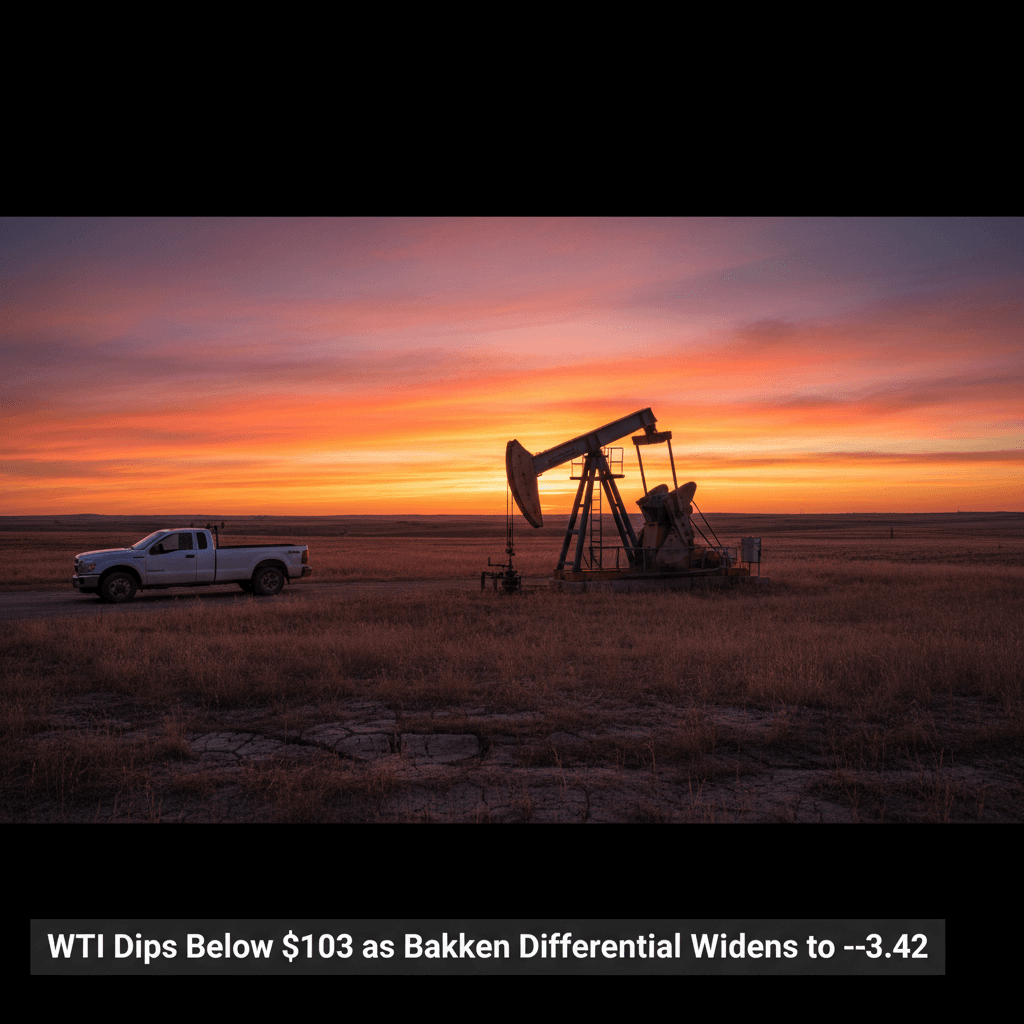
Oil Prices Drop Sharply, WTI Falls Below $101 Amid Market Pressure
Bakken crude differential holds steady as broader market sell-off impacts operator revenues.
Front-month WTI crude oil futures fell 2.35% on Friday, September 11, 2026, closing below the $101 threshold to settle at $100.07 per barrel. The global benchmark, Brent crude, saw a steeper decline of 2.88%, dropping $3.10 to $104.53 per barrel, according to live price data.
The sharp downturn reflects mounting bearish pressure in the commodities market. Natural gas prices also edged lower, dipping one cent to $2.82 per MMBtu. The sell-off was widespread, indicating a broader risk-off sentiment or reaction to fundamental data such as inventory builds or demand concerns.
For Bakken producers, the price received at the wellhead is directly tied to the WTI benchmark, minus a regional differential. The Bakken differential was quoted at -$3.42 versus WTI on Friday. This pricing structure means Bakken crude is effectively trading at approximately $96.65 per barrel ($100.07 - $3.42). This represents a significant daily revenue decrease for operators compared to earlier in the week when WTI was trading above $102.
While the daily differential remained stable, the collapse in the underlying benchmark price is the primary driver of reduced cash flow. Every dollar drop in WTI translates to millions of dollars in lost monthly revenue across the Williston Basin, directly impacting drilling budgets, well completion schedules, and shareholder returns.
The price drop may be linked to several industry factors. Traders often react to weekly U.S. inventory data from the Energy Information Administration; an unexpected build in crude or fuel stocks can trigger sell-offs. Additionally, macroeconomic signals regarding inflation, interest rates, or global demand growth can pressure prices. Market participants also constantly assess statements and production quotas from the OPEC+ alliance, as any indication of increased supply or weakened compliance can weigh on prices.
In the current high-cost environment, sustained prices above $90 per barrel are generally considered necessary to support active drilling programs in the Bakken. While today's price of $100.07 WTI remains in that supportive range, rapid volatility and sustained downward trends could prompt operators to reassess the pace of activity, particularly for marginal wells or those in less productive areas of the play.
Source
Live Price Data, Bakken Wire Market Analysis