WTI Crude--
Brent Crude--
Natural Gas--
ND Rig Count--
WTI Crude--
Brent Crude--
Natural Gas--
ND Rig Count--
Oil Prices Edge Lower as U.S. Crude Stocks Rise - Bakken Wire
Oil Prices

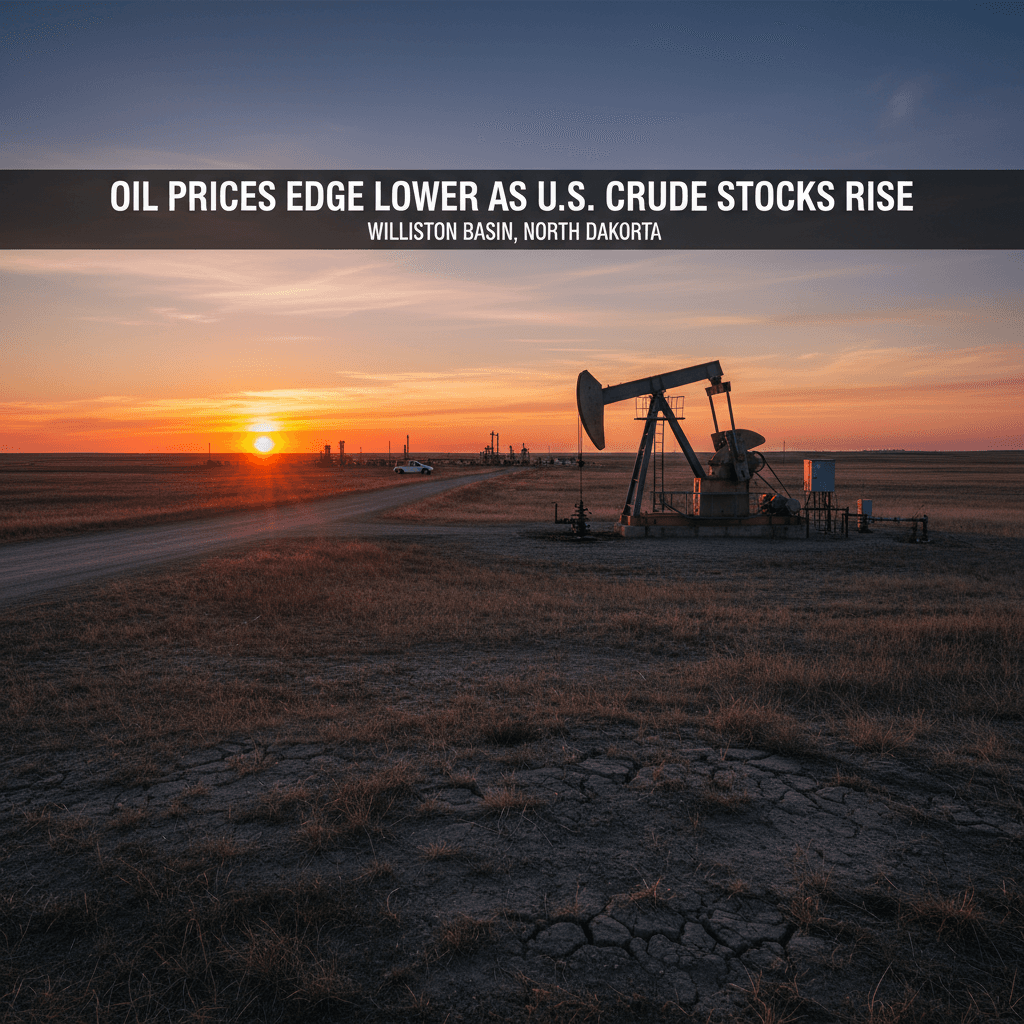
Oil Prices Edge Lower as U.S. Crude Stocks Rise

WTI and Brent crude dip in early trading, with the Bakken differential holding steady at -$3.42.

Bakken Wire Staff·☀️Morning Wire·

Global oil prices declined slightly in early trading Saturday, August 29, as a reported build in U.S. crude inventories weighed on the market. West Texas Intermediate (WTI) crude traded at $83.40 per barrel, down 13 cents or 0.16%, while the international benchmark Brent crude fell 42 cents to $88.10, a decline of 0.47%.

The primary factor behind the dip was data from the U.S. Energy Information Administration showing a rise in commercial crude stocks. According to Rigzone, crude oil inventories, excluding the Strategic Petroleum Reserve, stood at 428.9 million barrels as of August 21. This increase in supply provides a slight counterbalance to ongoing market tightness.

For Bakken producers, the local price benchmark is closely tied to WTI. The Bakken differential—the discount at which Bakken crude trades versus WTI at the Cushing, Oklahoma, hub—was recorded at -$3.42. This means Bakken crude is currently priced at approximately $79.98 per barrel. A stable, narrow differential is critical for North Dakota operators as it directly impacts wellhead economics and cash flow. The current spread is within a range that supports continued production and operational activity in the Williston Basin.

Natural gas prices also saw a decrease, trading at $2.89 per MMBtu, down three cents. While oil is the primary economic driver for the Bakken, natural gas prices influence the economics of associated gas production and the ongoing challenge of meeting the state's gas capture targets.

The marginal price drop suggests a market in consolidation, balancing geopolitical supply risks against tangible inventory data. For Bakken operators, prices in the low-$80s for WTI, translating to roughly $80 for Bakken crude, remain supportive for drilling and completion programs, though they temper the windfall profits seen during periods of higher pricing. The focus for local firms will remain on operational efficiency and managing differentials to maximize the value of each barrel produced.

Source

Live Price Data, Rigzone (EIA inventory report published August 28, 2026)

oil priceswtibrentbakken differentialcrude inventorieseianatural gas

Share this article

Related Articles

Oil Prices Edge Lower Friday as Brent, WTI, and Bakken Differential Dip - Bakken Wire
Oil Prices

Oil Prices Edge Lower Friday as Brent, WTI, and Bakken Differential Dip

Front-month WTI crude futures traded at $83.33 per barrel on Friday, August 28, down 24 cents (-0.24%) from the previous settlement. The global Brent benchmark saw a larger decline, falling 34 cents (-0.38%) to $88.18 per barrel, according to live price data. The natural gas market also softened, with the front-month contract down 3 cents to $2.88 per MMBtu. For Bakken producers, the local price environment weakened. The Bakken crude differential to the WTI benchmark widened to a discount of $3.42 per barrel. This means Bakken crude priced at the Clearbrook, Minnesota, hub is effectively valued at approximately $79.91 per barrel based on the day's WTI settlement. The modest pullback in crude prices reflects a consolidation phase after recent gains. Traders are balancing persistent concerns over global economic growth and fuel demand against ongoing supply discipline from major producers. Market participants are also assessing the impact of geopolitical tensions on...

🌅Afternoon Wire·Aug 28
Oil Prices Dip Midday as U.S. Crude Inventories Edge Higher - Bakken Wire
Oil Prices

Oil Prices Dip Midday as U.S. Crude Inventories Edge Higher

West Texas Intermediate crude oil futures traded lower midday Friday, August 28, pressured by a reported increase in U.S. commercial inventories. WTI was down 0.6% to $83.03 per barrel, while the global benchmark Brent crude fell to $87.99. The price decline follows data from the U.S. Energy Information Administration showing a small build in domestic stockpiles. According to Rigzone, citing the EIA's latest weekly petroleum status report, crude oil stocks, excluding the Strategic Petroleum Reserve, stood at 428.9 million barrels as of August 21. The slight inventory increase provided a bearish counterpoint to recent market strength, which has been supported by steady demand and ongoing supply management from major producing nations. The midday dip puts WTI on track for a modest weekly decline after reaching multi-week highs earlier in the period. For Bakken producers, the local price benchmark is directly tied to WTI, minus a regional differential. That differential—the discount...

🔆Midday Wire·Aug 28
Oil Prices Dip as Bakken Discount Widens to $3.42 - Bakken Wire
Oil Prices

Oil Prices Dip as Bakken Discount Widens to $3.42

Oil prices retreated in early trading Friday, with West Texas Intermediate (WTI) crude dropping 0.53% to $83.09 per barrel. The global benchmark Brent crude also fell, trading at $88.17, down 0.4%. The decline pressures Bakken Shale operators, as the discount for North Dakota's crude oil widened. The Bakken differential to WTI was reported at -$3.42, meaning Bakken crude is priced at approximately $79.67 per barrel at the wellhead. The broader market sell-off was attributed to a stronger U.S. dollar and bearish U.S. inventory data released this week. According to the Energy Information Administration, U.S. commercial crude oil inventories rose by 2.9 million barrels for the week ended August 21, 2026, exceeding analyst expectations. The reported build suggests weaker near-term demand or increased supply, applying downward pressure on prices. Furthermore, a rally in the U.S. Dollar Index, which makes oil more expensive for holders of other currencies, contributed to the decline....

☀️Morning Wire·Aug 28