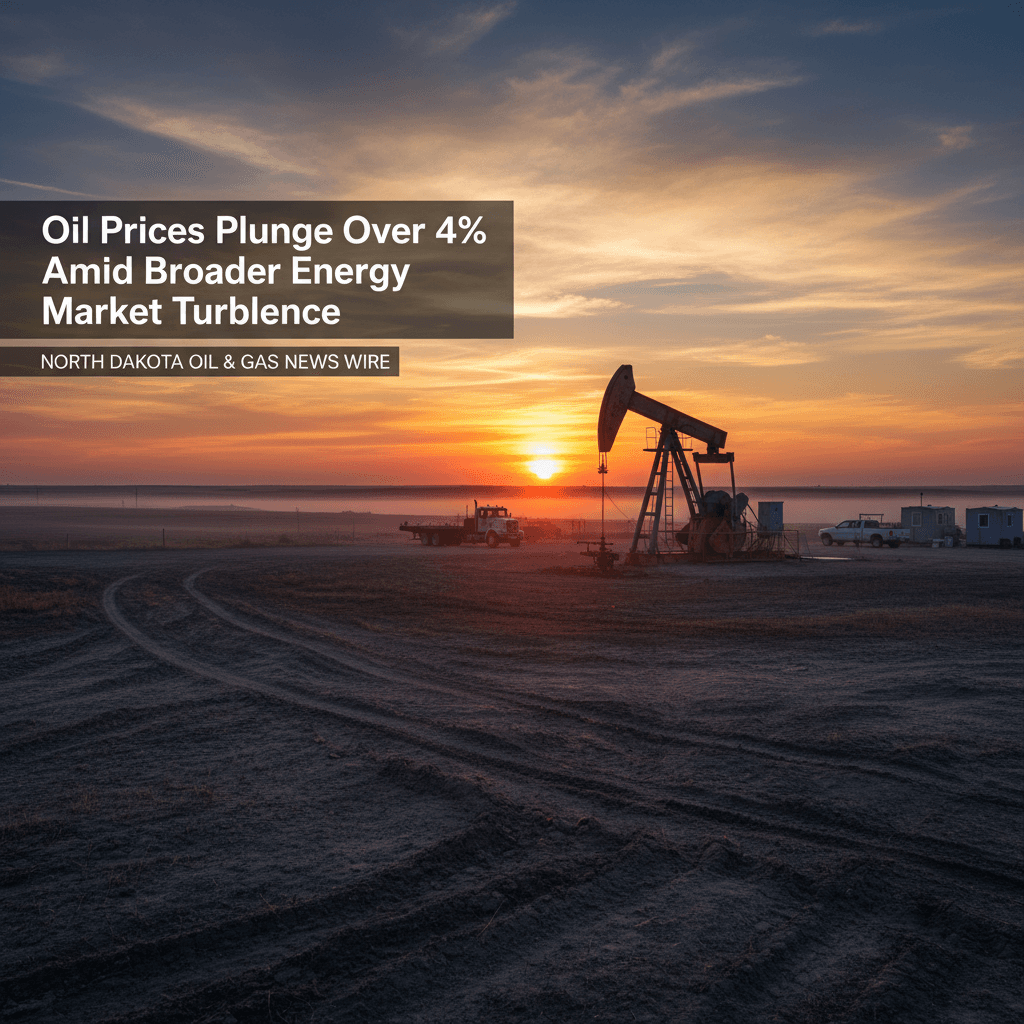
Oil Prices Plunge Over 4% Amid Broader Energy Market Turbulence
WTI crude falls to $92 as record diesel prices and supply concerns create a volatile market landscape with implications for Bakken differentials.
Front-month WTI crude oil prices fell sharply on Monday, September 21, trading down $4.08, or 4.25%, to $92 per barrel. Brent crude followed, dropping $3.46 to $95.83. The Bakken crude differential to WTI was -$3.42. Natural gas also declined, trading at $2.84, down $0.07.
The sharp correction in crude prices occurs within a complex global energy crisis marked by regional fuel shortages and soaring costs for refined products. According to OilPrice.com, record diesel prices are raising fears of local fuel shortages, shifting the market from a pricing problem to a potential physical-delivery problem. While supplies remain broadly available, isolated diesel outages are being reported.
Regional disparities are stark. In Texas, the statewide average for diesel was $5.9779 per gallon on September 20, while regular gasoline averaged $3.9480. In contrast, California averages hit $8.4244 for diesel and $6.1533 for gasoline, according to OilPrice.com. The article notes that proximity to supply—refineries and oil fields—is becoming a critical factor for fuel availability.
For Bakken operators, the widening gap between high retail fuel prices and the day's falling crude price presents a mixed picture. The negative Bakken differential of -$3.42 indicates the local crude is selling at a discount to the WTI benchmark, which can pressure wellhead revenues. However, the extreme diesel prices highlighted in the reports directly impact drilling and completion costs, as diesel fuels frac spreads, rigs, and trucking fleets.
Globally, the European Central Bank (ECB) reported that the surge in wholesale natural gas prices, which have doubled since the start of the Middle East conflict, is passing through to consumers faster than in the past. The ECB noted this could rekindle inflation fears. While the report focuses on Europe, it underscores the ongoing volatility in global energy markets driven by geopolitical instability.
OilPrice.com linked current market tensions to the U.S.-Israeli war with Iran and a recent drone attack on a critical Saudi Arabian pipeline. While oil prices have increased about 40% since the conflict began, Monday's sharp pullback suggests extreme volatility as traders assess the risk of physical disruptions against economic demand destruction from high prices.
The situation underscores a bifurcated energy market: crude benchmarks are experiencing high volatility, while downstream refined products like diesel are hitting record levels with tangible supply risks. For the Bakken, operators must navigate lower crude prices against spiking operational fuel costs, with local diesel availability becoming a key logistical watchpoint.
Source
Live Price Data, OilPrice.com (Record Diesel Prices Raise Fears of Local Fuel Shortages, published 2026-09-21; Wholesale Gas Prices Are Reaching Consumers Faster, ECB Says, published 2026-09-21)