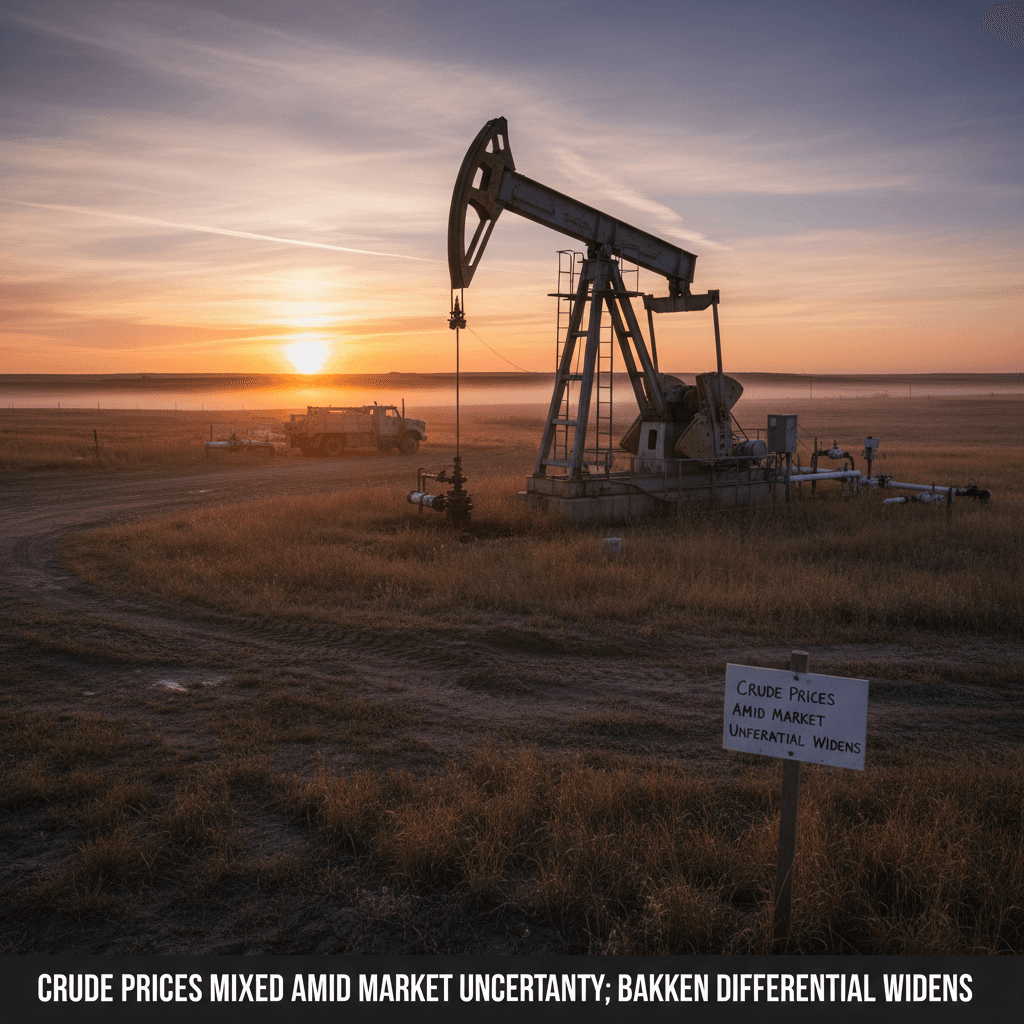
Oil Prices Rally Over 2% as Analysts Debate Market's Path
WTI gains more than $1.50 despite analyst commentary suggesting the recent speculative bubble has burst.
Front-month WTI crude oil futures rallied 2.22% to trade at $70.77 per barrel in midday trading Monday, June 29, according to live price data. The global benchmark, Brent crude, followed with a 1.9% increase to $73.98.
The sharp midday gains, with WTI up $1.54 and Brent up $1.38, come amid a mixed market sentiment. The rally in crude prices contrasted with a drop in natural gas, which traded at $3.19, down $0.09 for the session.
The price advance for Bakken-linked crude was slightly tempered by the regional differential. The Bakken price differential to the U.S. benchmark West Texas Intermediate was -$3.42 per barrel, according to live data.
The midday surge occurs alongside significant analyst commentary on the market's broader direction. According to a report from Rigzone published Monday, energy consultancy Wood Mackenzie stated that the oil price bubble has burst. The firm's analysis, as summarized by Rigzone, suggests a fundamental shift away from the speculative highs that have characterized recent trading.
For Bakken operators, the day's price action presents a complex picture. The strong rally in the absolute price of WTI is a positive signal for near-term cash flow and wellhead economics. However, the persistent negative differential for Bakken crude means local producers realize a price several dollars below the headline WTI figure. The current differential of -$3.42 indicates ongoing logistical or quality adjustments specific to the North Dakota play.
The juxtaposition of a strong daily price increase with a major consultancy declaring the end of a price bubble highlights the current volatility and uncertainty in the oil markets. Operators must navigate these conflicting signals, where short-term trading gains may be set against a longer-term analytical view of a cooling market.
The Bakken formation, a key driver of North Dakota's economy and a major contributor to U.S. tight oil production, remains sensitive to these price swings. Revenue for both operators and royalty owners is directly tied to the realized Bakken price, which is a function of both the volatile global benchmark and the local differential. Today's data shows both metrics moving, but in different contexts for the market's overall health.
Source
Live price data, Rigzone report summarizing Wood Mackenzie analysis published June 29, 2026.