Oil Prices Slide as WTI Drops Below $92, Bakken Differential Widens
Bakken crude trades at a $3.42 discount to WTI as broader market pressures weigh on regional pricing.
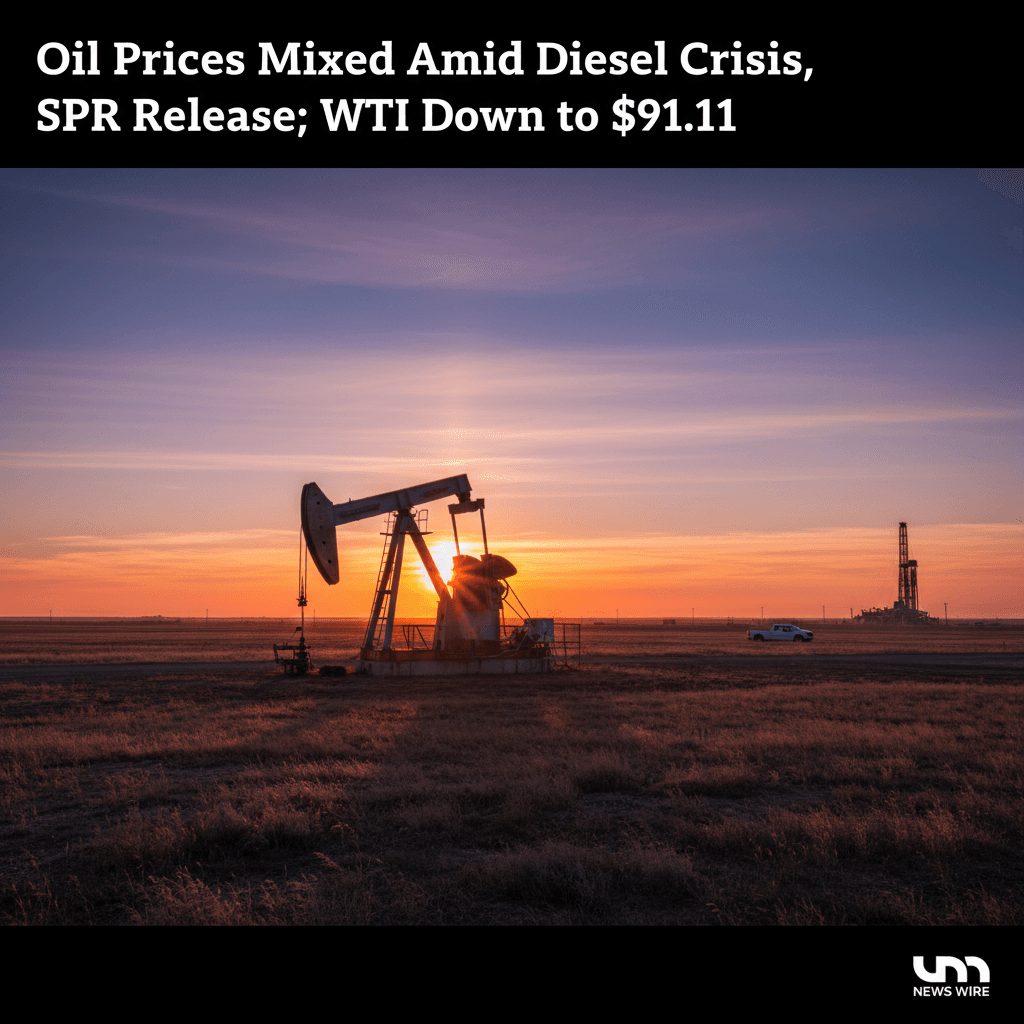
West Texas Intermediate crude oil prices fell sharply in midday trading Saturday, October 3, 2026, putting pressure on Bakken crude values. WTI was trading at $91.11 per barrel, down $1.76 or 1.9% on the day. The global benchmark Brent crude saw a more modest decline, trading at $102.25, down just six cents.
The price for Bakken crude at the Clearbrook, Minnesota, hub was trading at a discount of $3.42 per barrel to WTI, according to live price data. This puts the implied price for Bakken crude at approximately $87.69 per barrel.
Analysts have noted increasing pressure on oil markets. According to a report from Rigzone published Friday, analysts at BMI, a unit of Fitch Solutions, noted that oil prices have "come under pressure" heading into the fourth quarter of 2026. While the specific drivers were not detailed in the summary, such pressure often stems from concerns over economic demand, inventory levels, or shifts in OPEC+ production policy.
The steeper decline in WTI compared to Brent has widened the spread between the two benchmarks to over $11 per barrel. A wide spread can sometimes indicate stronger global demand relative to U.S. supply or logistical constraints within North America. For Bakken producers, the regional discount to WTI adds a second layer of pricing pressure on top of the falling benchmark.
In contrast to crude, natural gas prices saw gains. The commodity was trading at $3.04 per million British thermal units, up seven cents on the day.
For Bakken operators, the midday price action presents a mixed but challenging picture. The slide in WTI, combined with a persistent regional discount, directly impacts wellhead revenue and can influence decisions on production maintenance and new drilling activity. Operators with strong hedge books may be partially insulated from the day's decline. The price environment will be closely watched by North Dakota royalty owners, as state tax revenues are directly tied to the value of produced oil.
Market participants will continue to monitor for official inventory data, geopolitical developments, and any statements from OPEC+ regarding production quotas for the remainder of the year. The price pressure noted by analysts suggests a cautious outlook as the industry moves deeper into the final quarter of 2026.
Source
Live price data as of October 3, 2026; Rigzone report from October 2, 2026.