WTI Crude--
Brent Crude--
Natural Gas--
ND Rig Count--
WTI Crude--
Brent Crude--
Natural Gas--
ND Rig Count--
Oil Prices Slip as Crude Inventories Fall, Bakken Differential Widens - Bakken Wire
Oil Prices

Oil Prices Slip as Crude Inventories Fall, Bakken Differential Widens

WTI settles near $70 while market weighs falling US stocks, Hormuz flows, and recessionary supply concerns.

Bakken Wire Staff·🌅Afternoon Wire·

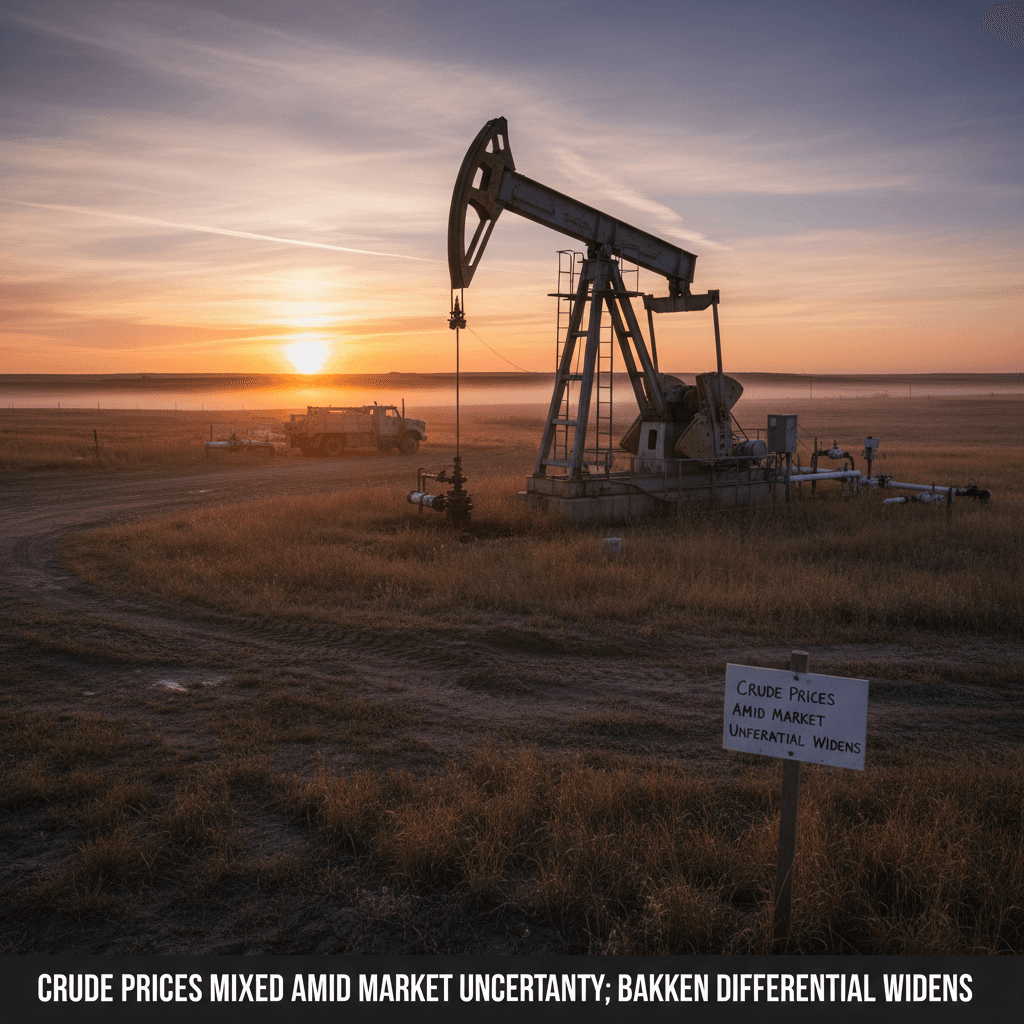
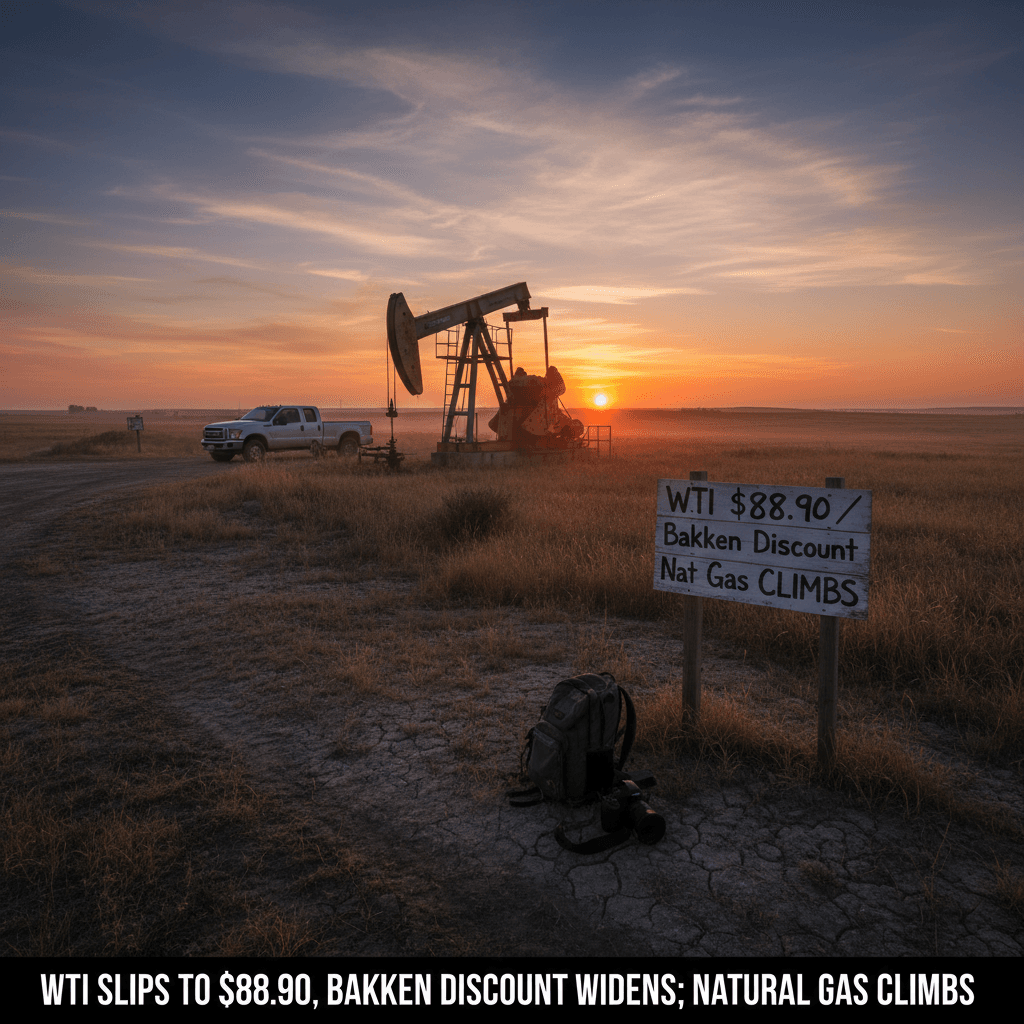
Front-month WTI crude oil settled at $70.05 per barrel on Tuesday, down 0.99% for the day, according to live price data. Brent crude fell 0.66% to $73.42. The price for Bakken crude at the wellhead, reflecting a key discount to the US benchmark, widened to -$3.42 versus WTI.

The day's losses come amid mixed signals from fundamental data. According to an American Petroleum Institute (API) estimate reported by OilPrice.com, U.S. commercial crude oil inventories fell by 6.072 million barrels in the week ending June 26. This continues a trend of significant draws, with stocks shedding 59.4 million barrels over the prior eleven weeks. The Strategic Petroleum Reserve (SPR) also declined by 5.5 million barrels last week to 325.7 million barrels—the lowest level in over four decades, according to the same source.

Despite the inventory draws, prices faced downward pressure. OilPrice.com reported that flows from the Strait of Hormuz have partially resumed following the U.S.-Iran ceasefire, though tanker traffic remains well below pre-war levels. This has eased some of the extreme physical market premiums seen for alternative crudes like North Sea Forties, which became highly sought-after during the crisis.

An analysis published by OilPrice.com presented a counterintuitive outlook, suggesting that supply shortages stemming from the Iran conflict could ultimately lead to lower oil prices, potentially below $40 per barrel, alongside a deepening recession. The article argued that a "self-organizing economy" could respond to shortages not with high prices, but with reduced economic activity and government restrictions, mirroring the 2020 COVID-19 crash. The same source noted concerns over critically low levels of already-pumped oil in storage buffers.

For Bakken operators, the widening local differential to -$3.42 indicates a slight increase in regional pricing pressure relative to the US benchmark. The continued drawdown of national inventories, if sustained, could provide underlying support for WTI prices. However, the potential for renewed recessionary fears and the complex dynamics of global supply, as outlined in the analyses, injects significant uncertainty into forward price expectations. North Dakota producers will be closely monitoring both the physical flow of Gulf Coast crude and the evolving geopolitical risks affecting global benchmarks.

Source

Live price data; OilPrice.com articles "Why a Supply Crunch From Iran Could Send Oil Back Below $40 a Barrel," "The Oil Benchmark Named Brent Is Losing Its Brent," and "US Crude Oil Inventories Keep Falling As Hormuz Flows Slow To Start," all published June 30, 2026.
oil priceswtibrentbakken differentialinventoriesiranstrait of hormuzrecession

Share this article

Related Articles

Oil Prices Steady as Bakken Discount Widens - Bakken Wire
Oil Prices

Oil Prices Steady as Bakken Discount Widens

Oil prices showed little movement in Sunday trading, with West Texas Intermediate (WTI) crude holding steady at $87.06 per barrel, according to live market data. The global benchmark, Brent crude, was also unchanged at $94.39. Natural gas prices were flat at $2.81 per MMBtu. For Bakken producers, the more critical figure is the regional price differential. Bakken crude at the Clearbrook, Minnesota, hub was trading at a discount of $3.42 per barrel below the WTI benchmark price. This spread is a direct determinant of the netback price received by North Dakota operators and directly impacts cash flow and drilling economics. The static price action follows a volatile week driven by mixed signals from global inventories and ongoing geopolitical tensions. Market analysts note that prices found a footing above $86 for WTI after U.S. government data showed a larger-than-expected drawdown in crude stockpiles last week, indicating robust demand. However, this was...

🌅Afternoon Wire·Aug 23
Oil Prices Edge Higher Midday as Bakken Discount Holds at $3.42 - Bakken Wire
Oil Prices

Oil Prices Edge Higher Midday as Bakken Discount Holds at $3.42

Oil prices posted modest gains in midday trading Sunday, with benchmark crudes holding near multi-week highs. West Texas Intermediate (WTI) crude was trading at $87.06 per barrel, a gain of $0.23 or 0.26%. The international benchmark Brent crude rose to $94.39, up $0.61 or 0.65%, according to live price data. Bakken crude priced at the Clearbrook, Minnesota, hub maintained a differential of negative $3.42 per barrel versus WTI. This places the effective price for Bakken barrels at approximately $83.64, factoring in the regional discount. Natural gas futures also saw upward movement, rising $0.05 to trade at $2.81 per million British thermal units. The midday price strength continues a trend of firming crude markets. Prices are being supported by a combination of sustained demand signals and ongoing supply discipline from major producing nations within the OPEC+ alliance. Geopolitical tensions in key oil-producing regions also continue to underpin a risk premium in...

🔆Midday Wire·Aug 23
WTI Holds Above $87 Amid Global Supply Concerns; Bakken Differential Widens - Bakken Wire
Oil Prices

WTI Holds Above $87 Amid Global Supply Concerns; Bakken Differential Widens

Oil prices edged higher on Sunday, with West Texas Intermediate (WTI) crude trading at $87.06 per barrel, a gain of 0.26% or $0.23, according to live market data. The global benchmark Brent crude rose 0.65% to $94.39, while natural gas prices increased by $0.05 to $2.81 per MMBtu. The Bakken crude differential, which measures the price of Bakken barrels delivered to Clearbrook, Minnesota, against WTI, was assessed at a discount of $3.42. This price spread is a key indicator of the competitiveness and market access for North Dakota's light sweet crude. Market support stems from tightening global crude supplies. According to a report from Rigzone, U.S. refiners are facing a looming supply drop from their biggest foreign crude supplier at a time of peak seasonal demand. While the source material did not specify the supplier, such a reduction in available imported crude typically increases competition for domestic barrels, including those...

☀️Morning Wire·Aug 23