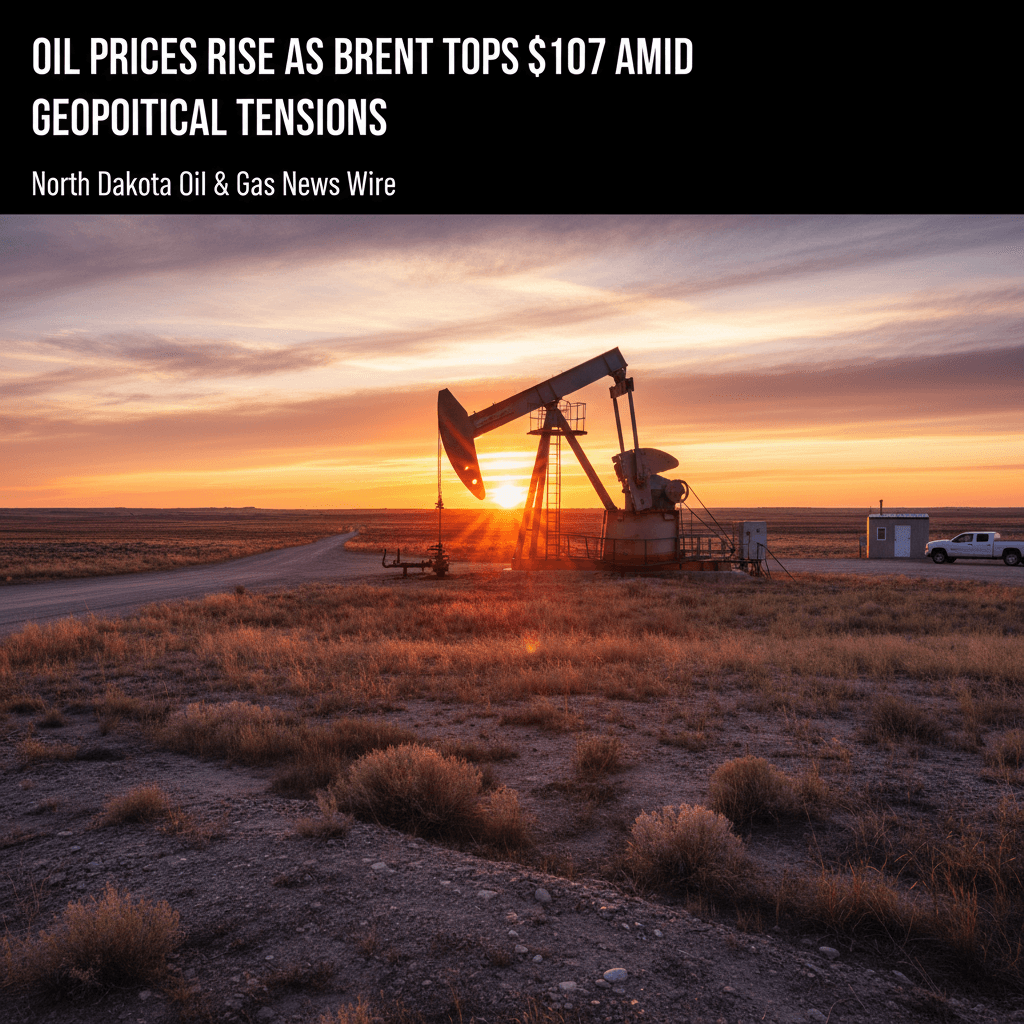
Oil Prices Surge, Brent Outpaces WTI Amid Benchmark Scrutiny
Bakken crude discount holds as global supply concerns and shifting shipping dynamics widen the spread between key benchmarks.
Oil prices rallied strongly in midday trading Saturday, with global benchmark Brent crude posting a larger gain than U.S. benchmark West Texas Intermediate. According to live price data, Brent crude was trading at $109.86 per barrel, up $3.94 or 3.72% on the day. WTI crude followed at $99.02 per barrel, a gain of $2.52 or 2.61%. The Bakken differential—the discount at which crude from the North Dakota formation trades versus WTI—stood at -$3.42.
The significant surge in both benchmarks points to mounting supply risks in the global market. The price action continues a trend of divergence between WTI and Brent noted earlier in the week. According to a Rigzone report from October 15, WTI surged while Brent edged lower amid shifting shipping costs and tight global supplies. The current session sees both climbing, but the Brent-WTI spread has expanded to over $10, highlighting differing regional pressures and the cost of moving crude.
The reliability of the Brent benchmark itself is facing high-profile scrutiny. According to a separate Rigzone report from October 16, Wall Street veteran Jeff Currie called the world's most important oil benchmark little more than a "vibe contract," suggesting it may be out of step with physical energy market fundamentals. This critique comes as the benchmark shows heightened volatility and a widening gap with U.S. prices.
For Bakken operators, the rising price environment is a net positive, but the region's discount persists. With WTI above $99, Bakken crude is effectively priced near $95.60 per barrel. The maintained differential reflects ongoing logistical costs to move oil from the Williston Basin to major refining hubs. The strong absolute price level, however, supports well economics and cash flow for producers across North Dakota.
Natural gas prices showed a contrasting trend, trading at $3.12 per MMBtu, down $0.12 on the day. This weaker performance for gas underscores the oil-specific nature of the current supply concerns driving the crude rally.
The sharp gains underscore a tense global market where physical supply tightness, geopolitical risks, and transportation economics are key drivers. The expanding spread between Brent and WTI can influence export economics for U.S. crude, including barrels from the Bakken. While the "vibe" of the market is bullish, as reflected in the Brent benchmark, Bakken netbacks remain directly tied to WTI minus the local differential.
Source
Live Price Data, Rigzone (October 16, 2026), Rigzone (October 15, 2026)