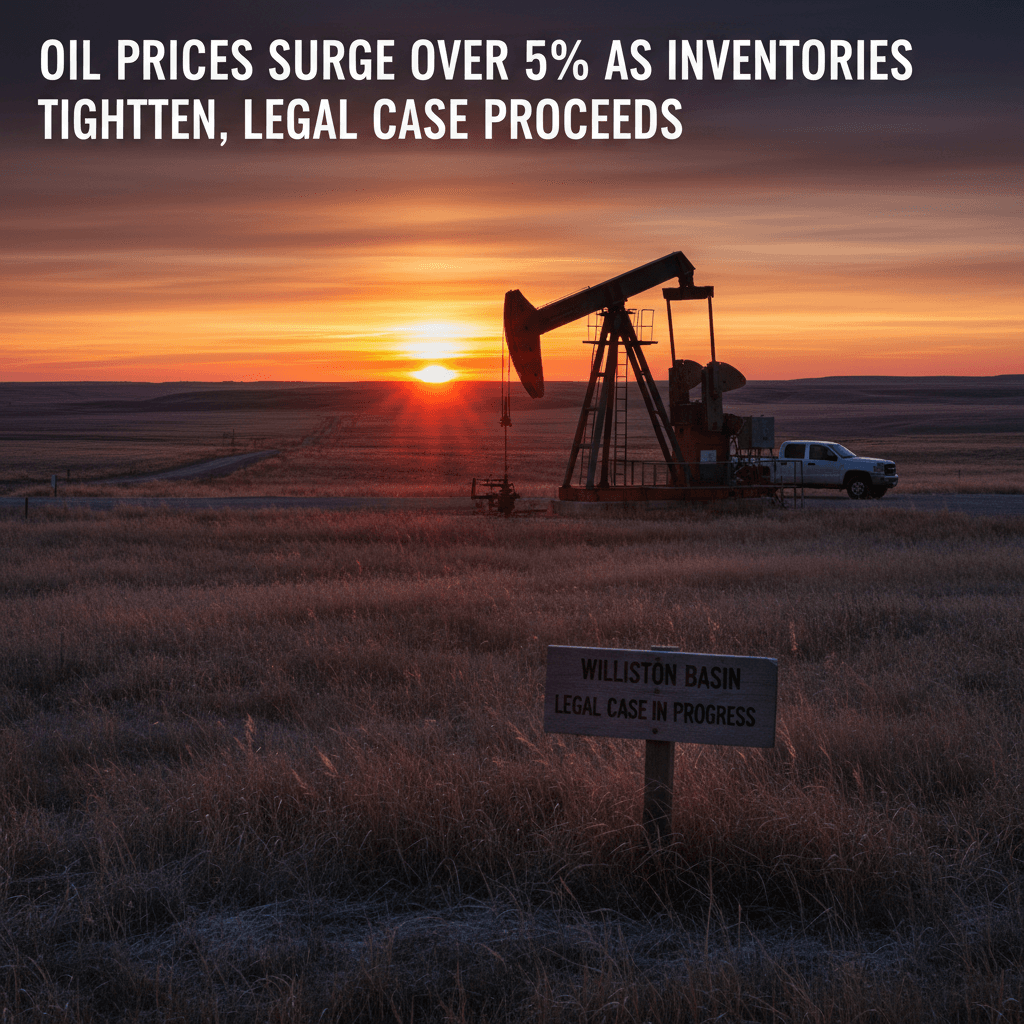
Oil Prices Surge Over 5% as Inventories Tighten, Legal Case Proceeds
WTI and Brent crude post sharp gains amid supply draws and a court ruling allowing an antitrust lawsuit against shale producers to move forward.
Oil prices surged more than 5% Tuesday, with West Texas Intermediate (WTI) crude closing at $90.65 per barrel, a gain of $4.89, according to live price data. Brent crude rose to $95.14, up $4.65. The Bakken crude differential was $3.42 below WTI. The rally was supported by a reported draw in U.S. commercial crude inventories and continued releases from the Strategic Petroleum Reserve (SPR).
The American Petroleum Institute (API) estimated that U.S. crude inventories fell by 2.6 million barrels for the week ending August 28, according to OilPrice.com. This follows a prior-week build of 4.2 million barrels. The commercial inventory draw was aided by another 3.1 million barrels leaving the SPR, bringing the reserve's total to 286.6 million barrels. OilPrice.com notes this level is approaching the generally accepted operational minimum of 250-300 million barrels.
U.S. production for the week ending August 21 was reported at 13.843 million barrels per day, a slight weekly increase and up 461,000 bpd from a year earlier. Distillate inventories, already 14% below the five-year average, fell another 300,000 barrels, while gasoline stocks rose by 300,000 barrels. Cushing, Oklahoma, inventories rose by 200,000 barrels.
Separately, a federal judge allowed antitrust lawsuits accusing major U.S. shale producers of coordinating production cuts to proceed, OilPrice.com reported. U.S. District Judge Matthew Garcia rejected dismissal efforts by defendants including Diamondback Energy and Occidental Petroleum. The lawsuits, filed beginning in 2024, allege producers restrained shale output to push up prices for crude and refined products.
Judge Garcia found plaintiffs had plausibly alleged a conspiracy based on production decisions and communications, stating the complaints identified interactions that went beyond normal industry information exchange. The defendants deny wrongdoing. The case places a legal lens on the industry's shift to capital discipline, with plaintiffs arguing some corporate restraint crossed into coordinated action.
For Bakken operators, the day's high prices and tightening physical market are a direct revenue benefit, though the narrowing differential suggests regional pricing pressure. The ongoing legal case introduces a new layer of scrutiny for corporate production strategies that have defined the post-drill-boom era. The court will now examine whether decisions to restrain supply growth were independent or coordinated, a question with potential long-term implications for how shale companies operate.
Source
Live Price Data, OilPrice.com (U.S. Shale Producers Lose Bid to Kill Oil Price-Fixing Case; U.S. Crude Inventories Drop amid Continued SPR Draws)