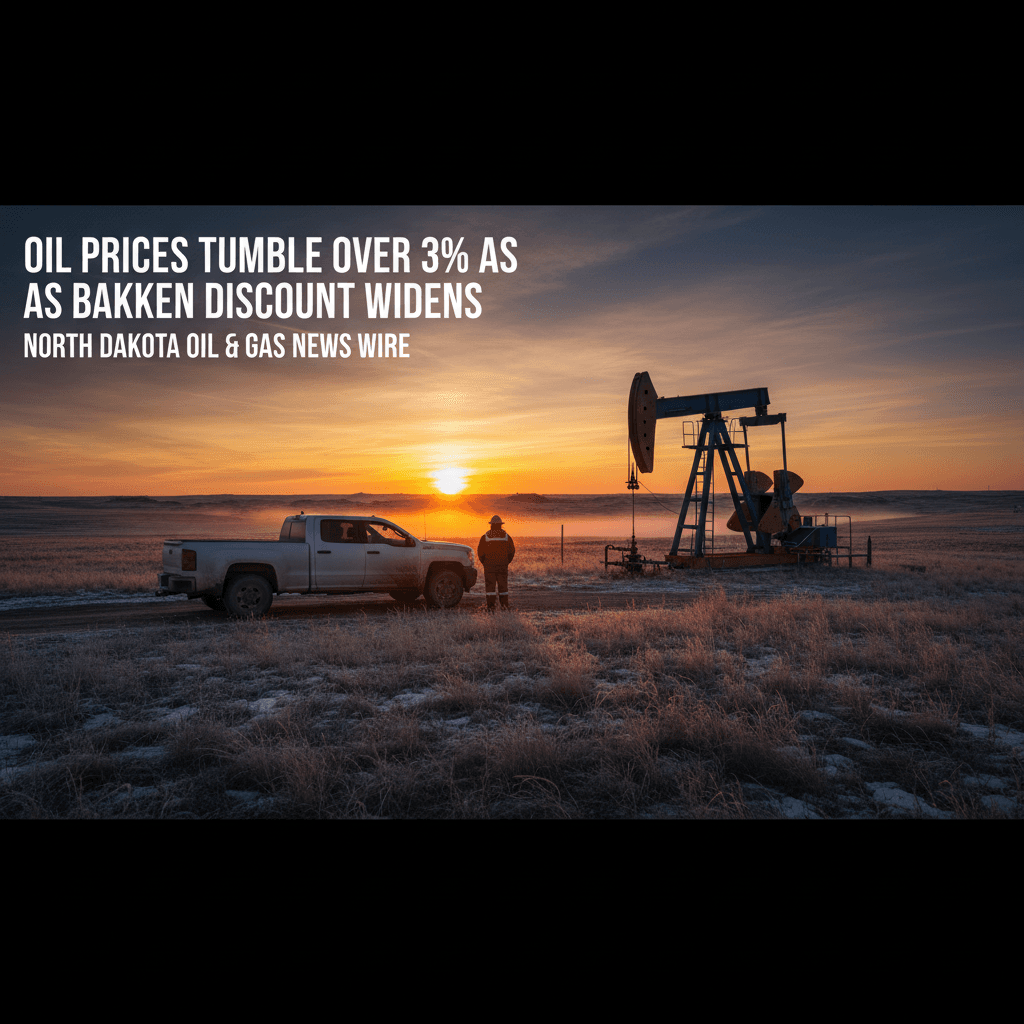
Oil Prices Tumble Over 3% as Bakken Discount Widens
WTI falls below $103, pressuring Bakken operators as gasoline price surge adds to market volatility.
Oil prices fell sharply in midday trading Wednesday, September 16, 2026, with the benchmark West Texas Intermediate (WTI) crude dropping 3.3% to trade at $102.34 per barrel. The global benchmark Brent crude fell 3.19% to $105.28, according to live price data. The price for Bakken crude at the wellhead weakened further, trading at a discount of $3.42 below WTI.
The midday sell-off represents a significant retreat for Bakken producers, who are directly exposed to the WTI price minus the local differential. The wider discount indicates increased pressure on Bakken crude's market value relative to the benchmark. Natural gas prices saw a minor decline, trading at $2.9 per MMBtu.
The price drop comes amid a surge in retail gasoline prices across the United States. According to Rigzone, gasoline prices jumped in every U.S. state with GasBuddy warning there is "no relief in sight." This consumer-facing price inflation, often a drag on crude demand outlooks, is occurring alongside the crude market correction.
For Bakken operators, the combined effect of a lower absolute price and a wider discount squeezes cash flow and can impact drilling economics. The volatility underscores the sensitivity of the North Dakota oil patch to broader macroeconomic signals and refined product markets. While prices remain above the $100 threshold, rapid intraday declines can trigger reassessments of operational spending.
The midday price action suggests traders are weighing concerns over future demand against current tight physical supplies. The simultaneous rise in gasoline prices and fall in crude futures can indicate market perceptions of refining margins or potential demand destruction at the consumer level.
Market participants will monitor inventory data and geopolitical developments for direction. For royalty owners and operators in the Williston Basin, the widening Bakken differential is a key metric, as it directly reduces the netback price received for each barrel produced.
Source
Live Price Data, Rigzone