WTI Crude--
Brent Crude--
Natural Gas--
ND Rig Count--
WTI Crude--
Brent Crude--
Natural Gas--
ND Rig Count--
Russian Oil Revenue Slump May Signal Global Price Pressure - Bakken Wire
Global Markets

Russian Oil Revenue Slump May Signal Global Price Pressure

A six-month low in Russia's August oil revenue could foreshadow softer global markets affecting Bakken crude pricing.

Bakken Wire Staff·🔆Midday Wire·

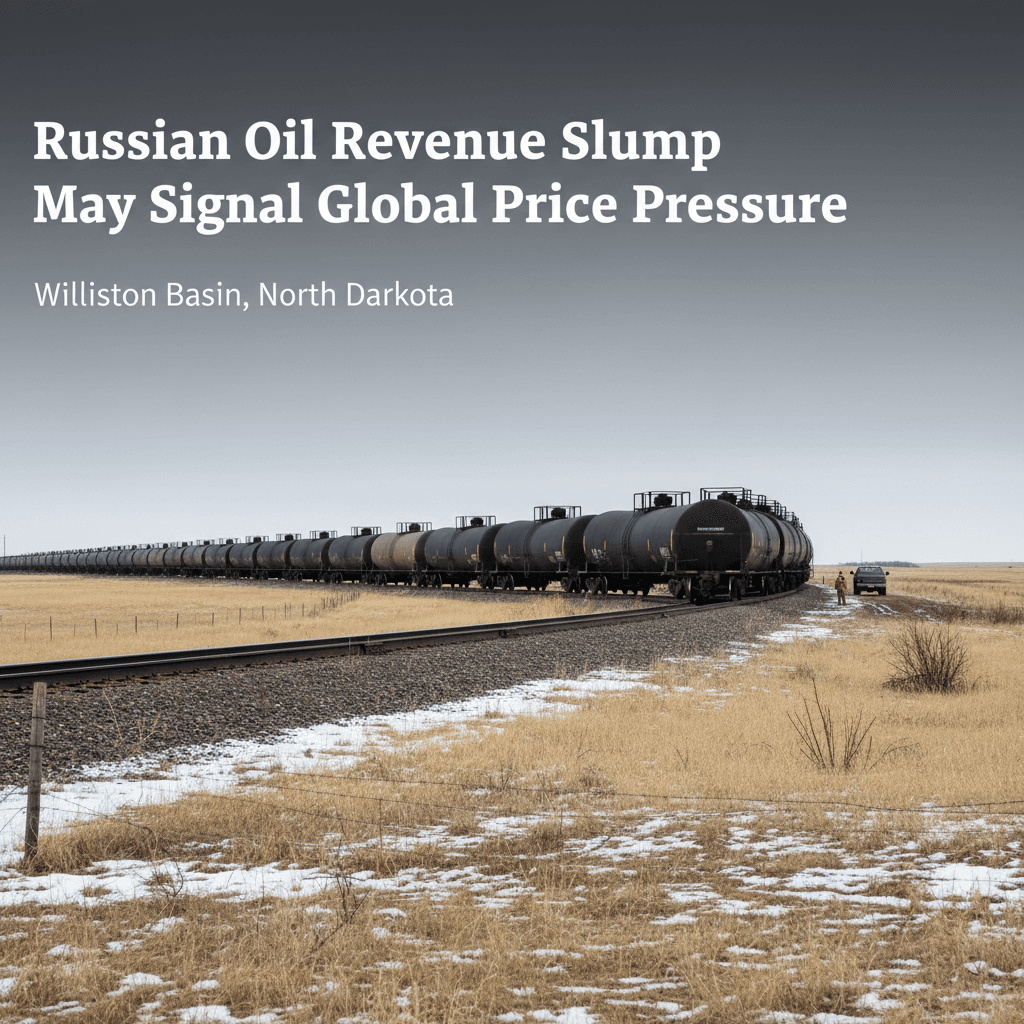
Russia's oil revenue slumped to a six-month low in August, according to a report from Rigzone. The development, published on September 5, highlights ongoing volatility in global energy markets.

For Bakken operators, the health of major exporting nations like Russia is a key indicator for international crude oil benchmarks. Revenue declines often reflect a combination of lower prices, reduced export volumes, or both. These global market shifts directly influence the price Bakken producers receive for their crude, which is typically priced at a differential to benchmarks like West Texas Intermediate (WTI).

The Bakken formation in North Dakota is a price-taker in the global oil market. While regional factors like pipeline capacity and well productivity are important, the ultimate driver of operator revenue and drilling budgets is the global price of crude. Softening revenue for a major producer can signal increased global supply or weakening demand, which typically translates to downward pressure on prices worldwide.

In the current environment, any sustained downturn in global prices could lead Bakken operators to reassess capital expenditure plans for the remainder of the year. The industry has maintained a focus on capital discipline and shareholder returns, meaning significant price drops could prompt a slowdown in drilling activity rather than a push for volume.

The report does not specify the causes of Russia's revenue drop, but for Bakken stakeholders, the takeaway is heightened market uncertainty. Royalty owners and service companies monitor these global signals closely, as they directly impact local economic activity in the Williston Basin. Market analysts will be watching for subsequent data on global inventories and OPEC+ policy responses for further direction.

Source

Rigzone
global marketsoil pricesrussiabakken operatorsrevenue

Share this article

Related Articles

The Midday Take - Energy Market Briefing
Global Markets

Energy Market Briefing

Bakken Wire Midday Briefing Saturday, September 5, 2026 1. Headlines Oil prices are holding steady at elevated levels today. As of midday, WTI crude is at $91.48 per barrel, with Brent at $96.28. This follows a week where, according to Rigzone, oil ended 9.7% higher due to renewed US-Iran tensions keeping supply risks from the Strait of Hormuz elevated. Supporting the market, U.S. crude inventories (excluding the SPR) dropped week-on-week to 424.5 million barrels as of August 28, according to the EIA. The broader North American rig count declined this week, driven solely by a drop in Canadian activity. Baker Hughes reported the total U.S. rig count is unchanged at 588, while the Canadian count fell by 7 rigs to 204. In other corporate news, Shell finalized its $16.5 billion acquisition of Montney shale producer ARC Resources. 2. What's Really Happening The market's primary focus remains geopolitical risk, specifically the...

🔆Midday Wire·Sep 5
The Morning Take - Energy Market Briefing
Global Markets

Energy Market Briefing

Daily Energy Market Briefing Saturday, September 5,我家 2026 1. Headlines Oil prices are holding onto significant weekly gains, with Brent crude closing the week at $96.28 and WTI at $91.48, according to Rigzone. The weekly rally of 9.7% is being attributed by analysts to renewed U.S.-Iran fighting keeping supply risks elevated in the Strait of Hormuz. Supporting the price floor, the U.S. Energy Information Administration (EIA) reported a drawdown in crude oil inventories, with stocks, excluding the Strategic Petroleum Reserve, falling to 424.5 million barrels as of August 28. The broader North American drilling landscape showed mixed signals this week. Data from Baker Hughes, reported by OGJ, shows the total U.S. rig count held steady at 588, unchanged from last week but up 51 units year-over-year. However, a decline in Canadian activity pulled the continental rig count down to 792. In other corporate news, Shell finalized its $16.5 billion acquisition...

☀️Morning Wire·Sep 5
Global Markets

U.S. Nuclear Stagnation May Prolong Bakken's Role in Global Energy Mix

The United States is rapidly falling behind China in building new nuclear power capacity, a trend that could extend the domestic need for fossil fuel-based power generation, including from the Bakken formation. According to a report from OilPrice.com, China added a staggering 34 gigawatts of nuclear capacity in the past decade, while the U.S. added just one new plant. China is on track to overtake both France and the United States to become the world's largest nuclear power producer within the next five years. “By a wide margin, China will have the world’s most dynamic and significant nuclear industry through 2035,” energy lead analyst Damien Ma of Gavekal Technologies stated in a June report cited by the source. The U.S. nuclear fleet, while still the world's largest by output, is aging rapidly. OilPrice.com reports the U.S. has 96 operating commercial reactors, with an average age of 44 years. All but...

☀️Morning Wire·Sep 5