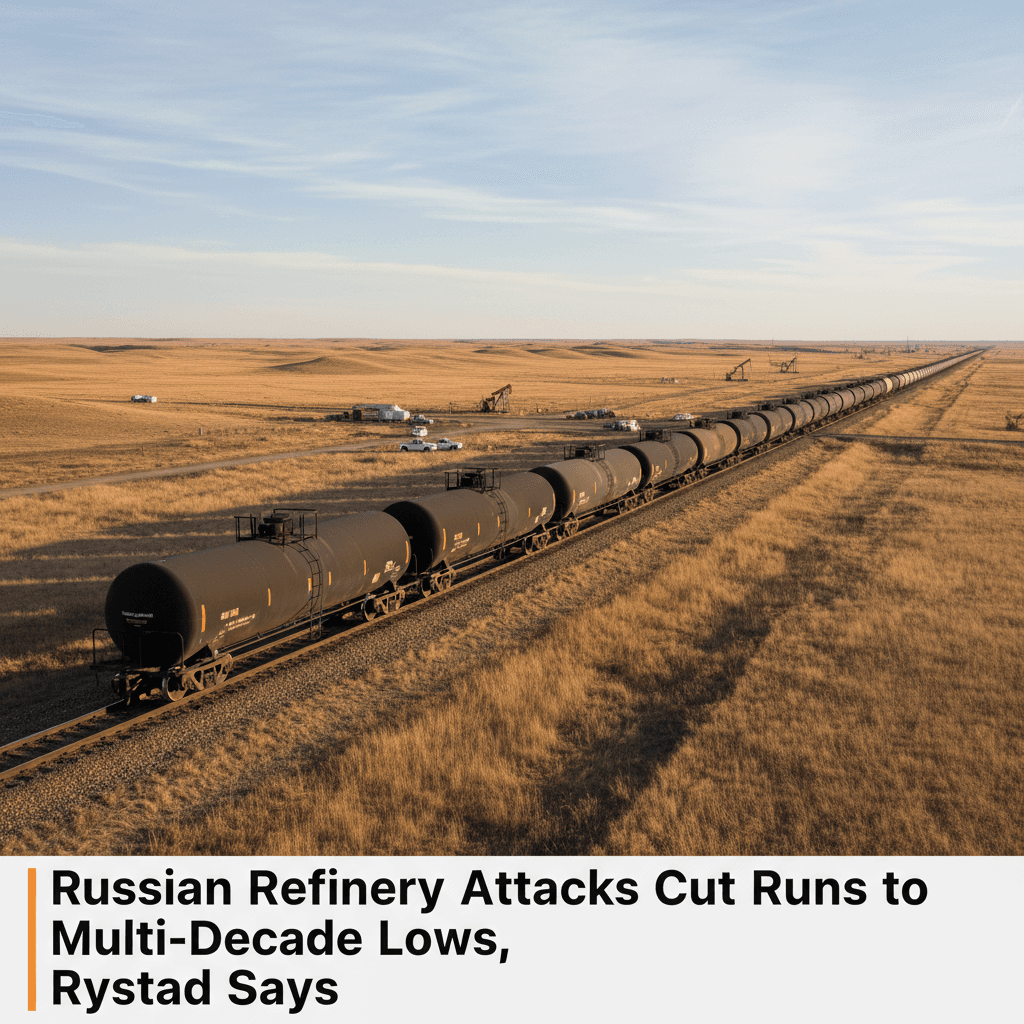
Russian Refinery Attacks Cut Runs to Multi-Decade Lows, Rystad Says
Disruption to global refined product supply could provide indirect support for Bakken crude oil prices.
Russian oil refinery runs have dropped to their lowest level in more than two decades, according to analysis from Rystad Energy. The energy consultancy attributes the plunge in processing rates to continued Ukrainian strikes on refinery infrastructure, Rigzone reported on November 28.
The sustained attacks have significantly curtailed Russia's capacity to turn crude oil into refined products like diesel and gasoline. This represents a major disruption to global supplies of these fuels.
For Bakken operators, such a sharp reduction in refined product output from a major producer can have bullish implications for the crude oil they extract. Reduced global refinery runs, especially on this scale, tighten the market for refined fuels. This can strengthen crack spreads—the profit margin for refining a barrel of crude—which in turn can increase demand from refineries for crude oil feedstock to capitalize on those margins.
While the Bakken formation is primarily an oil-producing region, its light sweet crude is a key feedstock for U.S. refineries. Increased demand for crude to fill the gap left by lost Russian refining could provide underlying price support for Bakken crude benchmarks. However, the direct impact will depend on complex global trade flows and the ability of other refining centers, including those in the U.S., to increase throughput.
The situation underscores the interconnected nature of the global oil market, where geopolitical events far from North Dakota can influence local wellhead economics. Bakken producers will be watching for any sustained upward pressure on global crude prices as a result of the prolonged refinery disruptions in Russia.
Source
Rigzone reported Rystad Energy's analysis that Russian refinery runs have dropped to the lowest in more than two decades due to Ukrainian strikes, published November 28, 2026.