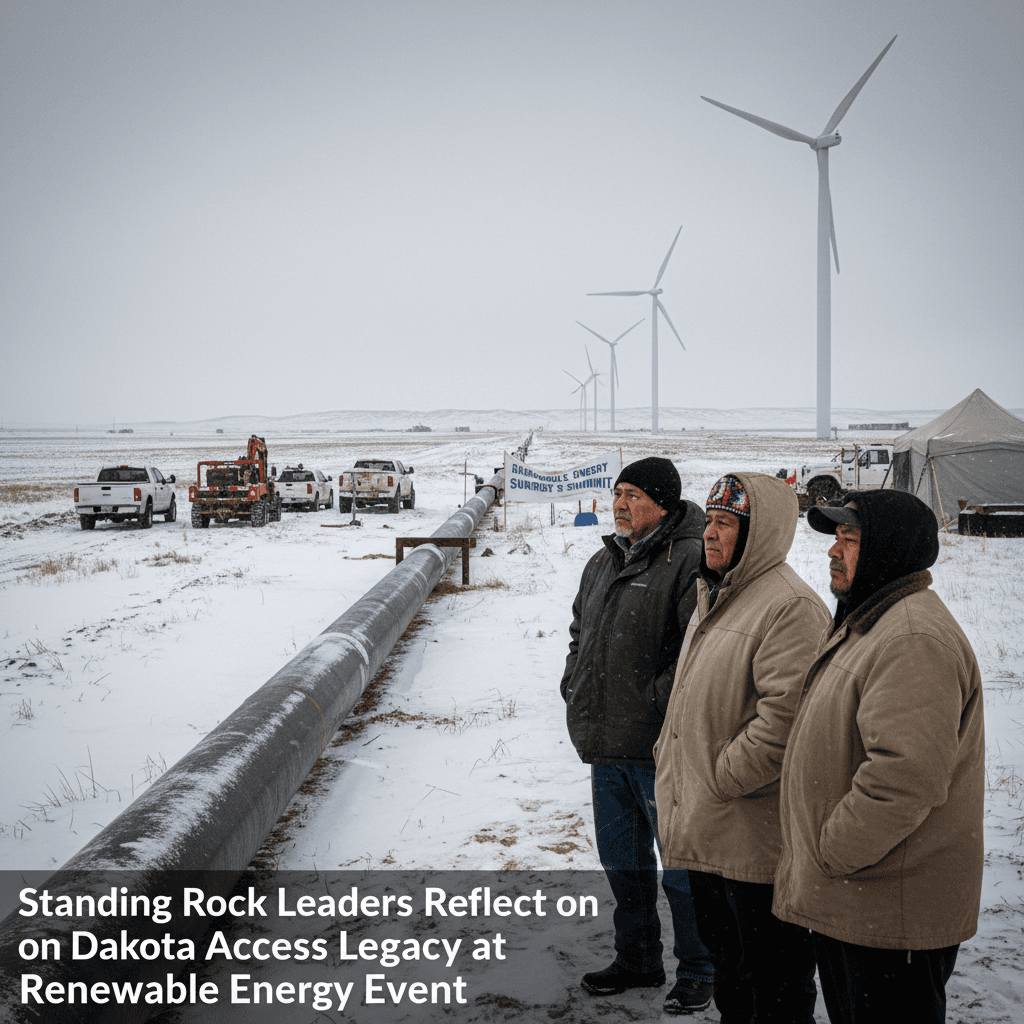
Standing Rock Leaders Reflect on Dakota Access Pipeline Protests a Decade Later
Tribal leaders at a renewable energy event cite lasting impact of the 2016-2017 demonstrations, while oil continues to flow through the contested pipeline.
Standing Rock Sioux tribal leaders reflected on the legacy of the Dakota Access Pipeline protests at a renewable energy event this week, stating the demonstrations awoke the world even as oil continues to flow through the contested infrastructure. The remarks were made at the first People of the Sun event, hosted by the nonprofit Indigenized Energy at the Prairie Knights Casino on the Standing Rock Reservation on Thursday, September 17, 2026.
“The oil is still flowing. The pipeline hasn’t been shut down, but there’s something really powerful that has happened, even more powerful than that, is of course the world has been awoken,” Nola Taken Alive, Standing Rock Sioux Tribal Council representative-at-large, told the audience, according to the North Dakota Monitor. The event included reflections on the demonstrations that began a decade ago, in 2016 and 2017.
Thousands of people gathered in southern North Dakota during those years to protest the multistate pipeline, which the Standing Rock Sioux Tribe opposed as a threat to its water supply. The demonstrations centered near the project's Missouri River crossing and involved chaotic brushes with law enforcement before protest camps were cleared in 2017. Protesters argued the pipeline trampled Indigenous rights and ignored environmental concerns, claims pipeline developer Energy Transfer has long denied.
The event highlighted the ongoing legal and community impact of the pipeline's construction. Hundreds of arrests resulted from the roughly six-month protest period, though many charges were later dismissed. Other court cases still linger, including lawsuits between Energy Transfer and environmental group Greenpeace.
For Bakken operators and the state's oil industry, the Dakota Access Pipeline remains a critical piece of infrastructure, moving crude from the Williston Basin to market. The pipeline's continued operation ensures a major outlet for North Dakota production, even as its legacy sparks continued dialogue about energy development and tribal sovereignty.
Indigenized Energy founder and CEO Cody Two Bears framed the event as being held in a “frontline community that has been through the atrocities of extraction, the atrocities of dealing with people that have come in and devastated our lands, our water, our earth.” He cited inflation, rising energy costs, and federal cuts as issues hitting tribal communities hard.
The event also showcased tribal-led renewable energy initiatives, such as the Buffalo Sun project, where Indigenized Energy installed solar panels to power a buffalo barn for a tribal food and culture effort. The gathering underscores a shifting energy landscape in North Dakota, where fossil fuel infrastructure and renewable energy projects coexist, often in proximity to tribal lands directly impacted by extraction.
Source
North Dakota Monitor via Bing News, published September 18, the article was published September 20, 2026.