WTI Crude--
Brent Crude--
Natural Gas--
ND Rig Count--
WTI Crude--
Brent Crude--
Natural Gas--
ND Rig Count--
States Challenge FERC Plan to Expand Gas Pipeline Permitting Exemptions - Bakken Wire
Pipeline & Infrastructure

States Challenge FERC Plan to Expand Gas Pipeline Permitting Exemptions

Over a dozen states oppose a federal proposal that could alter the regulatory landscape for midstream projects serving the Bakken.

Bakken Wire Staff·🔆Midday Wire·

Over a dozen states and the District of Columbia are formally opposing a federal plan to widen exemptions for natural gas pipeline permits, according to a report from Rigzone. The states protested a proposed rulemaking by the Federal Energy Regulatory Commission (FERC) that would broaden the types of pipeline projects qualifying for review exemptions.

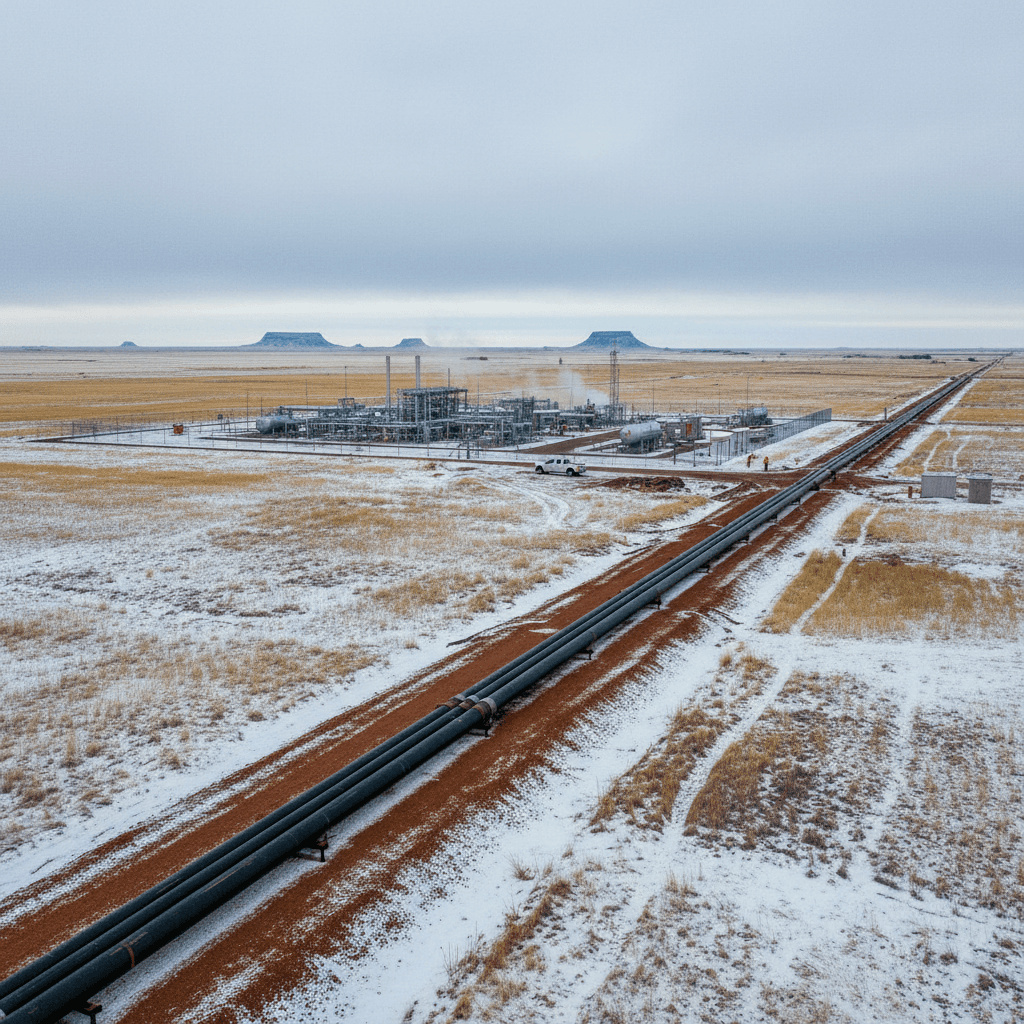
The development represents a significant regulatory challenge that could impact the midstream sector in oil-producing regions. FERC's blanket certificate authority allows pre-approved companies to construct, operate, and acquire certain small-scale pipeline facilities without a case-specific review. Expanding this authority is typically sought by industry to accelerate infrastructure development.

For Bakken operators, efficient pipeline takeaway capacity is critical for moving natural gas, a key byproduct of oil drilling in the formation. Regulatory hurdles or delays in permitting for gathering lines and other small-scale projects can directly affect development timelines and operational costs. An expanded exemption could, in theory, streamline the build-out of supporting gas infrastructure.

However, the strong opposition from multiple states signals potential legal and administrative roadblocks ahead. State agencies often weigh in on environmental and land-use concerns associated with pipeline routing and construction. A coordinated challenge could slow the implementation of any new rule, creating uncertainty for midstream companies planning projects in North Dakota and across the Williston Basin.

The outcome of this dispute will be closely watched by Bakken stakeholders. While the industry generally favors regulatory streamlining, the state opposition highlights the ongoing tension between federal permitting goals and state-level oversight. The final rule, if enacted amid this pushback, could reshape the permitting process for future gas pipeline expansions in the region.

Source

According to Rigzone
fercpipelineregulationnatural gasinfrastructurepermittingmidstream

Share this article

Related Articles

Standing Rock Pipeline Protests Mark 10-Year Anniversary, Recalling 2016 Flashpoint - Bakken Wire
Pipeline & Infrastructure

Standing Rock Pipeline Protests Mark 10-Year Anniversary, Recalling 2016 Flashpoint

The protests over the Dakota Access Pipeline (DAPL) reached a critical flashpoint in early September 2016, an event marking its 10-year anniversary this week, according to a report from the North Dakota Monitor. The $3.7 billion crude oil pipeline project ignited a months-long conflict after the U.S. Army Corps of Engineers approved its route half a mile outside the Standing Rock Sioux Reservation. The decision framed a national debate pitting American energy infrastructure against tribal sovereignty and environmental concerns. While developers and state officials argued modern steel pipelines were safer for fossil-fuel transit than railroads or trucks, the Standing Rock Sioux Tribe and a growing movement of allies contended the project threatened water sources, sacred sites, and the environment. What began as a smaller protest swelled into a major encampment south of Bismarck, drawing thousands of Indigenous people and activists from around the world. High-profile supporters, including actors Shailene Woodley...

🔆Midday Wire·Sep 6
Pipeline & Infrastructure

Decade Since DAPL Protests Began, Standing Rock Flashpoint Remembered

This week marks ten years since protests over the Dakota Access Pipeline (DAPL) intensified into a major conflict at the Standing Rock Sioux Reservation in North Dakota. According to a report from the Williston Herald, the world's attention turned to the state in early September 2016 after the U.S. Army Corps of Engineers approved plans for the $3.7 billion crude oil pipeline half a mile outside the reservation. The decision sparked a months-long standoff that pitted American energy development against tribal sovereignty. A grassroots movement of Indigenous protesters and allies from around the world argued the project threatened water supplies, sacred tribal sites, and the environment. Developers and state officials, meanwhile, maintained that modern steel pipelines offered safer fossil-fuel transit than railroads or trucks. Thousands of people, including Native Americans and climate activists, flocked to the plains south of Bismarck. Their numbers grew to the point of threatening to overwhelm...

☀️Morning Wire·Sep 6
Pipeline & Infrastructure

Standing Rock Pipeline Protests Reached Critical Flashpoint 10 Years Ago

The protest movement against the Dakota Access Pipeline (DAPL) reached a major flashpoint in early September 2016, drawing thousands to the Standing Rock Sioux Reservation and igniting a national debate over energy and tribal rights. According to a report from the North Dakota Monitor via Bing News, the conflict intensified after the U.S. Army Corps of Engineers approved plans for the $3.7 billion crude oil pipeline to run half a mile outside the reservation. The project created a stark confrontation between American energy infrastructure and tribal sovereignty. Pipeline developers and state officials argued that modern steel pipelines offered safer fossil-fuel transit than railroads or trucks. Meanwhile, the Standing Rock Sioux Tribe, led by then-Chairman Dave Archambault II, and allies contended the pipeline threatened water sources, sacred sites, and the environment. What began as a smaller protest swelled into a major encampment on the plains south of Bismarck. Thousands of Indigenous...

🌅Afternoon Wire·Sep 5