WTI Crude--
Brent Crude--
Natural Gas--
ND Rig Count--
WTI Crude--
Brent Crude--
Natural Gas--
ND Rig Count--
Global Markets

Supertanker Rush to Hormuz Worsens Global Shipping Crunch

Increased demand for Middle East shipments tightens vessel availability, potentially raising costs for Bakken crude exports.

Bakken Wire Staff·🌅Afternoon Wire·

A rush of supertankers to the Middle East is worsening a global shipping crunch, according to a report from Rigzone. The publication reported on October 8 that vessels are racing to the region to capitalize on soaring fees for carrying oil through the critical Strait of Hormuz.

The development highlights ongoing geopolitical and logistical pressures in global oil markets. The Strait of Hormuz is a vital chokepoint for seaborne crude exports from major producers like Saudi Arabia, Iraq, and the United Arab Emirates. Increased shipping activity and higher freight rates there can ripple through the worldwide tanker market.

For Bakken operators in North Dakota, a tighter global tanker market can translate into higher costs for exporting crude. While most Bakken crude is transported domestically via pipeline and rail, a significant portion reaches international waterborne markets, primarily from the Gulf Coast. When vessel availability decreases and spot charter rates rise globally, the cost to move crude from the U.S. Gulf to international buyers increases.

This can marginally compress the price differential between Bakken crude at the wellhead and international benchmarks like Brent. A smaller differential makes Bakken crude less competitive in overseas markets, potentially incentivizing more domestic consumption or storage. The trend underscores the Bakken's connection to global maritime logistics, where disruptions in key channels like the Hormuz Strait can indirectly impact the economics of North Dakota's oil.

The Rigzone report did not specify the cause of the soaring fees in the Strait of Hormuz. However, such spikes are often linked to regional tensions, increased export volumes, or localized vessel congestion. For Bakken producers, monitoring these freight costs is a key part of managing the final delivered price of their oil to refiners worldwide.

Source

Rigzone

shippingexportsglobal marketslogisticsstrait of hormuz

Share this article

Related Articles

The Afternoon Take - Energy Market Briefing
Global Markets

Energy Market Briefing

Bakken Wire Afternoon Briefing Thursday, October 8, 2026 1. Headlines Oil prices surged today, with WTI settling at $91.14, up $2.86 (3.24%), and Brent at $103.83, up $3.63 (3.62%), according to price data. Multiple sources are attributing the gains to escalating geopolitical tensions and hurricane-related supply disruptions. Rigzone reports crude posted its biggest gain in a month amid Middle East tensions and hurricane-related production cuts. OilPrice.com details that Hurricane Isaias has forced the shut-in of 1.28 million barrels per day of U.S. Gulf oil production, a sharp increase from earlier this week. The market is also reacting to contradictory signals from the Iran conflict. OilPrice.com reports that President Trump stated on Truth Social that "we will not be attacking Iran at any time prior to the Midterm Elections," which one source claimed caused oil to drop intraday. However, other reports from the same source note that oil jumped roughly $4...

🌅Afternoon Wire·Oct 8
The Midday Take - Energy Market Briefing
Global Markets

Energy Market Briefing

DAILY ENERGY BRIEFING Thursday, October 8, Бакен 1. Headlines Crude oil prices are surging sharply midday. WTI is trading at $92.66, up $4.38 or 4.96%, while Brent is at $105.65, up $5.45 or 5.44%. According to Rigzone, the primary driver for this rebound is a significant escalation of attacks on tankers in the Strait of Hormuz by Iran. Natural gas prices are slightly lower at $3.13. The U.S. Energy Information Administration (EIA) has substantially raised its price outlook, increasing its 2026 Brent forecast by over $5 per barrel and its 2027 forecast by $10, as reported by Rigzone. In other news, Indian refiners are significantly reducing purchases of Russian crude for November delivery, with four-week average shipments plunging to 310,000 barrels per day—the lowest level since March 2022—according to data from Bloomberg cited by both OilPrice.com and Rigzone. The reason cited is economic: Russian Urals crude is no longer cheap,...

🔆Midday Wire·Oct 8
Indian Refiners Cut Russian Crude Imports as Urals Prices Rise - Bakken Wire
Global Markets

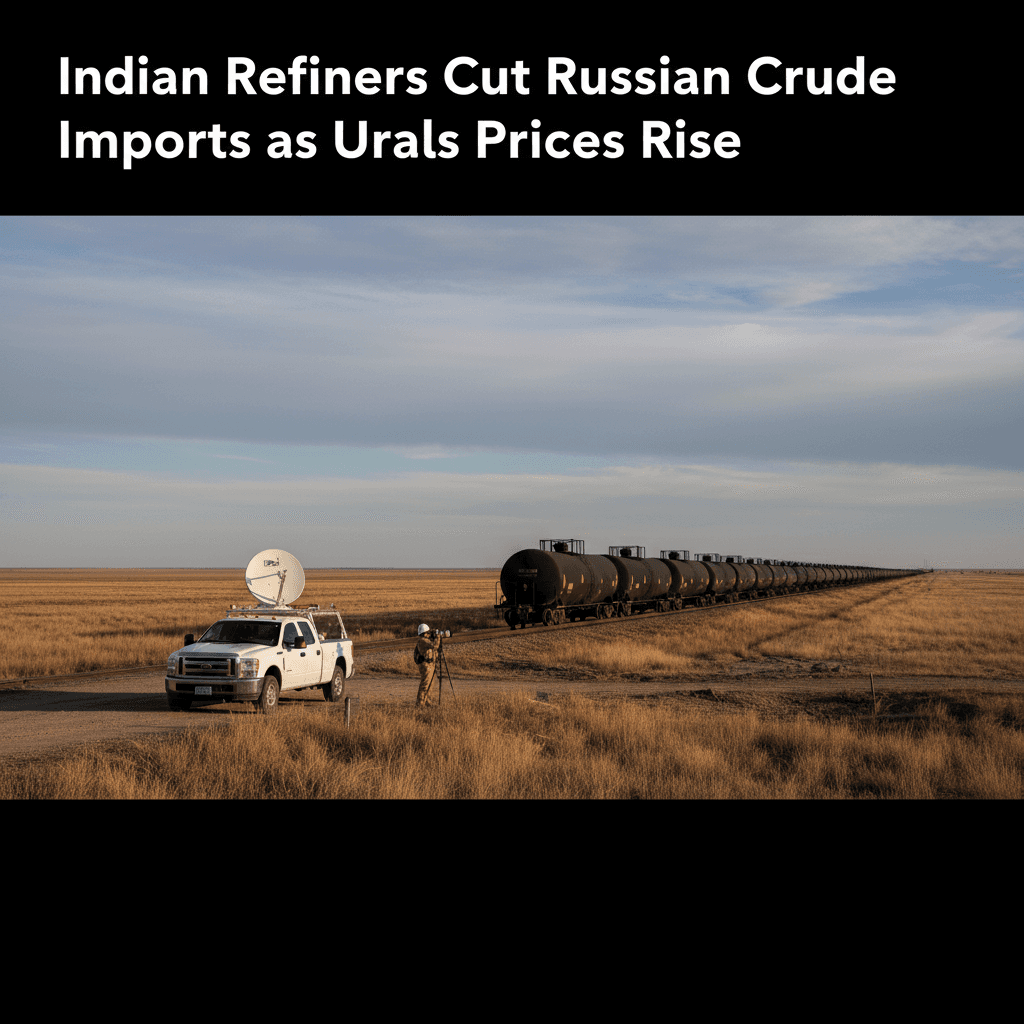
Indian Refiners Cut Russian Crude Imports as Urals Prices Rise

India has sharply reduced its crude oil imports from Russia, with flows plunging to their lowest level since March 2022, according to tanker-tracking data compiled by Bloomberg and reported by OilPrice.com. In the four weeks to October 4, shipments from Russia to India averaged just 310,000 barrels per day. The primary driver is economics, not political pressure from U.S. tariff threats, sources told Bloomberg. The price of Russia’s flagship Urals crude loaded in Baltic ports has jumped and now nearly equals the price of Middle Eastern crudes. Urals is being offered at premiums of more than $10 per barrel over Dated Brent, OilPrice.com reported. Increased availability of Middle Eastern crude, as flows through the Strait of Hormuz have rebounded, has given Indian refiners a cheaper alternative. They have opted for Gulf region supplies for November delivery, according to a summary from Rigzone. This significant shift in global trade flows removes...

🔆Midday Wire·Oct 8