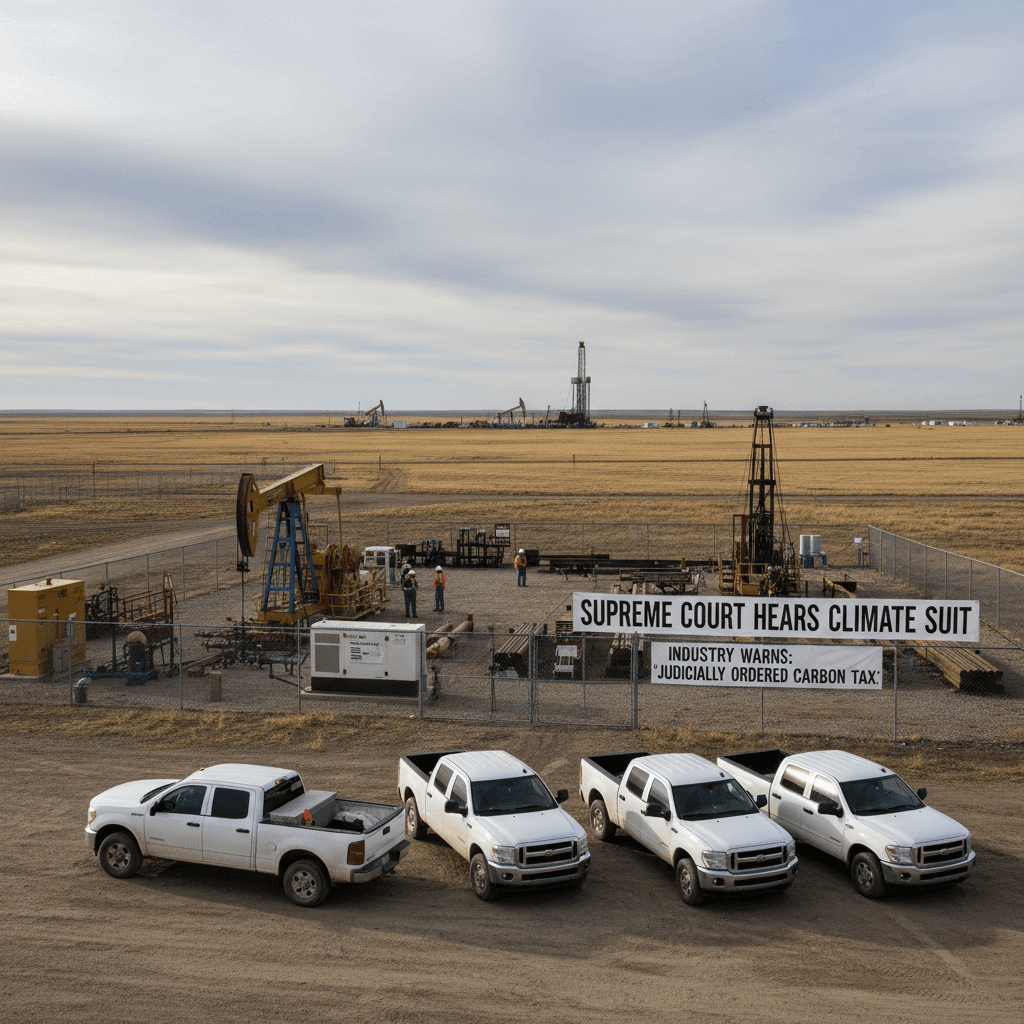
Supreme Court Hears Climate Suit, Industry Warns of 'Judicially Ordered Carbon Tax'
The high court's decision could determine if state-level suits against oil majors proceed, a case watched closely by Bakken operators for its liability implications.
The U.S. Supreme Court heard arguments Monday in a pivotal climate liability case that could open the door to state-level lawsuits against oil and gas companies, a prospect the industry warns could act as a "judicially ordered carbon tax," according to a report from OilPrice.com.
The case involves a lawsuit filed by Boulder County, Colorado, against ExxonMobil and Suncor Energy Inc., seeking damages for local climate-change-related impacts. The Canadian-based Suncor and Texas-based ExxonMobil argue that climate policy and alleged damages are exclusively federal matters, and the state suit should be dismissed. Boulder County contends it is only seeking compensation for local damage from decades of emissions, not aiming to change federal policy, OilPrice.com reported.
For Bakken operators, the case represents a significant liability threat. The industry argues that a victory for Boulder County would allow a flood of similar lawsuits to proceed, potentially targeting producers based on their historical emissions. While the suit currently names only two international majors, the legal theory could extend to other large producers with operations in North Dakota.
The companies have warned that such an outcome could "bankrupt the oil industry," according to the source. However, the OilPrice.com analysis suggests bankruptcy is a complex defense. The report notes that large companies with valuable assets often reorganize under court supervision, continuing to operate while paying debts. In such a scenario, future profits could be directed to successful plaintiffs, potentially wiping out shareholder value and harming bondholders.
The ultimate financial risk, while framed as an existential threat to the industry, might instead lead to a restructuring of ownership. The source suggests that large jury awards "could be satisfied by handing over chunks of ownership of the losing companies to the municipalities, states and others who have sued."
The Supreme Court's decision on whether the state court suit can proceed will set a critical precedent. For North Dakota, a major oil-producing state, the ruling will clarify the legal landscape for its key industry. A decision allowing state suits could expose operators to litigation from municipalities or the state itself for costs associated with climate impacts, reshaping long-term liability calculations for every producer in the Williston Basin.
Source
OilPrice.com reported