WTI Crude--
Brent Crude--
Natural Gas--
ND Rig Count--
WTI Crude--
Brent Crude--
Natural Gas--
ND Rig Count--
Texas Employment Up; CCS Project Scales; Oil Market Faces Crosscurrents - Bakken Wire
Pipeline & Infrastructure

Texas Employment Up; CCS Project Scales; Oil Market Faces Crosscurrents

A roundup of industry developments as Bakken operators navigate a complex market and regulatory landscape.

Bakken Wire Staff·🌅Afternoon Wire·

Texas upstream employment increased in April, according to the Texas Independent Producers and Royalty Owners Association (TIPRO). The report, published by Rigzone, signals continued labor demand in a key U.S. oil-producing state. For Bakken operators, this underscores a broader national industry trend of steady operational activity, even as North Dakota's own employment figures remain influenced by local rig counts and production levels.

Separately, the Moomba Carbon Capture and Storage project onshore South Australia has permanently sequestered 2 million metric tons of carbon dioxide equivalent in over 18 months, Rigzone reported, citing operator Santos. The project's scale, equated to taking 826,000 cars off the road, highlights the advancing global deployment of CCS technology. For the Bakken, where emissions reduction and potential CCS applications are a growing focus for operators and regulators, the Moomba project demonstrates the tangible volume reductions achievable at commercial scale.

Market analysts see oil prices being pulled in two directions, Rigzone noted, summarizing commentary from Naeem Aslam, CIO at Zaye Capital Markets (ZCM). This analysis points to conflicting macroeconomic and geopolitical forces influencing crude prices. For Bakken producers, such crosscurrents underscore the continued volatility in the market that directly impacts drilling budgets, hedging strategies, and cash flows in North Dakota.

These disparate developments—steady regional employment, scaling emissions technology, and conflicting price pressures—collectively frame the operating environment for Bakken shale companies. They must manage costs and labor while considering long-term investments in emission reduction technologies, all within a market facing uncertain directional pulls.

Source

Rigzone (TIPRO Says Texas Upstream Employment Rose in April; Santos Says Moomba CCS Delivering Emissions Reduction at Scale; Analysts See Oil Being Pulled in 2 Directions)
employmentcarbon captureoil marketbakkentexas

Share this article

Related Articles

Pipeline & Infrastructure

Canada Moves to Fast-Track Oil Pipeline for Asian Markets

Canadian Prime Minister Mark Carney is invoking new powers to fast-track regulatory approval for a major new oil pipeline, according to a report from Rigzone. The move aims to expand Canada's access to Asian crude markets. While the specific pipeline project was not named in the report, the push for increased export capacity from Canada represents a significant shift in North American energy infrastructure policy. For Bakken operators, the development carries both competitive and logistical considerations. Increased pipeline capacity from Western Canada could influence crude pricing benchmarks across the continent, including the Bakken's own local price at Clearbrook, Minnesota. Greater volumes of Canadian crude reaching global markets can affect the supply-demand balance for similar light sweet crudes produced in the Williston Basin. Historically, pipeline constraints have limited Canadian crude to primarily U.S. Midwest markets, keeping a lid on prices. A new high-capacity outlet to Asia could alter that dynamic, potentially...

☀️Morning Wire·Oct 4
Canadian Prime Minister Fast-Tracks New Oil Pipeline for Asian Markets - Bakken Wire
Pipeline & Infrastructure

Canadian Prime Minister Fast-Tracks New Oil Pipeline for Asian Markets

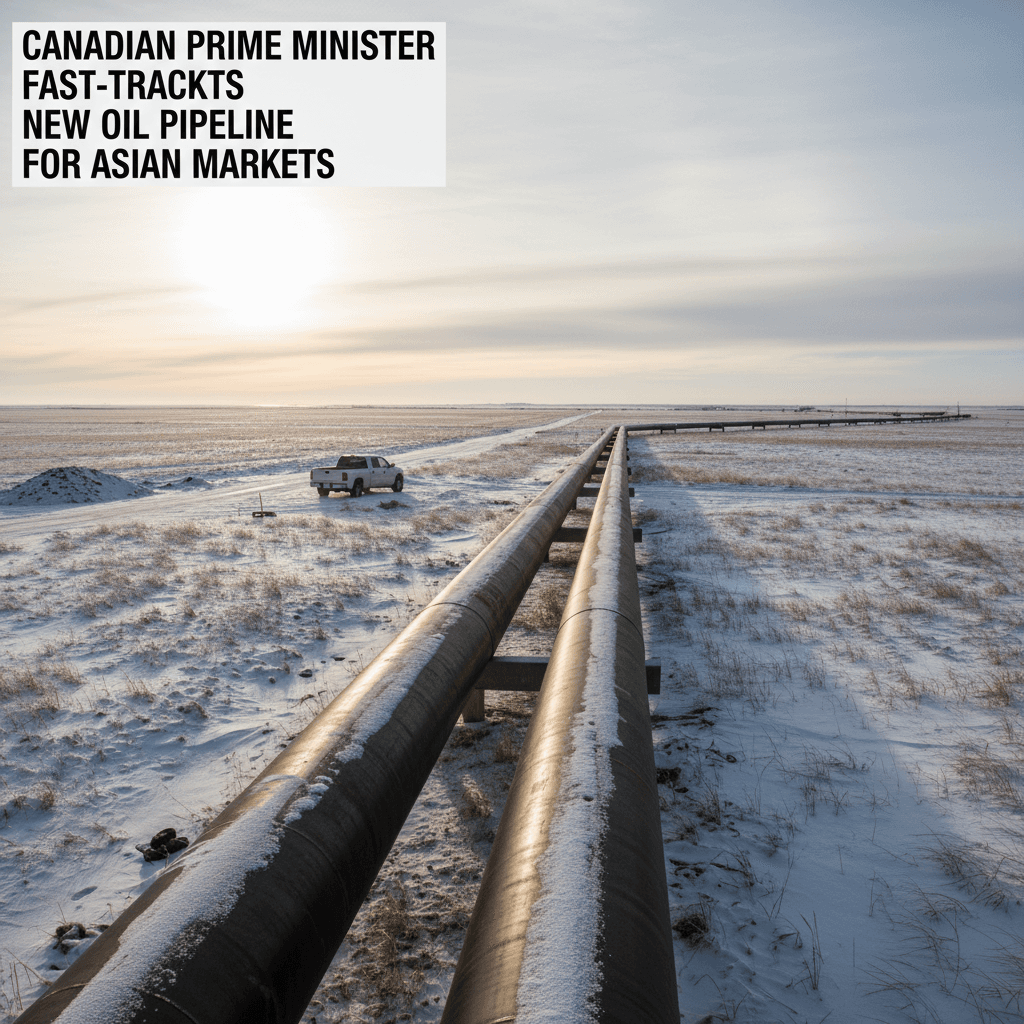
Prime Minister Mark Carney has invoked new powers to expedite regulatory approval for a new, high-capacity oil pipeline, according to a report from Rigzone. The move aims to expand Canada's access to Asian markets. The development, reported on October 2, signals a renewed push by Canada to move its crude oil to West Coast export terminals. For Bakken operators in North Dakota, new Canadian pipeline capacity can influence regional market dynamics. Increased pipeline takeaway capacity from Western Canada can affect the flow of competing crudes, including Bakken barrels, through existing midcontinent pipeline systems. Changes in these flows can impact local basis differentials—the difference between the price of Bakken crude at the wellhead and the U.S. benchmark price. While the Rigzone report did not specify a pipeline route or capacity, any major new Canadian export conduit could alter crude oil logistics in North America. Bakken crude often moves to market via...

🔆Midday Wire·Oct 3
Pipeline & Infrastructure

Canada Moves to Fast-Track Oil Pipeline for Asian Market Access

Canadian Prime Minister Mark Carney is expediting regulatory approval for a new, high-capacity oil pipeline intended to expand Canada's access to Asian markets, according to a report from Rigzone. The report, published October 2, stated Carney has invoked new powers to fast-track the project. The development highlights ongoing efforts by North American producers to reach lucrative overseas markets beyond domestic and traditional refining hubs. Increased Canadian export capacity to Asia could influence global crude pricing benchmarks and shipping routes. For operators in North Dakota's Bakken formation, new Canadian pipeline capacity represents a shifting competitive landscape. Bakken crude, which primarily moves to market via pipelines, rail, and truck, often competes with Canadian heavy and light crude grades in the U.S. Midwest and Gulf Coast refining markets. Enhanced Canadian access to Asian buyers could, over time, alter flow patterns and competition for pipeline space within the continent. However, the specific impact on...

🌅Afternoon Wire·Oct 2