WTI Crude--
Brent Crude--
Natural Gas--
ND Rig Count--
WTI Crude--
Brent Crude--
Natural Gas--
ND Rig Count--
Trump Approves Enbridge Pipeline Permit for North Dakota Border Crossing - Bakken Wire
Pipeline & Infrastructure

Trump Approves Enbridge Pipeline Permit for North Dakota Border Crossing

Presidential permit for Bakken Pipeline Company LP facilitates new cross-border infrastructure in Burke County, bolstering capacity for Bakken and Canadian crude.

Bakken Wire Staff·🔆Midday Wire·

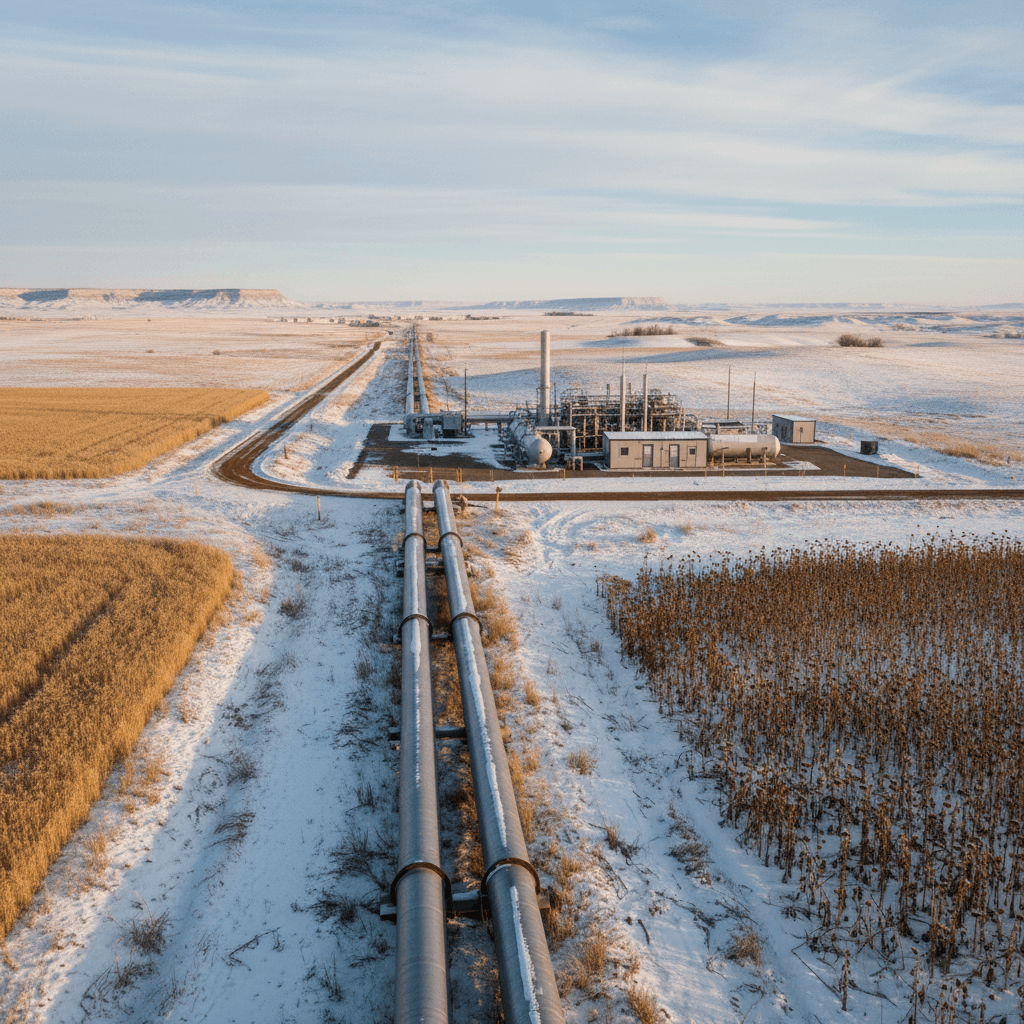
U.S. President Donald Trump has approved a key presidential permit for a new pipeline project at the North Dakota-Canada border, a move set to enhance crude oil transportation capacity for the region. The permit, issued to Bakken Pipeline Company LP, authorizes the construction, connection, operation, and maintenance of pipeline facilities in Burke County, North Dakota, according to Bing News reports from April 15, 2026.

Bakken Pipeline Company is a limited partnership and subsidiary of Enbridge Inc., a major North American pipeline operator. The approval provides a concrete step to boost the flow of crude oil and petroleum products between the United States and Canada, directly impacting a key Bakken border region.

The permit is part of a broader series of approvals for Enbridge's cross-border network. The company also received permits for the operation and maintenance of existing pipelines in Pembina County, North Dakota, and St. Clair County, Michigan, fortifying its infrastructure footprint, according to the sources.

This development aligns with Enbridge's ongoing multi-billion dollar expansion strategy. Last year, the company committed US$1.4 billion to its Mainline Optimization project, which targets an additional 150,000 barrels per day of capacity on its cross-Canada system that feeds into the U.S. Midwest. Another 100,000 barrels per day is slated to flow through the Flanagan South system to the U.S. Gulf Coast.

Looking ahead, Enbridge has outlined a potential second phase for the Mainline Optimization. That phase could add another 250,000 barrels per day by 2028 by utilizing the existing Dakota Access Pipeline (DAPL) corridor from North Dakota to southern Illinois. This phased approach focuses on expanding current capacity over building entirely new pipelines.

The strategic importance of these projects is underscored by collaboration with regional governments. In January 2026, the Alberta government formed a working group with Enbridge to explore further pipeline capacity increases to the U.S. market, signaling a mutual interest in bolstering energy trade.

Enbridge's network is a critical artery for moving crude, with Gulf Coast refineries as a key destination. The approved permits and planned expansions position the company to move an additional 500,000 barrels per day over the next few years, a capacity increase that could reshape North American supply dynamics by the end of the decade, according to the source reports.

For North Dakota and Bakken operators, the new border crossing permit in Burke County and the potential use of the DAPL corridor represent significant incremental takeaway capacity. This infrastructure supports the long-term market access for Bakken crude alongside Canadian volumes, enhancing the region's role in continental energy trade.

Source

Bing News (The Deep Dive, Devdiscourse), April 15, 2026
pipelineenbridgebakken pipeline companyinfrastructurepermittingcross-bordertakeaway capacityburke county

Share this article

Related Articles

Pipeline & Infrastructure

Pipeline Outage Forces Bakken Producers to Rely on Trucking

North Dakota oil producers are moving crude by truck as a prolonged outage of an Enbridge Inc. pipeline in the state forces them to seek alternatives to avoid shutting in production, according to a Seeking Alpha report. The disruption is creating logistical challenges and increased costs for Bakken operators who typically rely on pipeline networks for efficient transportation to market. While the specific Enbridge line affected was not named in the report, such outages directly impact the takeaway capacity critical to the region's oil fields. "Some producers and marketers are trucking out production to delivery points," the report stated, highlighting the immediate industry response to maintain crude flow. Trucking is a more expensive and less efficient transport method compared to pipelines, squeezing operator margins. The continued outage underscores the vulnerability of regional production to infrastructure disruptions. For Bakken operators, the inability to access a major pipeline necessitates rapid adjustments in...

☀️Morning Wire·Nov 22
Bakken Producers Turn to Trucks Amid Enbridge Pipeline Outage - Bakken Wire
Pipeline & Infrastructure

Bakken Producers Turn to Trucks Amid Enbridge Pipeline Outage

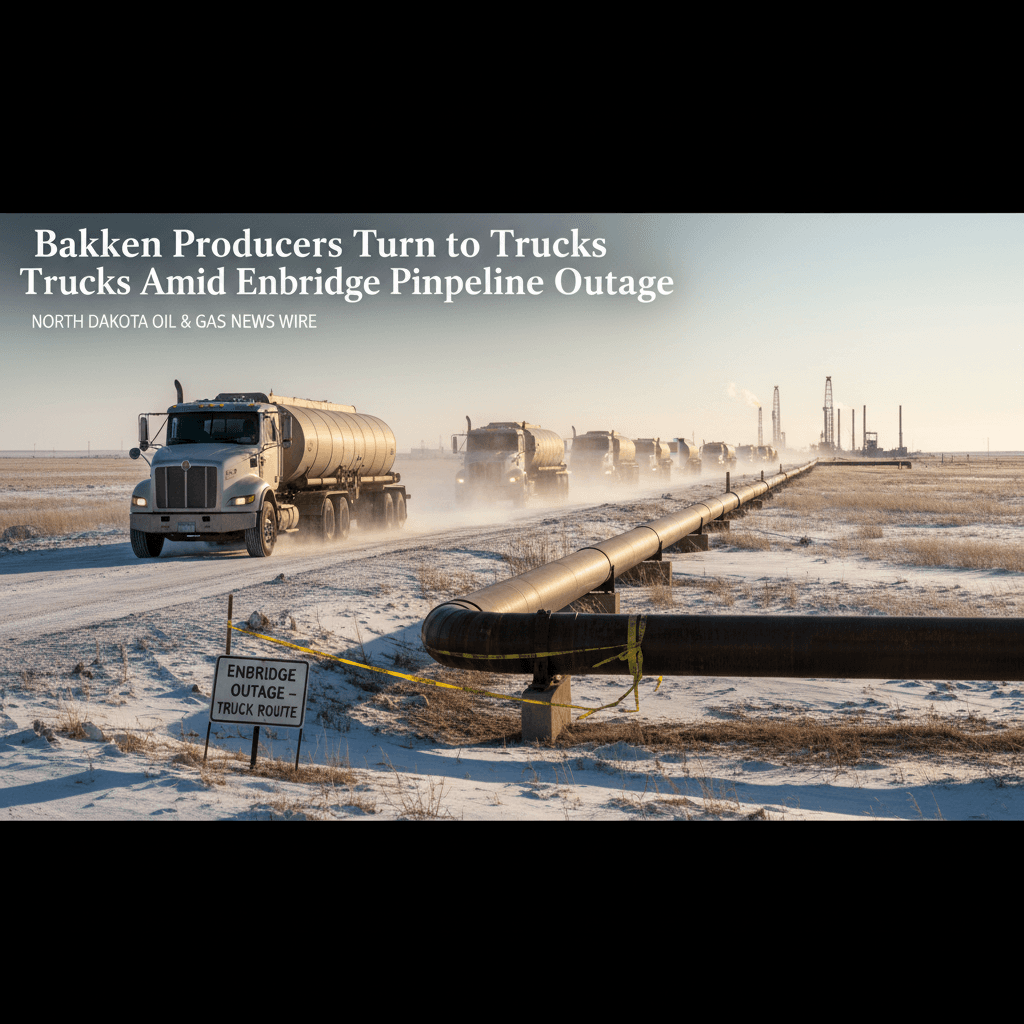
North Dakota oil producers are moving crude by truck as a prolonged outage of Enbridge Inc.'s pipeline in the state continues, according to a Seeking Alpha report. The disruption is forcing operators to seek alternative transportation to avoid shutting in production. "Some producers and marketers are trucking out production to delivery points," the report stated. This shift to trucking represents a significant logistical and economic change for Bakken operators, who typically rely on pipelines for cost-effective transport. The increased reliance on trucking comes with higher costs and logistical challenges compared to pipeline shipments. For Bakken operators and royalty owners, these added expenses can compress margins and complicate daily operations. The ongoing outage highlights the critical nature of pipeline infrastructure for the Williston Basin's oil economy. Pipeline capacity is essential for maintaining steady, economical crude transportation from the wellhead to market. While the specific cause and expected duration of the Enbridge...

🔆Midday Wire·Nov 21
Pipeline & Infrastructure

Enbridge Pipeline Outage Forces Bakken Producers to Truck Crude

North Dakota oil producers are turning to trucks to move crude to market as a continued outage on a key Enbridge pipeline system restricts flows, according to a Bloomberg report cited by Seeking Alpha. The disruption is forcing operators to find alternative transport methods to avoid shutting in production. The shift to trucking represents a significant operational and economic challenge for Bakken producers. Pipeline transport is typically the most cost-effective and efficient method for moving large volumes of crude from the wellhead to refineries and hubs. Relying on trucks increases transportation costs per barrel and introduces logistical complexities. For operators in the Bakken formation, North Dakota's primary oil-producing region, prolonged pipeline constraints can directly impact cash flow and drilling plans. While trucking provides a necessary outlet to keep wells online, sustained use at scale can erode profit margins, especially if the outage continues indefinitely. The specific Enbridge pipeline involved and...

🌅Afternoon Wire·Nov 20