WTI Crude--
Brent Crude--
Natural Gas--
ND Rig Count--
WTI Crude--
Brent Crude--
Natural Gas--
ND Rig Count--
WTI Falls 3.9% as Oil Prices Retreat; Bakken Differential at $-3.42 - Bakken Wire
Oil Prices

WTI Falls 3.9% as Oil Prices Retreat; Bakken Differential at $-3.42

Crude prices declined while natural gas edged higher, leaving Bakken operators focused on wellhead spreads and global gas balances.

Bakken Wire Staff·☀️Morning Wire·

North Dakota crude producers opened the week with lower oil prices and a slightly higher natural gas benchmark. WTI Crude traded at $87.32, down $3.51 or 3.86%, while Brent Crude fell $4.41, or 4.49%, to $93.91. Natural Gas rose $0.07 to $3.07. The Bakken differential stood at $-3.42 versus WTI.

The decline in crude came amid an OilPrice.com headline that said oil prices fell after Trump signaled no new attacks on Iran. The same OilPrice.com coverage also pointed to easing European energy prices, with European natural gas futures dropping from over €100 per MWh to €86.80, likely reflecting renewed optimism about the Middle East after Democrats won control of both houses in the United States.

For Bakken operators, the immediate impact is straightforward: lower benchmark crude prices reduce revenue per barrel at the wellhead, while the Bakken differential shows the local price discount against WTI. Royalty owners also watch that spread because it affects the net realized value of North Dakota barrels.

Natural gas markets told a different story. The $0.07 rise in the gas benchmark to $3.07 may provide modest support for producers selling associated gas, but global gas signals remain mixed. OilPrice.com reported China is importing less LNG despite the start of peak demand season because abundant domestic gas supply has lowered prices. China’s national average LNG price stood at $21.97 per million British thermal units, almost $10 below the Japan/Korea Marker benchmark, according to OilPrice.com.

That domestic relief in China comes against a backdrop of tight global LNG pricing. Asian spot LNG prices topped $30 per mmBtu in late October for the first time since December 2022, and the latest close was $31.49 per mmBtu, OilPrice.com reported. The report said continued disruption in Qatar’s LNG exports and a growing imbalance between global demand for the fuel and supply have kept prices elevated, despite soaring U.S. exports.

In Europe, the pressure may continue into winter. OilPrice.com reported Denmark-based trader Mind Energy said low hydropower reservoir levels and soaring natural gas prices are putting upward pressure on Nordic power prices. The firm said southern Norway’s NO2 price area has not had as little water in its reservoirs in 30 years. Gas prices are at their highest since the end of 2022, and lower hydropower potential could make Nordic power prices volatile this winter, according to OilPrice.com.

For Bakken operators, the broader takeaway is that oil prices are moving lower while gas markets remain sensitive to weather, inventory and geopolitical risk. The Bakken differential of $-3.42 versus WTI is a key metric for field-level economics, and the small rise in natural gas to $3.07 offers a partial offset if operators are marketing associated gas. But with crude down sharply and global gas signals mixed, operators and royalty owners will be watching whether oil weakness persists or whether winter demand in Europe and Asia pulls energy prices back up.

Source

Bakken Wire live price data; OilPrice.com
bakkenoil priceswtibrentnatural gasbakken differentiallngeuropenorth dakota

Share this article

Related Articles

Oil Prices Flat in Afternoon Update; Bakken Crude Sits $3.42 Below WTI - Bakken Wire
Oil Prices

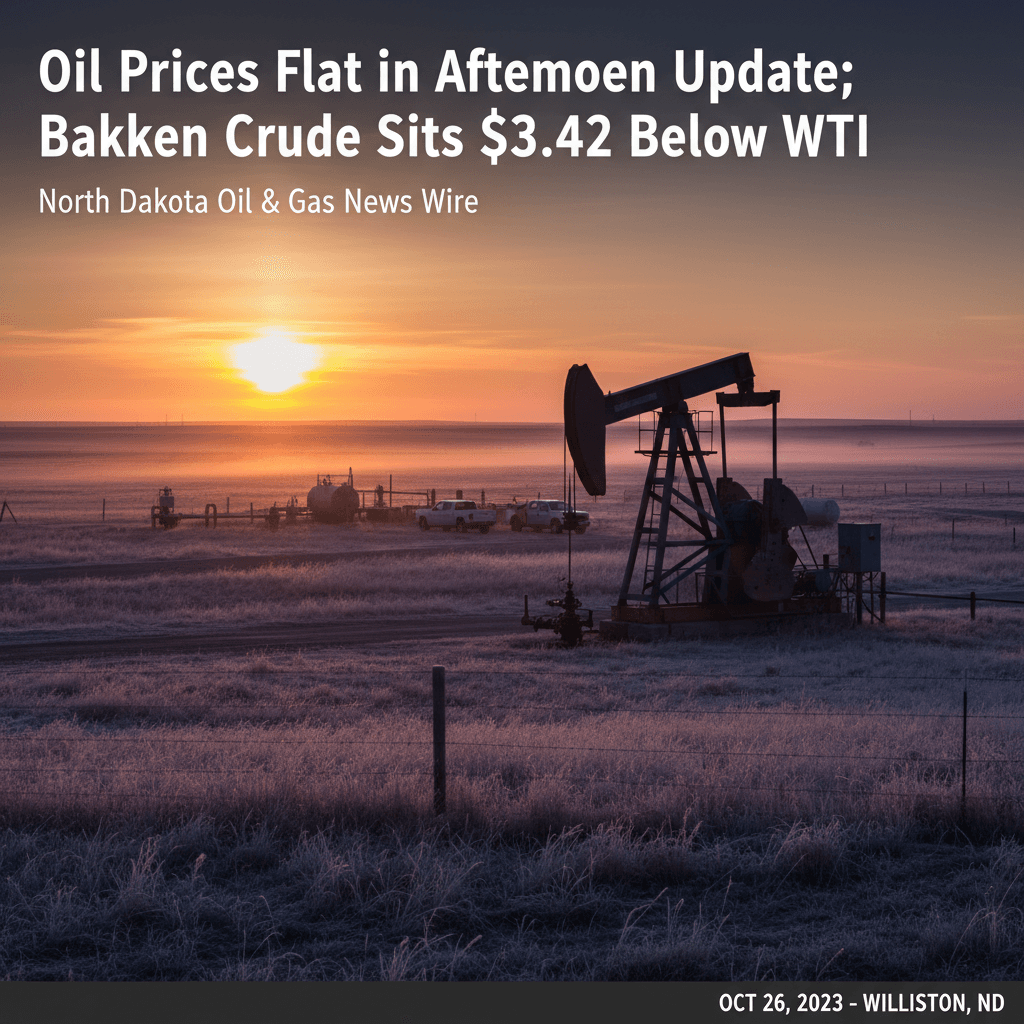
Oil Prices Flat in Afternoon Update; Bakken Crude Sits $3.42 Below WTI

Bakken Wire's afternoon oil and gas price update on Sunday, Nov. 8, 2026, showed crude benchmarks holding steady, with WTI crude at $90.83 and Brent crude at $98.32. Both benchmarks were listed with no change, +$0 and 0%, according to the live price data. Natural gas was listed at $3, also unchanged. For North Dakota producers, the more direct revenue marker was the Bakken differential, which the data placed at -$3.42 against WTI. That spread means Bakken crude was priced below the WTI benchmark, implying a Bakken reference level of $87.41 when measured against the WTI price in the update. The differential matters because Bakken operators and royalty owners typically track realized prices relative to WTI, not just the headline benchmark. The flat price action gave no indication of a new move in the oil complex based on the source data. The update did not include additional market-moving details such...

🌅Afternoon Wire·Nov 8
WTI Edges Higher as Bakken Crude Discount Holds at $3.42 - Bakken Wire
Oil Prices

WTI Edges Higher as Bakken Crude Discount Holds at $3.42

Oil prices moved modestly higher in midday market data Sunday, Nov. 8, 2026, according to Bakken Wire's live market data. WTI crude rose $0.31, or 0.34%, to $90.83. Brent crude edged up $0.03, or 0.03%, to $98.32. The two global benchmarks were separated by $7.49, with Brent trading above WTI. Natural gas gained $0.05 to $3.00. The move was smaller than WTI's $0.31 advance, but it added to the day's firmer energy pricing. For Bakken producers, the most important local number was the regional differential. Bakken crude was quoted at -$3.42 versus WTI, implying a regional benchmark price of $87.41. The discount means Bakken operators and royalty owners are not receiving the full WTI price, a difference that directly affects netbacks, leasehold economics and royalty calculations. The Bakken differential is a basis measure rather than a company statement or production report. In general oil markets, regional discounts can reflect transportation...

🔆Midday Wire·Nov 8
Oil Prices Hold Steady Near Key Levels, Bakken Differential Widens - Bakken Wire
Oil Prices

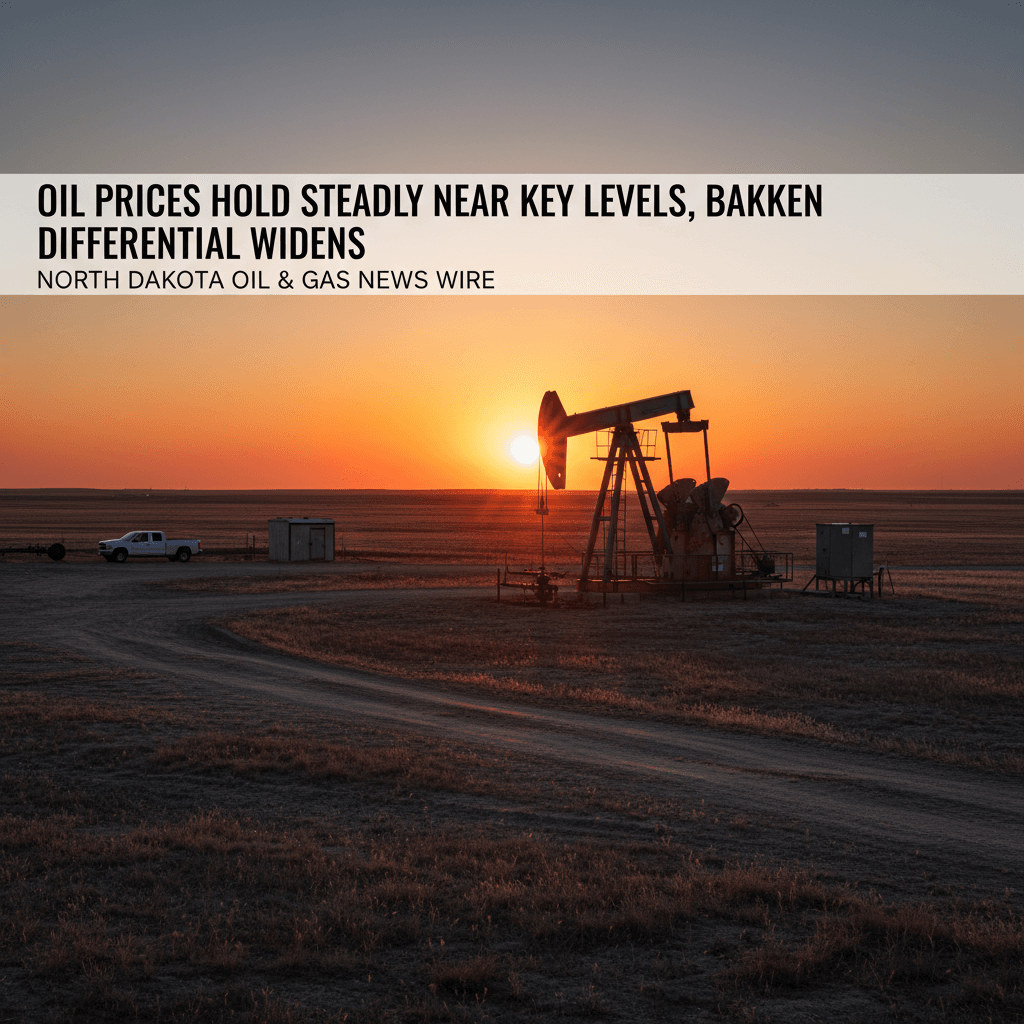
Oil Prices Hold Steady Near Key Levels, Bakken Differential Widens

Front-month WTI crude oil futures traded at $90.83 per barrel in early market action Sunday, November 8, posting a modest gain of $0.31 or 0.34%. The global benchmark, Brent crude, was nearly flat at $98.32, up just three cents, according to live price data. The Bakken crude differential, a critical metric for North Dakota producers, was quoted at a discount of $3.42 per barrel versus WTI. This represents a wider discount compared to recent averages, directly compressing the wellhead price received by Bakken operators. In contrast, natural gas prices saw significant pressure, trading at $3 per MMBtu, down $0.53. The stability in crude markets follows a period described by analysts as a "remarkable destination." Analysts at J.P. Morgan noted last week that the oil market had arrived at this point, according to a summary from Rigzone. While the source summary did not specify the drivers, the sustained price level near...

☀️Morning Wire·Nov 8