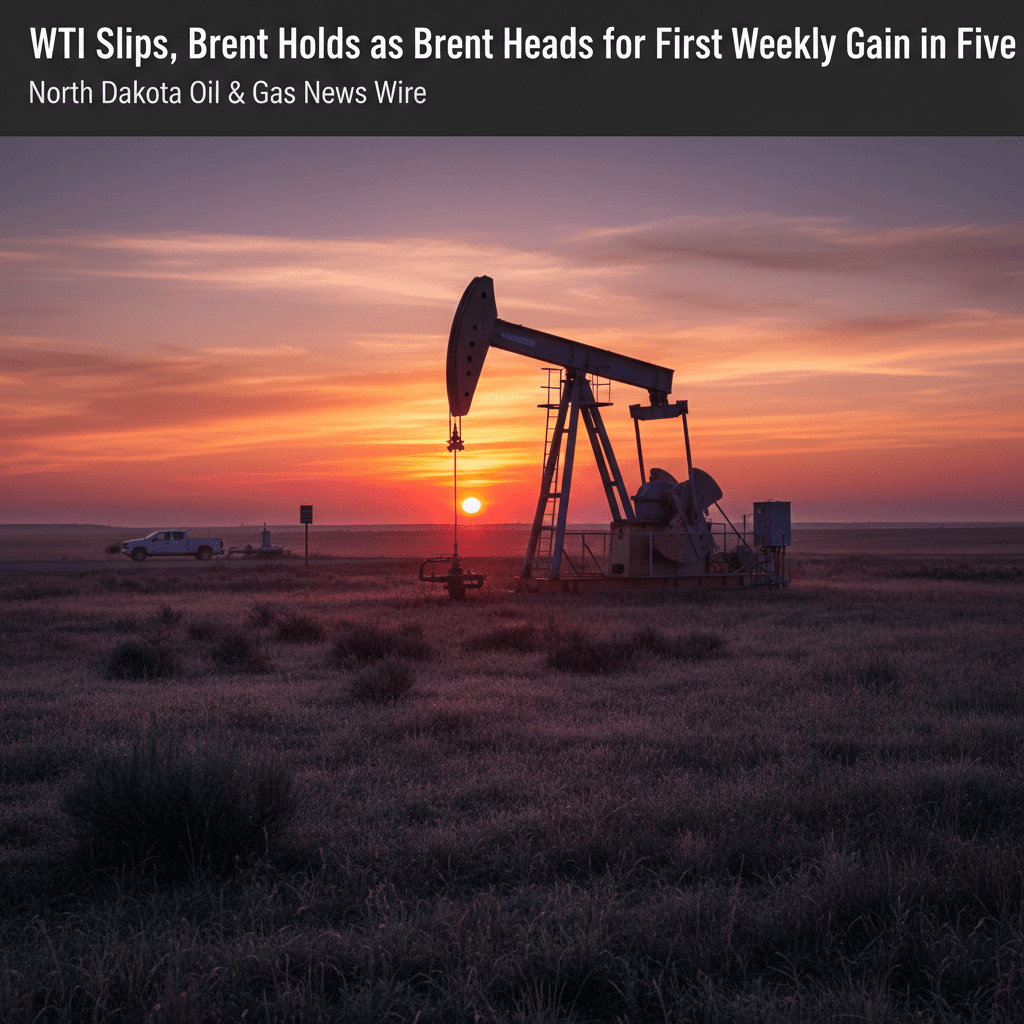
WTI Slips, Brent Holds as Brent Heads for First Weekly Gain in Five
Bakken differential narrows to -$3.42; rising U.S. crude stocks and airline fuel stress provide market context.
Oil prices were mixed in early trading Saturday, with West Texas Intermediate (WTI) crude declining while Brent crude held a slight gain. The international benchmark was poised for its first weekly increase in five weeks, according to Saxo Bank.
As of Saturday, November 28, 2026, WTI Crude was trading at $83.08, down $0.60 (-0.72%) from the previous close. Brent Crude traded at $90.84, a gain of $0.20 (0.22%). The Bakken crude differential to WTI was -$3.42. Natural gas prices saw a sharper drop, trading at $3.49, down $0.17.
The price pressure on WTI comes as U.S. commercial crude inventories rose week-on-week. According to a Rigzone report citing the latest U.S. Energy Information Administration (EIA) data, crude stocks, excluding the Strategic Petroleum Reserve, stood at 418.906 million barrels as of November 20. Rising domestic inventories can weigh on the U.S. benchmark price.
The sustained high price environment, particularly for Brent, continues to strain major consumers. According to a report from OilPrice.com, soaring fuel costs are threatening to push more airlines into bankruptcy. EasyJet CEO Kenton Jarvis warned that airlines without protective fuel hedges are in a "tricker position," stating, "Could there be airline failures? Yeah, it wouldn't surprise me." The report notes that EasyJet's own pre-tax profit fell 89% to £71 million for the year to September 2026, following a more than £100 million increase in fuel costs.
For Bakken operators, the current price structure presents a stable but cautious outlook. A WTI price above $83 provides economic incentive for continued production, while the narrower Bakken differential of -$3.42 improves the netback price received for barrels sold at the wellhead compared to wider discounts seen historically. The strength in Brent prices relative to WTI supports the global demand outlook but highlights ongoing geopolitical and economic crosscurrents affecting the market.
The financial distress reported in the airline industry, a major jet fuel consumer, serves as a reminder of potential demand destruction risks if oil prices remain elevated. However, Brent's movement toward a weekly gain suggests underlying market tightness may be persisting.
Source
Live Price Data, OilPrice.com (November 27, 2026), Rigzone (November 27, 2026)