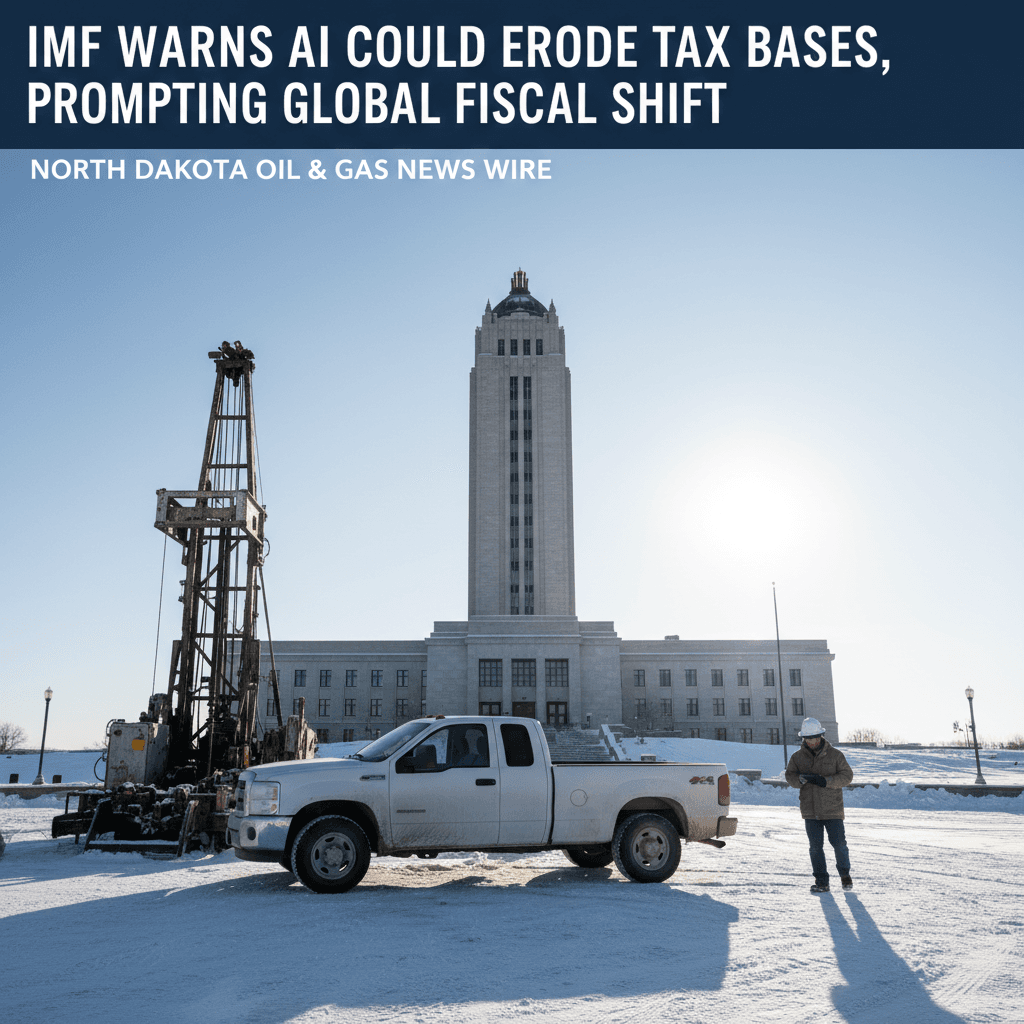
August Production Hits Record High, Boosting State Tax Revenue Forecast
Steady output gains and high war-driven prices push state SIF revenue forecast from under $300M to over $650M.
North Dakota's oil production reached a new all-time high in August, according to data presented in a Department of Mineral Resources media briefing on Tuesday. This production strength, coupled with sustained high prices from the ongoing U.S. war with Iran, is driving state oil tax revenues far above official forecasts.
Richard Suggs, a geology and Underground Injection Control program manager with the DMR, reported that the number of producing wells in the state reached a record 20,177 in August, an increase of 105 from July. Those wells produced more than 36 million barrels of oil, averaging 1.16 million barrels per day (bpd). This output was 5.6% above the state's revenue forecast of 1.1 million bpd for the period, according to the briefing.
The revenue surge is being amplified by market prices significantly exceeding projections. While West Texas Intermediate crude futures traded around $97 per barrel on Tuesday, the North Dakota market price for August was $76.14. That price is 33.6% above the state's revenue forecast price of $57 per barrel.
"Operators appear to be capitalizing on elevated oil prices," Suggs said during the briefing.
The financial impact for the state is substantial. Joe Morrissette, director of the Office of Management and Budget, stated in late September that the state now expects between $650 million and $700 million in new oil tax revenue for the Strategic Investment and Improvements Fund (SIF) for the current biennium. This is more than double the initial forecast of less than $300 million. The Western Dakota Energy Association noted this will boost the state's budget outlook.
Current drilling activity remains steady. According to the DMR's real-time monitoring, 34 rigs represented by 19 operators were active in the state in October.
While the near-term outlook is strong, state officials anticipate a price correction. Morrissette expects oil prices to fall sometime after the war with Iran is resolved, though the timing remains uncertain. The state's long-term forecast models an oil price of around $62 per barrel near the end of the current biennium, which concludes on June 30, 2027.
Source
Department of Mineral Resources media briefing on October 20, 2026, as reported by Bing News.