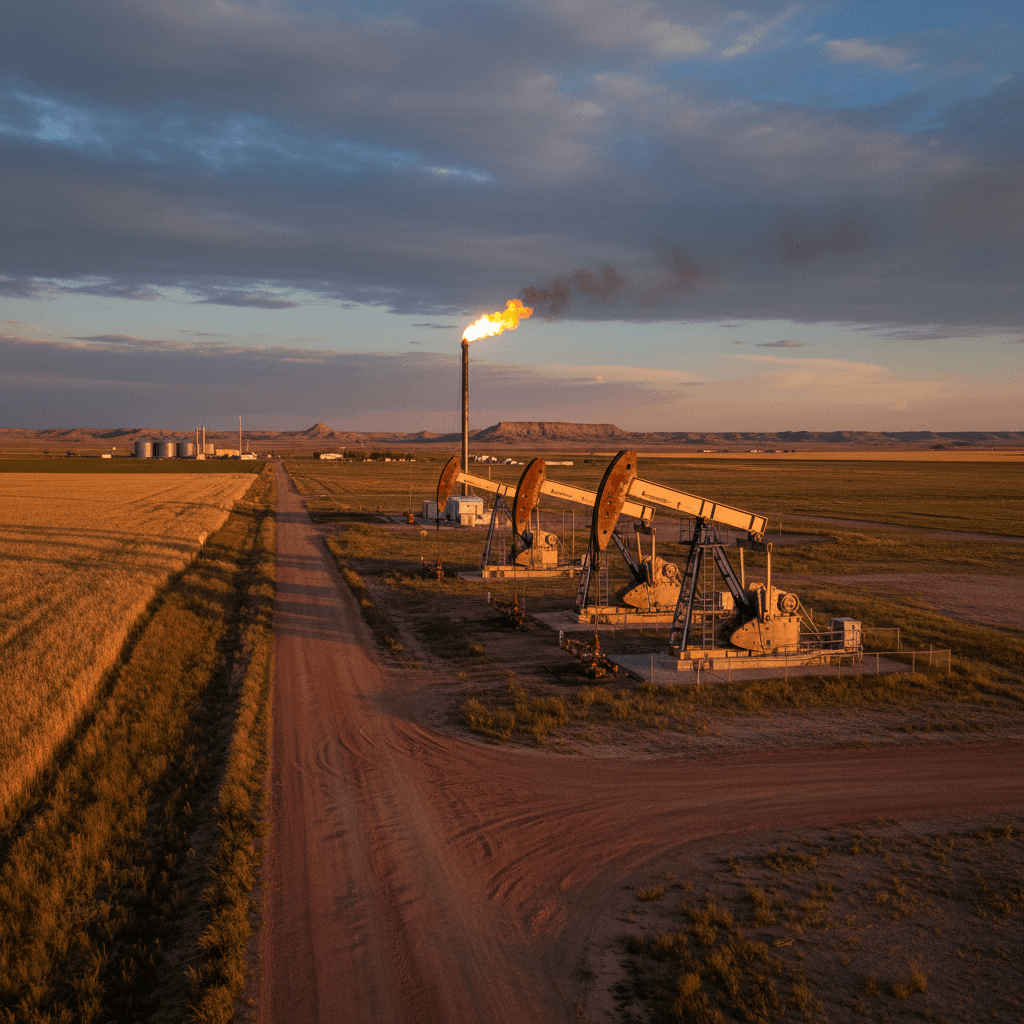
Bakken Activity Holds at 31 Rigs Amid Oil Price Retreat
North Dakota's rig count remains steady as operators navigate a drop in benchmark crude prices, with production trends facing potential headwinds.
North Dakota's active drilling rig count held at 31 on Thursday, a level signaling sustained but measured activity in the Bakken formation. The count comes as benchmark oil prices retreated, with West Texas Intermediate crude trading at $81.20 per barrel, down $2.07 for the day, according to live Bakken Wire data.
The current rig level is a key indicator for future production. Historically, the number of active drilling rigs has a direct, lagged correlation with oil output, as new wells take months to drill, complete, and bring online. A stable rig count suggests operators are maintaining a consistent pace of new well development to offset the steep natural decline rates of existing Bakken wells.
However, the day's price movement introduces a note of caution. Brent crude also fell, trading at $87.00, while the Bakken crude differential—the discount at which local crude trades versus WTI—stood at -$3.42. Lower headline prices, if sustained, can pressure operator cash flows and influence future capital spending decisions on drilling.
The current rig count of 31 reflects a disciplined approach by Bakken operators, who have prioritized financial returns and shareholder returns over aggressive production growth in recent years. Activity levels are sensitive to price signals, and a prolonged period of prices below certain thresholds can lead to a reduction in drilling.
For near-term production, the existing rigs will support output, but significant increases are unlikely without a higher level of investment. North Dakota's oil production has plateaued in recent years, with the rig count acting as a primary governor on growth. The state's output remains heavily dependent on the completion of drilled but uncompleted wells (DUCs) and the efficiency of new wells.
The outlook for Bakken production is therefore closely tied to commodity price stability. Operators require consistent prices to justify deploying more rigs and crews. The simultaneous drop in both WTI and Brent prices observed today, if part of a broader trend, could test the resilience of the current activity pace.
Natural gas prices, often a secondary consideration for Bakken producers focused on oil, were recorded at $2.73 per MMBtu. While not a primary driver, low gas prices can impact the economics of associated gas production.
Source
Live Bakken Wire Data as of Thursday, August 13, 2026.