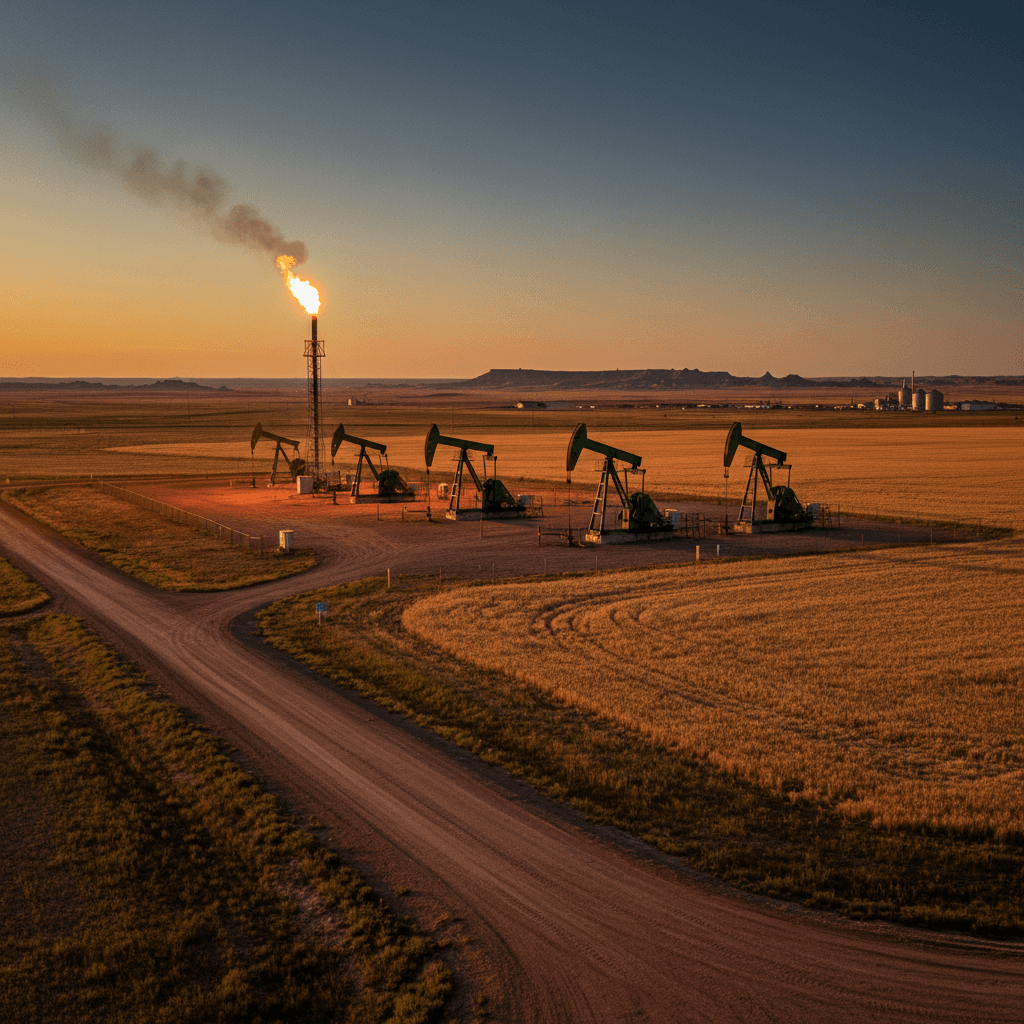
Bakken Drilling Economics Strengthen as WTI Holds Above $96
High oil prices improve returns for new wells, but elevated costs and a low rig count signal continued capital discipline.
The economics for drilling new wells in the Bakken formation have improved significantly with West Texas Intermediate (WTI) crude holding above $96 per barrel. As of Saturday, April 11, WTI was priced at $96.57, according to live Bakken data, providing a strong revenue backdrop for operators.
A typical new Bakken well costs between $7 million and $8 million to drill and complete. Industry analysts often cite an expected ultimate recovery (EUR) of approximately 500,000 to 750,000 barrels of oil equivalent per well in the core areas of the play.
At a WTI price near $96.57, the gross revenue potential from a 600,000-barrel well is substantial. However, operators face significant costs beyond the initial capital expenditure, including lease operating expenses, production taxes, transportation differentials, and royalty payments. The Bakken's discount to WTI, often reflected in the Williston Basin's Bakken crude price, also impacts netbacks.
The current price environment likely pushes internal rates of return (IRR) for new, core Bakken wells into attractive territory, potentially reviving interest in development drilling. The high price helps offset the persistent inflation in service and steel costs that have kept well expenses in the $7-8 million range.
Despite the favorable pricing, operational activity remains muted. The active rig count in North Dakota stands at just 24, according to the latest live data. This low figure suggests that while economics have improved, public operators continue to prioritize shareholder returns through dividends and buybacks over aggressive rig deployment.
The focus for many companies remains on maximizing free cash flow from existing production and completing high-return inventory in the core of the play. The sustained high commodity prices provide a buffer and may support a gradual increase in activity if prices are perceived as stable.
For royalty owners in North Dakota, the current price translates to stronger monthly royalty checks, assuming production holds steady. The state's oil revenue, which funds critical budgets, also benefits directly from the elevated price per barrel.
Source
Live Bakken Data for prices and rig count as of April 11, 2026. Well cost and EUR ranges based on standard industry knowledge for the Bakken formation.