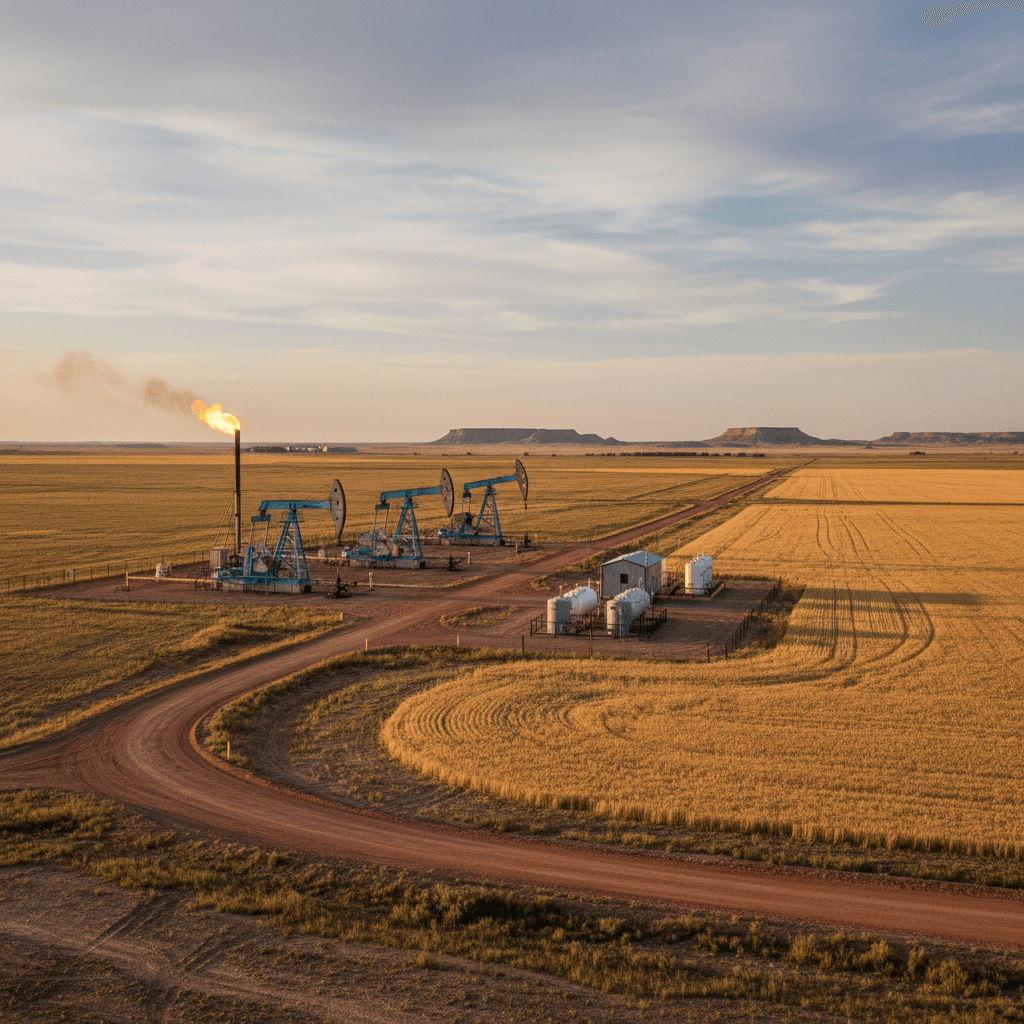
Bakken Drilling Economics Under Pressure as WTI Drops to $89.60
Operators face tighter returns with typical $7-8 million well costs, though strong EURs provide a buffer at current pricing.
The economics of drilling new wells in North Dakota's Bakken formation are facing renewed scrutiny as oil prices retreated in early June trading. On Tuesday, June 9, the U.S. benchmark West Texas Intermediate (WTI) crude price settled at $89.60 per barrel, down $1.70 for the session, according to live market data.
A sustained price above $85 is generally considered the threshold to support new drilling in the play. While current prices remain above that level, the recent dip narrows the margin for operators. The typical cost to drill and complete a modern Bakken well ranges from $7 million to $8 million.
For an economic analysis, the expected ultimate recovery (EUR) of a well is a critical factor. High-performing Bakken wells can have EURs ranging from 500,000 to over 1 million barrels of oil equivalent over their lifespan. At a WTI price of approximately $90, a well with a 750,000-barrel EUR could generate significant gross revenue before accounting for operating expenses, taxes, and royalties.
The active rig count, a key indicator of drilling activity, held at 28. This stable but historically low figure suggests operators are maintaining a disciplined capital approach, likely targeting only their highest-return prospects within the core of the Williston Basin.
The current price environment translates to manageable but not exceptional internal rates of return for new wells. Operators with efficient operations and prime acreage can still achieve attractive returns. However, for marginal locations or companies with higher cost structures, the $89-$90 price range may push some potential projects to the edge of economic viability.
The broader Brent crude benchmark was reported at $92.83, maintaining a healthy global price differential. For Bakken operators, local price realizations are typically a discount to WTI due to transportation costs, making the WTI price a crucial but not absolute determinant of wellhead economics.
The focus for Bakken producers will remain on capital discipline and operational efficiency. With well costs entrenched in the $7-8 million range, sustained WTI prices above $85 are essential to keep the current pace of development activity steady in North Dakota's primary oil-producing region.
Source
Live Bakken Data for June 9, 2026