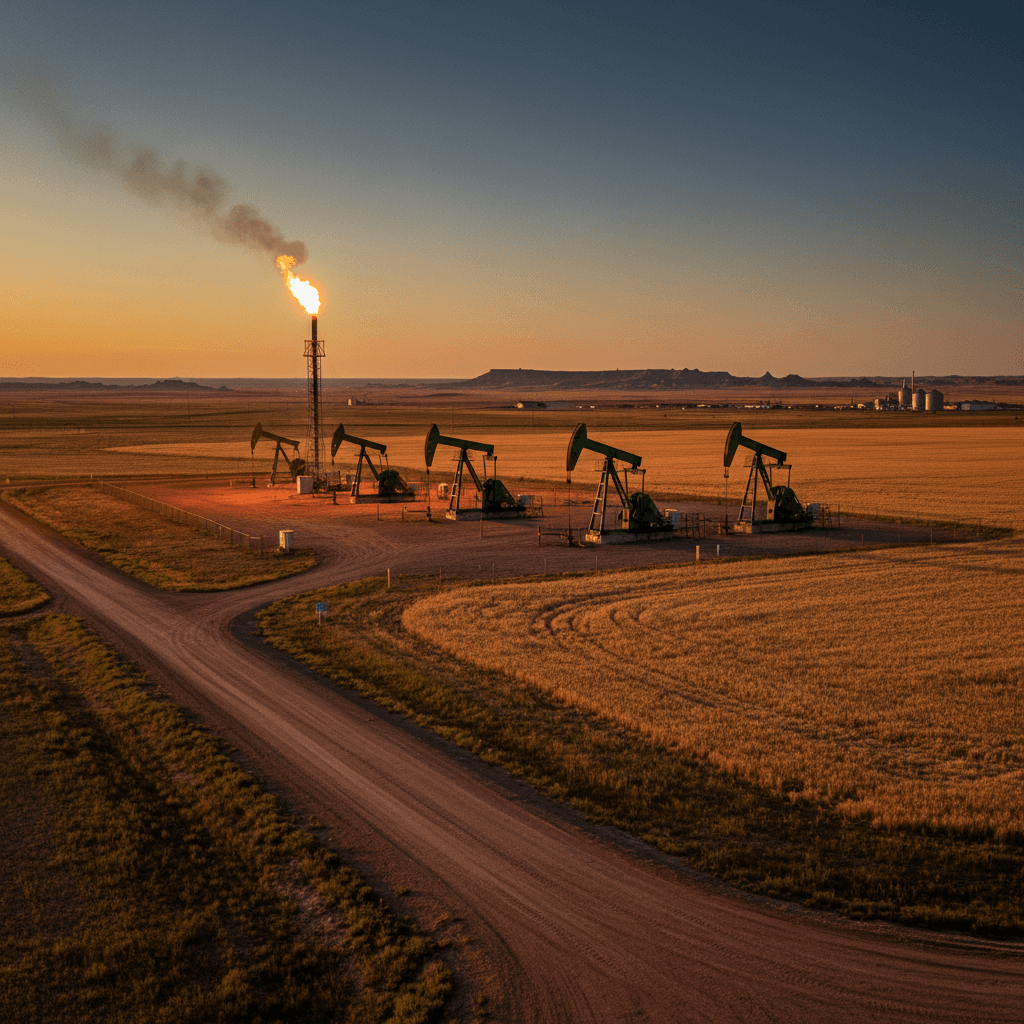
Bakken Rig Count Holds at 21 as Oil Prices Surge Over $86
High WTI prices and a narrow differential provide a favorable price environment, but the stagnant rig count suggests continued production discipline.
North Dakota's active drilling rig count held steady at 21 on Monday, according to live Bakken Wire data, as the state's oil industry benefited from a major rally in crude prices. The price of West Texas Intermediate (WTI) crude surged to $86.53 per barrel, a gain of $3.94 or 4.77% on the day.
The favorable pricing environment for Bakken crude was underscored by a relatively narrow differential. Bakken crude was priced at a discount of $3.42 per barrel compared to WTI, translating to a wellhead price of approximately $83.11. The international Brent benchmark also saw strong gains, closing at $94.71.
The current rig count of 21 is a critical indicator of future production activity in the Bakken formation. Historically, the number of active drilling rigs is a leading indicator for oil production, with a lag of several months between new drilling and sustained output from completed wells. The current level, while stable, remains far below the boom-era highs of over 200 rigs seen in the early 2010s.
The combination of high commodity prices and a tight differential typically creates economic incentives for operators to increase drilling activity. However, the stagnant rig count suggests that major producers in the basin are maintaining capital discipline, prioritizing shareholder returns and debt reduction over aggressive production growth. This trend has defined the post-pandemic era in the Bakken.
Natural gas prices, often a secondary revenue stream for Bakken operators, were quoted at $2.68 per MMBtu. While oil remains the primary economic driver for the basin, sustained low natural gas prices can impact the economics of gas-rich areas and associated gas capture projects.
For royalty owners and service companies, the current data presents a mixed picture. The sharp rise in oil prices directly boosts royalty payments and improves cash flow for operating companies. Yet, the lack of growth in the rig count signals that the associated job growth and service sector activity may remain limited in the near term.
The outlook for North Dakota's oil production hinges on whether operators choose to deploy more rigs in response to the strengthened price deck. For now, the data indicates a continuation of the controlled production strategy that has characterized the Bakken in recent years.
Source
Bakken Wire Live Data as of April 20, 2026