Bakken Rig Count Holds at 23 Amid Sharp Oil Price Decline
North Dakota's active rig count remains steady, but the outlook for production growth is clouded by falling crude prices and a steep Bakken price differential.
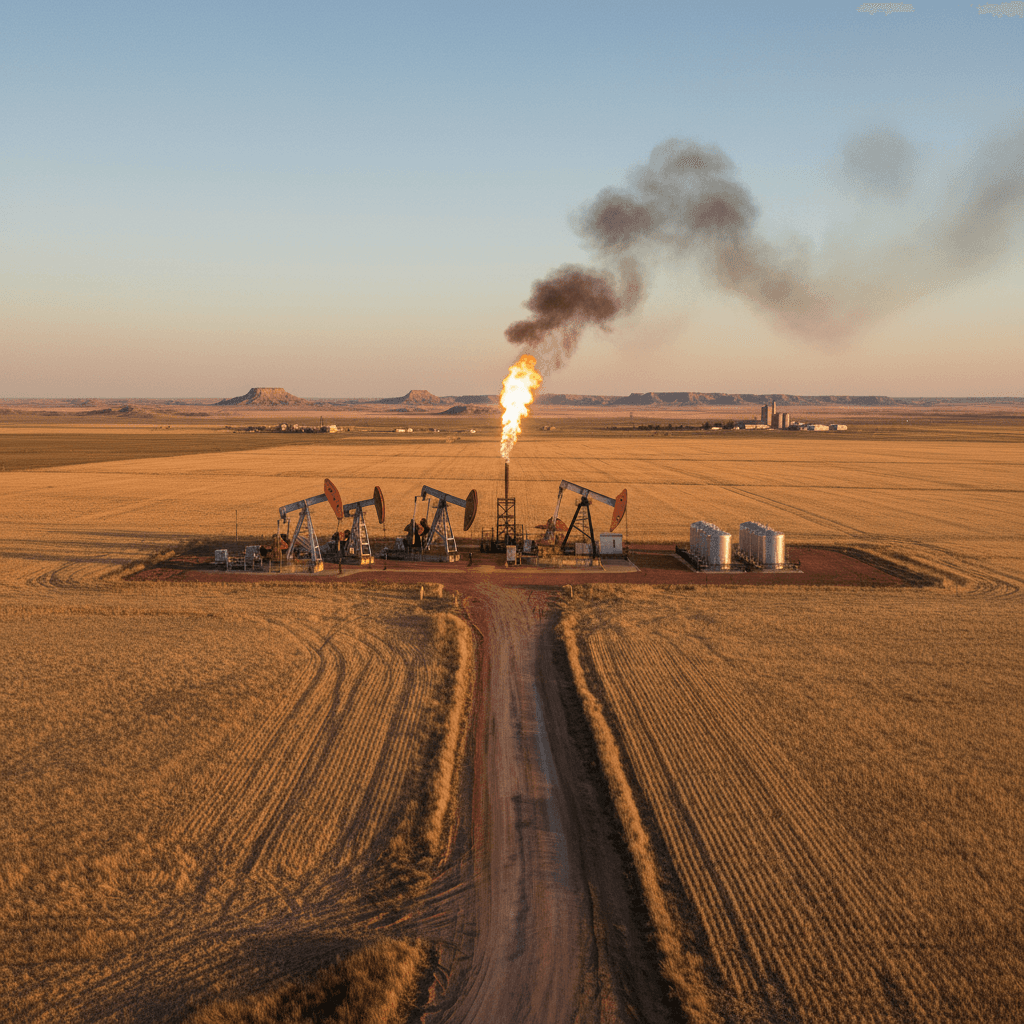
The active rig count in North Dakota's Bakken formation held at 23 on Monday, July 27, 2026, even as crude oil prices saw a significant sell-off. The current rig level, a key indicator of near-term drilling activity, suggests operators are maintaining a cautious but steady pace of development.
West Texas Intermediate (WTI) crude settled at $81.95 per barrel, down $7.36 or 8.24% for the day. The international Brent benchmark fell 9.34% to $87.74. The Bakken crude differential—the discount at which Bakken barrels trade compared to WTI at the Cushing, Oklahoma hub—was $3.42. This puts the wellhead price for Bakken crude at approximately $78.53. Natural gas prices were at $2.77 per MMBtu.
Historically, the rig count is a leading indicator for oil production, with a lag of several months between deploying a rig and new wells contributing to output. A stable rig count in the low 20s typically points toward maintaining, rather than significantly growing, current production volumes from the formation. The current level is far below the peak activity seen in previous boom cycles but reflects a focus on capital discipline and drilling only the highest-return locations.
The sharp decline in oil prices, if sustained, could pressure operator cash flows and future drilling budgets. The steep Bakken price differential further compounds this pressure, effectively lowering the realized price for Bakken producers. This combination may challenge plans to increase activity in the near term.
For North Dakota, which relies heavily on oil and gas tax revenue, sustained production levels are crucial. The state's output has been relatively flat in recent years, as efficiency gains from drilling longer laterals and using enhanced completion techniques have offset the lower number of active rigs. The current environment suggests this trend of moderated production is likely to continue, with operators closely watching price signals before committing to accelerate drilling programs.
The focus for Bakken operators will remain on operational efficiency and cost control to maintain profitability at current price levels. The outlook for production growth in the second half of 2026 will depend heavily on whether oil prices stabilize or recover from Monday's drop.
Source
Bakken Wire Live Data for July 27, 2026