Bakken Rig Count Holds at 23 as Oil Prices Rally
North Dakota's active rig count remains near historic lows despite a midday price surge for crude benchmarks.
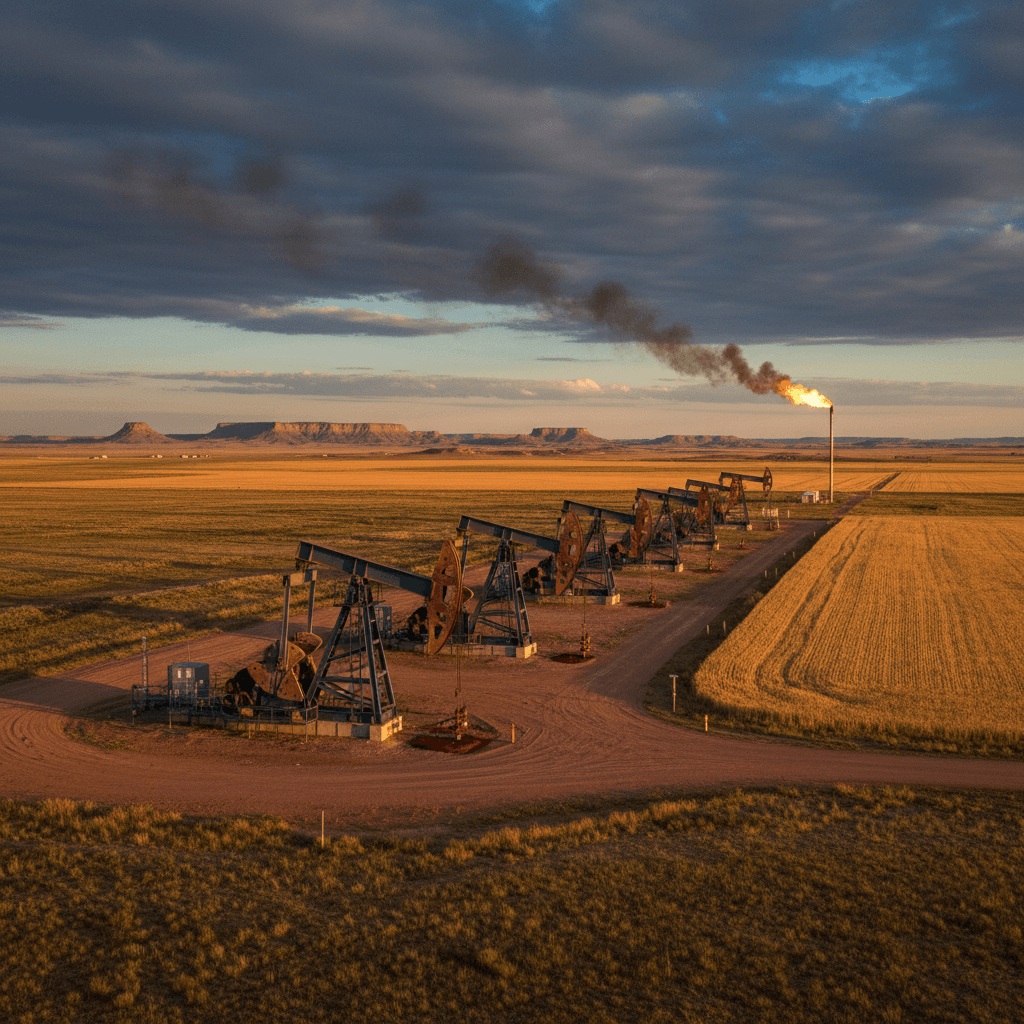
The number of active drilling rigs in North Dakota held steady at 23 on Tuesday, July 7, according to midday data from Bakken Wire. This count persists at a level far below the boom-era peaks, even as oil prices posted significant gains.
West Texas Intermediate (WTI) crude was trading at $70.41 per barrel, up $1.86 or 2.71% from the prior settlement. The international benchmark Brent crude rose to $74.04, a gain of $2.05. The Bakken crude differential, the discount at which local barrels trade compared to WTI, was -$3.42. Natural gas was priced at $3.28 per MMBtu.
The current rig count of 23 provides a key leading indicator for future oil production in the Bakken formation, North Dakota's primary oil-producing region. Historically, the number of active drilling rigs has a direct, though lagged, correlation with production levels. A sustained increase in rigs typically precedes a rise in output by several months, as new wells are drilled, completed, and brought online. Conversely, a low and stable rig count suggests production will likely remain flat or continue a gradual decline in the near term.
The midday price rally, if sustained, could improve the economics for Bakken operators. However, the stagnant rig count suggests companies are not yet responding to the price move with increased drilling activity. Operators often require a period of sustained higher prices and favorable market conditions before committing capital to expand drilling programs.
The current differential of -$3.42 indicates Bakken crude is trading at a moderate discount to the U.S. benchmark, which is a typical range for the grade. This pricing, combined with the current WTI price, determines the actual revenue received by producers in the state.
The combination of a low, stable rig count and rising prices creates a mixed signal for the North Dakota production outlook. While improved prices bolster cash flow and may slow the decline rate of existing wells, the lack of rig growth points to continued capital discipline among operators. For production to meaningfully increase, a higher and sustained rig count will be necessary.
Source
Bakken Wire live data as of Tuesday, July 7, 2026.