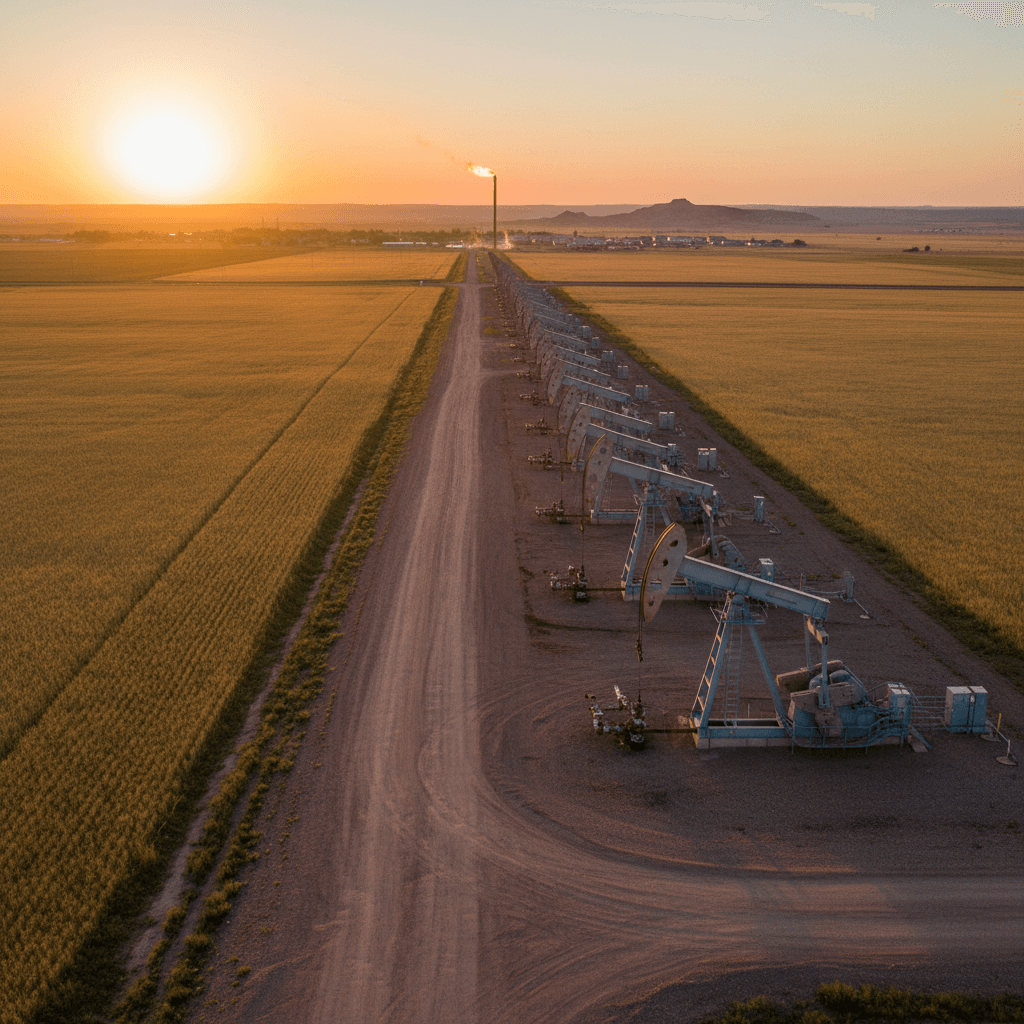
Bakken Rig Count Holds at 24 as Oil Prices Drop Sharply
North Dakota's active drilling fleet remains at a stable but historically low level, suggesting production may plateau despite lower crude prices.
The number of active drilling rigs in North Dakota held steady at 24 this week, according to live Bakken Wire data. The count comes as crude oil prices fell sharply, with West Texas Intermediate dropping 3.12% to $89.31 per barrel.
The current rig count represents a long-term baseline for the state's drilling activity, far below the peak of over 200 rigs seen during the previous boom cycles. Historically, the rig count is a leading indicator for future oil production, with changes typically impacting output volumes several months later. A stable count suggests operators are maintaining, but not aggressively expanding, their drilling programs.
The price for Bakken crude at the wellhead is approximately $85.89, calculated using the WTI price of $89.31 and the live Bakken differential of -$3.42 versus the benchmark. The international Brent crude benchmark also fell, settling at $96.78. Natural gas prices were reported at $2.89.
The simultaneous drop in both major oil benchmarks and the steady rig count points to a cautious near-term outlook for production growth. Operators often adjust capital spending and drilling plans in response to sustained price movements. The current price level, while down from recent highs, may still support maintenance drilling for many companies given improved operational efficiency in the basin.
With the rig count unchanged, analysts expect North Dakota's oil production to remain near current levels in the coming months. Significant increases would likely require a sustained period of higher prices to justify deploying more rigs and completing more wells. The focus for many Bakken operators has shifted to maximizing output from existing wells and drilling only their highest-return prospects.
The stability in the rig fleet indicates a mature phase for the Bakken play, where activity is closely tied to commodity prices and shareholder returns rather than aggressive growth. Production trends will continue to be monitored in relation to these key operational and economic signals.
Source
Live Bakken Wire Data