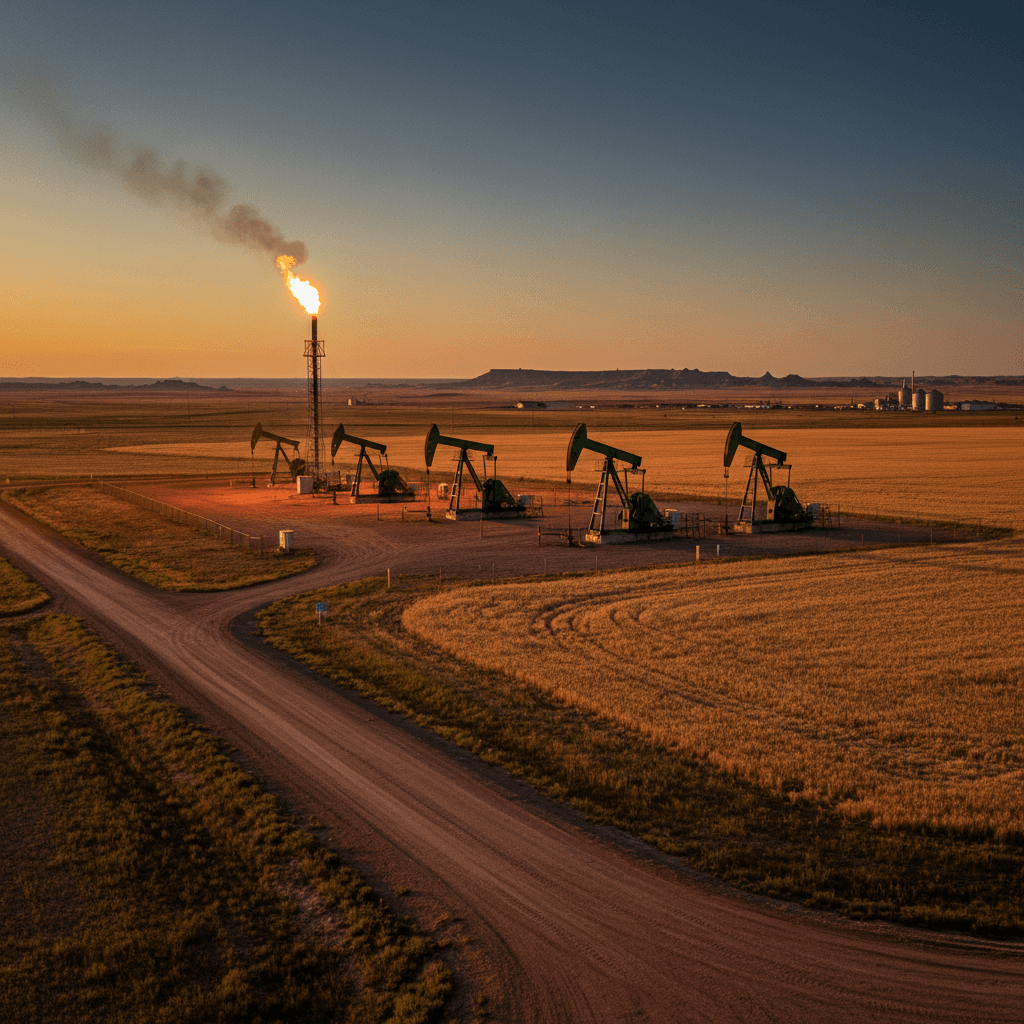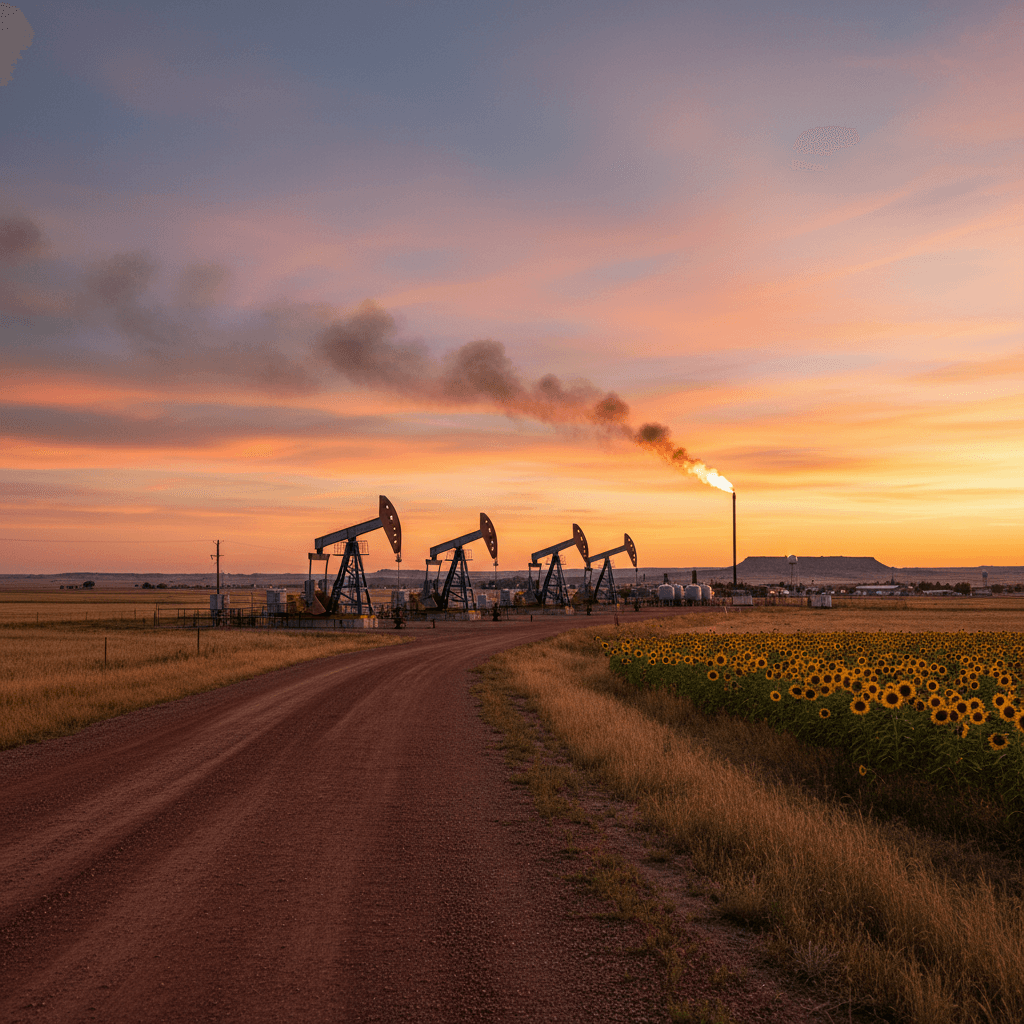
Bakken Rig Count Holds at 25 as Oil Prices Retreat
North Dakota's active rig count remains steady at mid-year 2026, providing a stabilizing signal for future production despite a significant midday drop in crude benchmarks.
The number of active drilling rigs in North Dakota held firm at 25 on Wednesday, a key indicator for near-term oil production levels in the Bakken formation. This count, provided by live Bakken Wire data, comes amid a sharp midday decline in global crude oil prices.
West Texas Intermediate (WTI) crude was trading at $68.06 per barrel, down $1.44 or 2.07% from the previous settlement. The international Brent benchmark fell to $71.10, a drop of $1.85 or 2.54%. The price for Bakken crude at the wellhead is effectively discounted further, with the Bakken differential reported at -$3.42 versus WTI. Natural gas was priced at $3.23 per MMBtu.
The steady rig count suggests operators are maintaining a baseline level of drilling activity despite price volatility. Historically, the active rig count is a leading indicator for future oil production, as new wells drilled today will typically begin contributing to output several months later. A stable rig count points to a likely stabilization in production volumes in the coming quarters, barring significant operational disruptions.
The current rig level of 25 represents a fraction of the peak activity seen during previous Bakken booms but aligns with a period of focused capital discipline and efficiency gains among operators. Companies have prioritized drilling in the most productive core areas and improving well completion techniques to maximize output from each rig.
The midday price drop, if sustained, could pressure operator margins and potentially influence future drilling plans. The Bakken differential, which reflects the cost to transport and grade the crude to the main pricing hub in Cushing, Oklahoma, adds another layer to local economics. A price near $65 per barrel for Bakken crude, after accounting for the differential, defines the immediate revenue environment for producers.
For royalty owners and service companies in the Williston Basin, the rig count is a direct barometer of field activity and associated economic spending. A hold at 25 rigs indicates a sustained, if modest, level of investment in new well construction. The outlook for North Dakota production will depend heavily on whether this rig count can be maintained or grown in the face of fluctuating commodity prices.
Source
Live Bakken Wire data for July 1, 2026.