Bakken Rig Count Holds at 27 as Oil Prices Retreat Sharply
North Dakota's active rig fleet remains steady despite a nearly 6% midday drop in WTI crude prices, signaling a focus on core development.
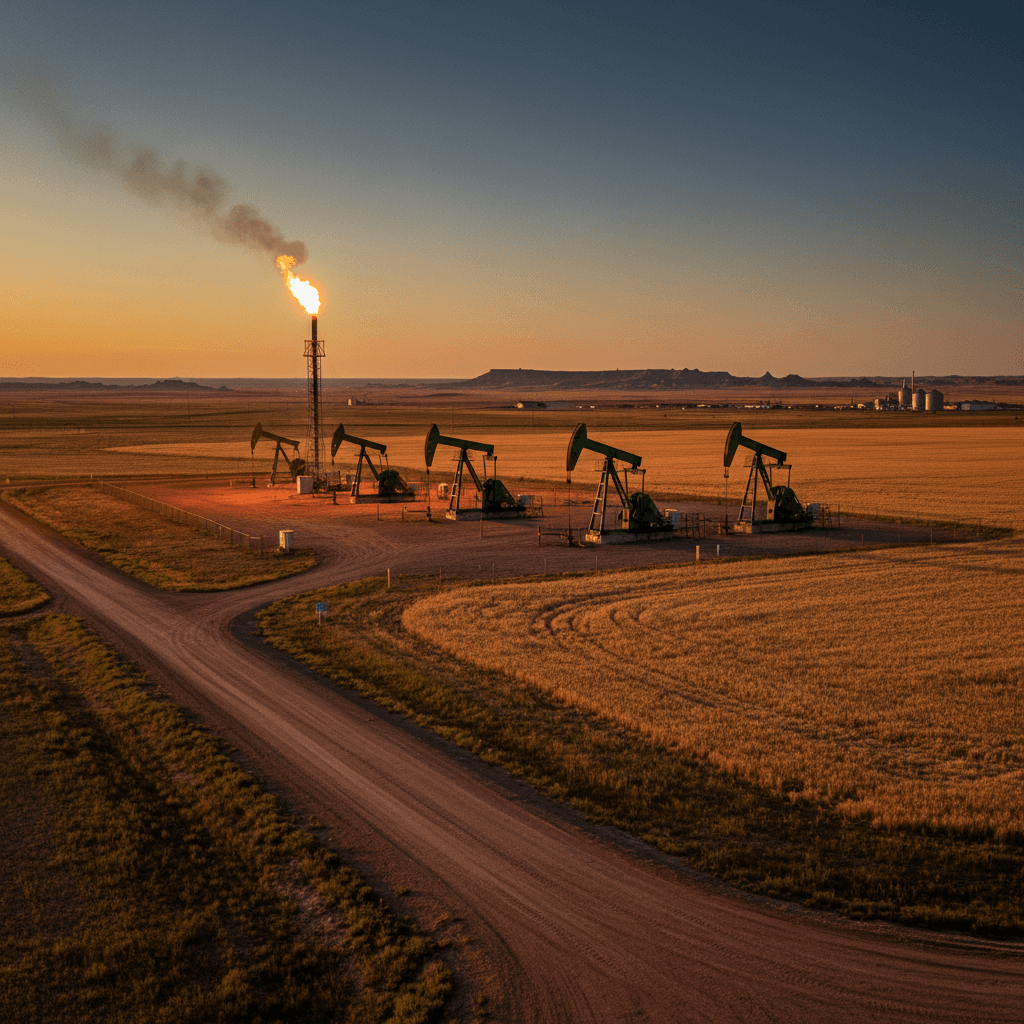
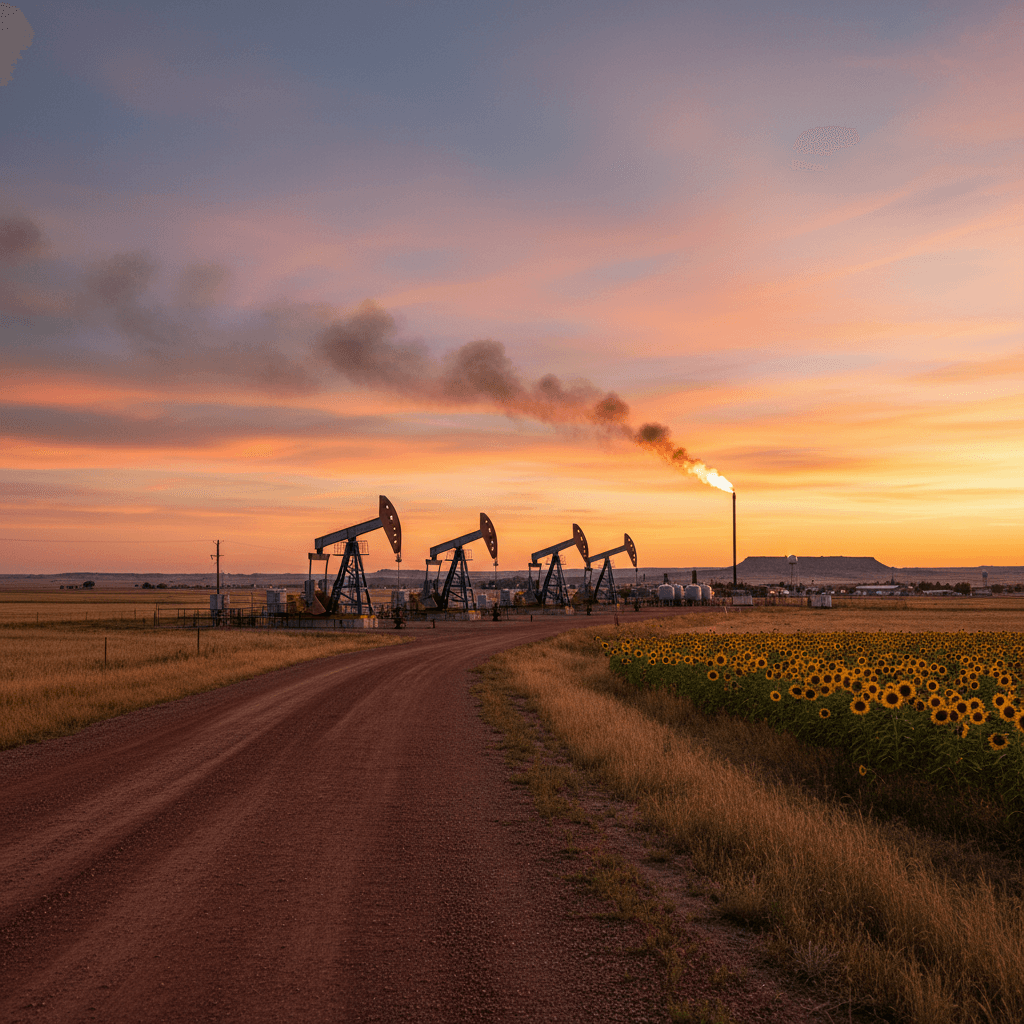
North Dakota's active drilling rig count held at 27 on Monday, August 3, as the Bakken's core operators maintained development plans despite a sharp midday decline in oil prices. The stability in the rig count comes as West Texas Intermediate (WTI) crude traded at $79.66 per barrel, down $5.01 or 5.92% for the day, according to live Bakken Wire data.
The Brent crude benchmark followed a similar trajectory, trading at $83.76, a drop of $4.17 or 4.74%. The Bakken crude differential—the discount at which Bakken barrels trade compared to WTI—stood at -$3.42. Natural gas prices were recorded at $2.77 per MMBtu.
Historically, the active rig count is a leading indicator for future oil production in North Dakota, with a lag of several months between drilling activity and new wells contributing to output. A sustained rig count in the mid-to-high 20s has been associated with maintaining the state's production plateau, which has hovered around 1.3 million barrels per day in recent years. The current count of 27 rigs suggests operators are continuing disciplined development of high-graded, core acreage.
The significant midday price drop introduces a note of caution for the production outlook. Sustained lower prices can pressure operator cash flows and capital budgets, potentially leading to deferred drilling plans if the weakness persists. However, the immediate lack of reaction in the rig count indicates that major Bakken producers may be insulated by hedged production or are prioritizing long-term development programs in their most profitable units.
For royalty owners and service companies, the steady rig activity is a positive near-term signal for local economic activity, even amid volatile commodity markets. The focus for the industry will be whether the price correction proves temporary or evolves into a longer-term trend that could test the current pace of operations.
The Bakken formation remains North Dakota's primary oil-producing region, and its output is a critical component of overall U.S. production. Operator strategy continues to emphasize efficiency and returns over volume growth, with the rig count serving as a key barometer of that disciplined approach.
Source
Bakken Wire Live Data as of midday, Monday, August 3, 2026