Bakken Rig Count Holds at 28 Amid Sharp Midday Price Decline
Benchmark oil prices fall over 4%, while North Dakota's active rig count remains steady, suggesting near-term production stability.
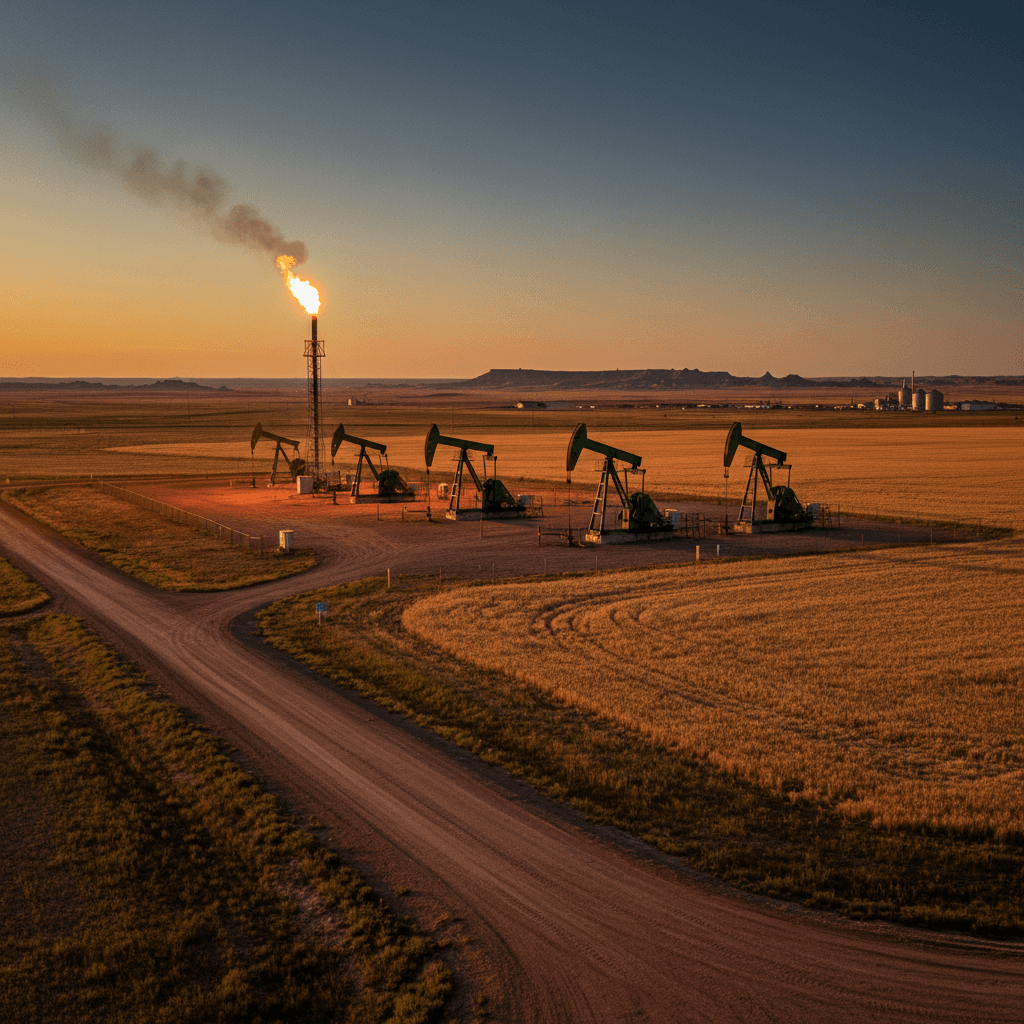
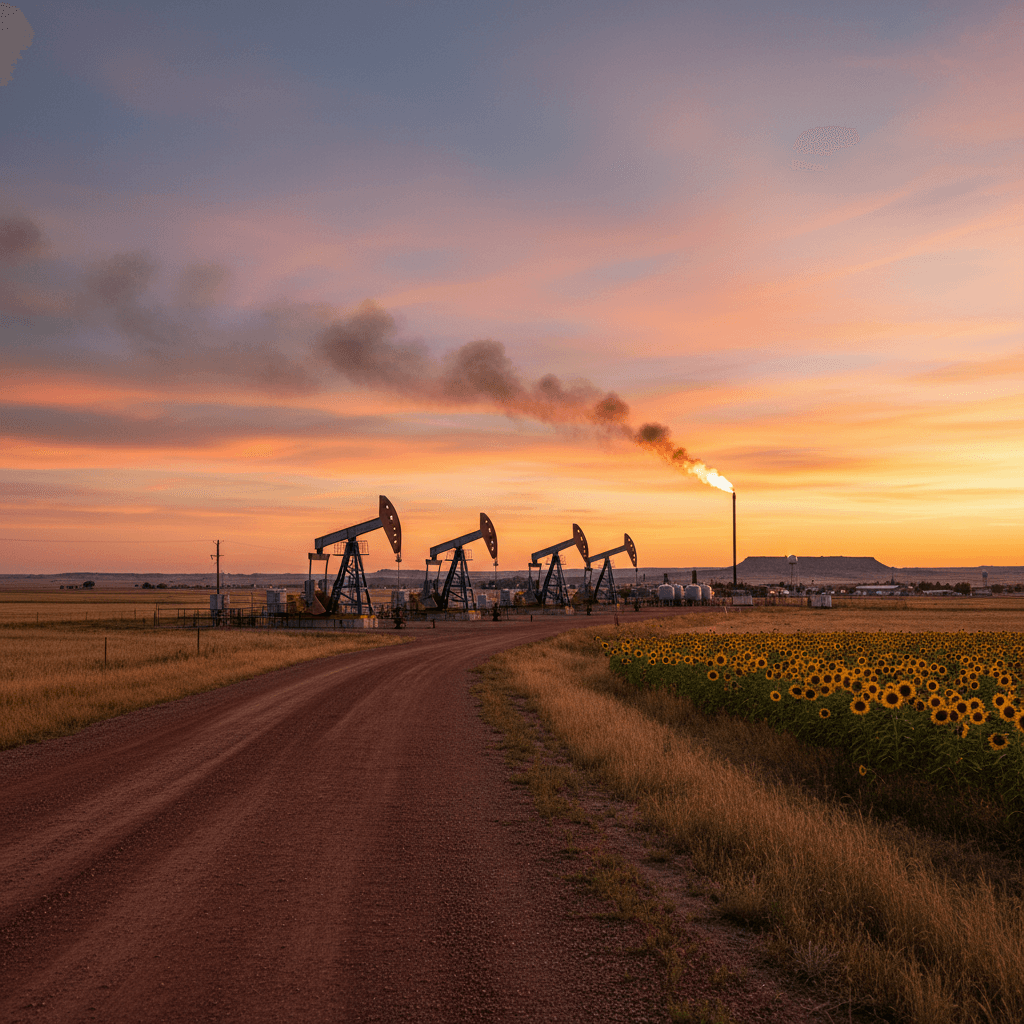
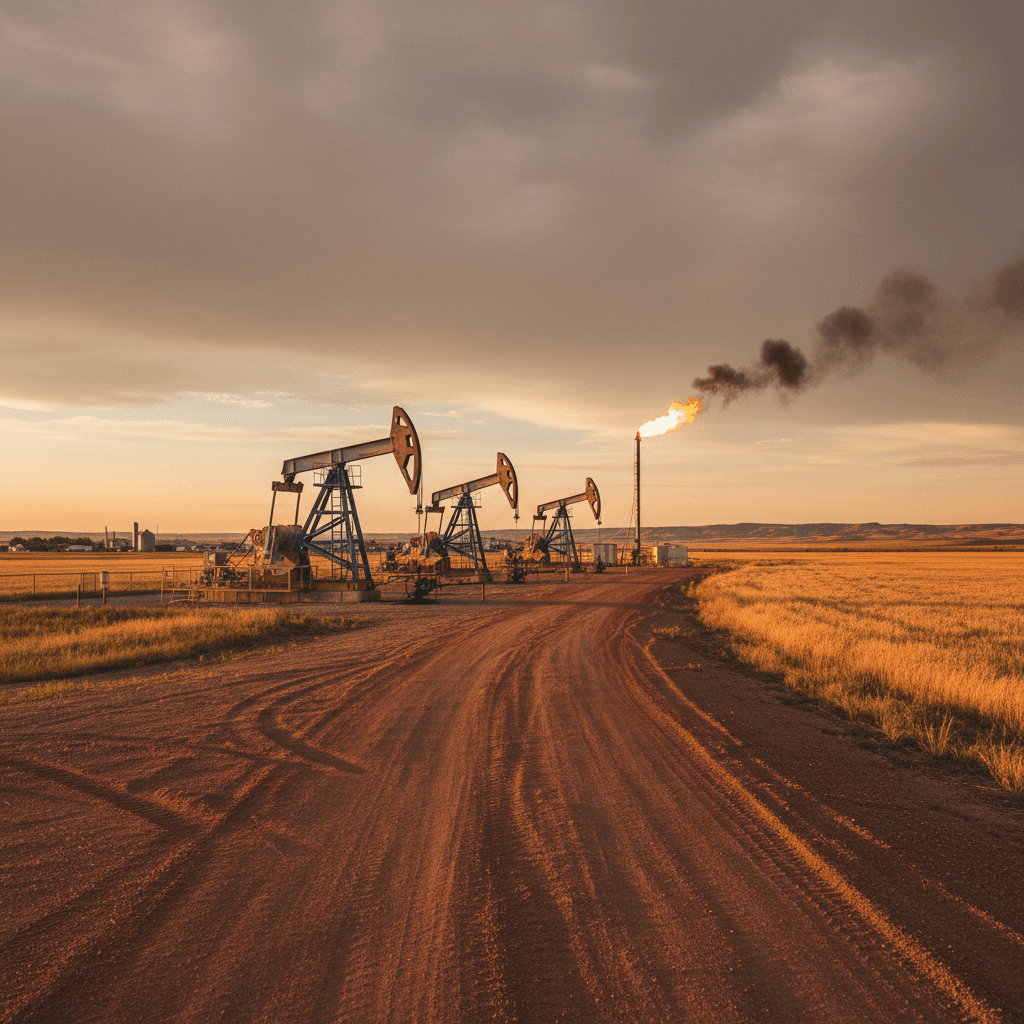
North Dakota's active drilling rig count held at 28 on Wednesday, a key indicator of near-term production activity in the Bakken formation, as crude oil prices experienced a significant midday sell-off. The state's rig count has remained a primary gauge for future oil output, with current levels suggesting a plateau in production volumes in the coming months.
The West Texas Intermediate (WTI) benchmark crude price was trading at $70.43 per barrel, down $2.78 or 3.8% for the day. The international Brent crude benchmark saw a larger drop, falling $3.12 to $73.96, a decline of 4.05%. Natural gas held at $3.23 per MMBtu. Bakken crude traded at a discount of $3.42 per barrel to the WTI benchmark.
Historically, the number of active drilling rigs in North Dakota has served as a leading indicator for the state's oil production, with changes in the count typically preceding shifts in output by several months. A steady rig count, such as the current 28, generally points to stable production levels in the near term, barring significant changes in well productivity or completion activity.
The sharp decline in oil prices, if sustained, could pressure operator cash flows and future drilling budgets. However, the immediate stability in the rig count suggests that, for now, drilling programs initiated under previous price expectations are continuing. The Bakken differential, while negative, is a typical market adjustment for the region's crude quality and transportation costs.
For Bakken operators and royalty owners, the current data presents a mixed picture. The steady operational tempo indicated by the rig count offers short-term predictability. However, the midday price volatility underscores the ongoing exposure to global commodity markets that defines the Williston Basin economy. Production trends in the Bakken, the primary oil-producing region of North Dakota, remain sensitive to these price signals over longer time horizons.
Source
LIVE BAKKEN DATA, June 24, 2026