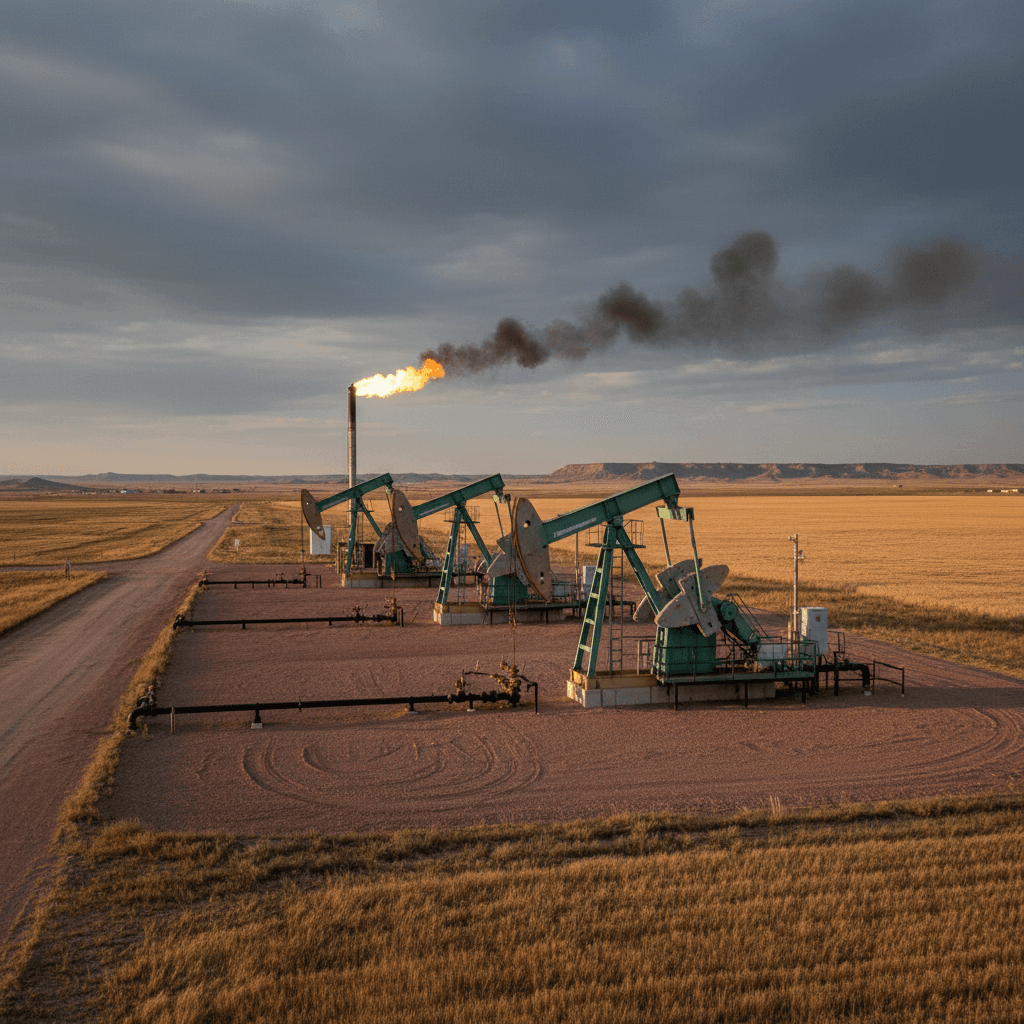
Bakken Rig Count Holds at 28 as Oil Prices Retreat Sharply
North Dakota production outlook faces headwinds from a 5% drop in crude benchmarks and a persistently low drilling fleet.
North Dakota's oil production faces near-term pressure as a sharp drop in oil prices coincides with a stagnant rig count, according to live market and activity data. The number of active drilling rigs in the state held at 28 on Monday, August 3, while West Texas Intermediate crude prices fell $4.62 to settle at $80.05 per barrel.
The current rig count remains near historic lows for the Bakken play, a level that analysts say is insufficient to sustain production growth. The Brent crude benchmark also fell sharply, dropping 5.03% to $83.51. The price for Bakken crude at the wellhead is further discounted, trading at a $3.42 differential below WTI.
Historically, the rig count serves as a leading indicator for future oil production, with a lag of several months between drilling activity and new wells coming online. A sustained rig count in the high 20s suggests that operators are maintaining only essential drilling programs to hold leases and offset natural decline from existing wells, rather than pursuing aggressive growth.
The simultaneous drop in commodity prices adds a significant financial headwind. The nearly 5.5% single-day decline in WTI, if sustained, could prompt further capital discipline from operators. Natural gas prices, a secondary revenue stream for Bakken producers, offered little offset at $2.77 per MMBtu.
The combined data points to a likely continuation of flat to slightly declining production volumes in North Dakota in the coming months. The state's output has been remarkably resilient given the low rig count, thanks to efficiency gains and high-grading of drilling inventory, but these factors have limits.
For royalty owners and service companies, the outlook suggests stability in cash flows but little prospect of a near-term activity surge. The focus for Bakken operators will remain on maximizing free cash flow and returns to shareholders, with capital expenditures tightly controlled unless commodity prices see a sustained recovery above current levels.
Source
Live Bakken Data for Monday, August 3, 2026.