Bakken Rig Count Holds at 30 as Oil Prices Retreat
North Dakota's drilling activity remains steady at a multi-year low, suggesting a stable but subdued production outlook.
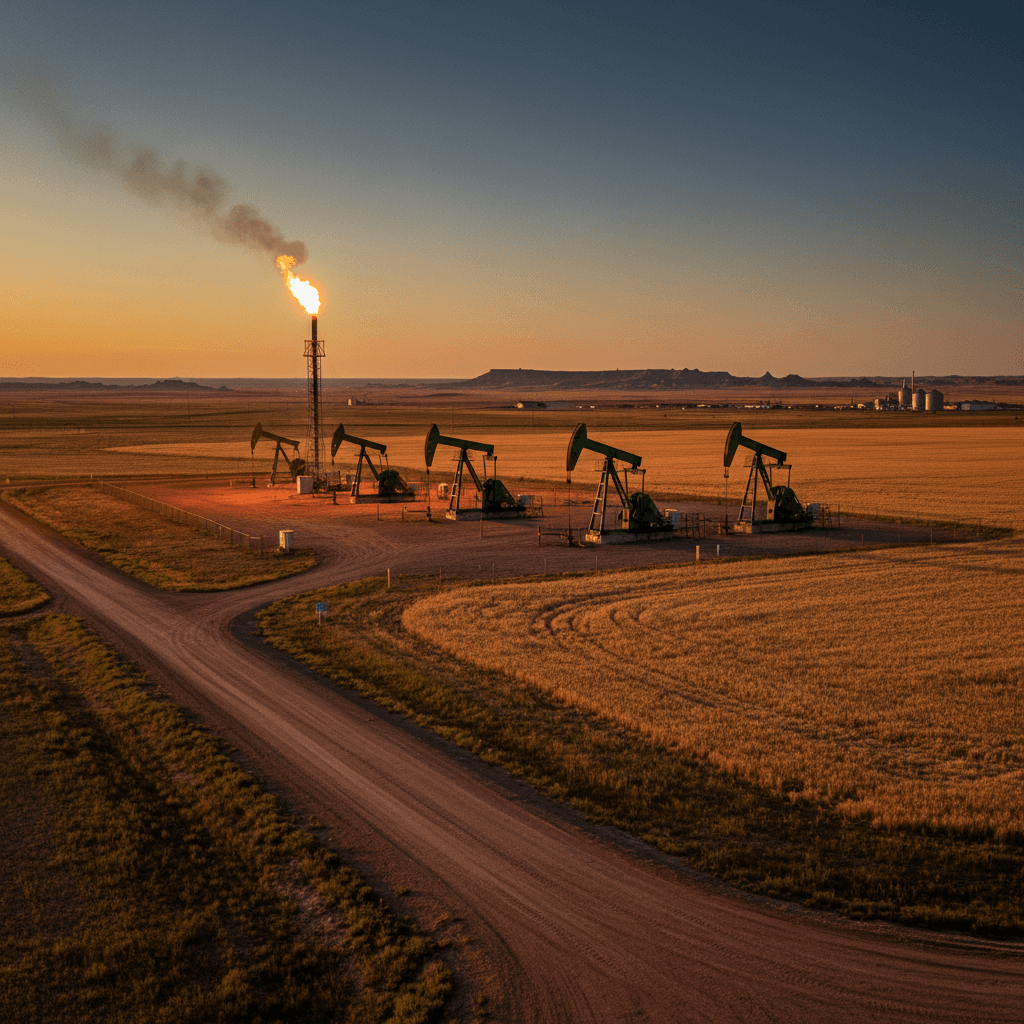
The active drilling rig count in North Dakota held at 30 on Wednesday, a level signaling continued capital discipline among Bakken operators. The stability in rigs comes as crude oil prices saw a modest pullback, with West Texas Intermediate trading at $75.07 per barrel, according to live Bakken Wire data.
The current rig count represents a fraction of the historic highs seen during the previous boom cycles. Historically, the rig count is a leading indicator for future oil production, with changes typically impacting output volumes several months later. A sustained count in the low 30s suggests that near-term Bakken production is likely to remain relatively flat.
Benchmark pricing showed mixed movements. WTI crude fell 92 cents to settle at $75.07, while the international Brent benchmark saw a minor decrease of five cents to $79.31. The Bakken crude differential—the discount at which local crude trades compared to WTI—was recorded at -$3.42 per barrel.
Natural gas prices were listed at $2.67 per MMBtu in the live data feed. The combination of moderated oil prices and a persistent low rig count points to a cautious operational environment. Operators are prioritizing cash flow and shareholder returns over aggressive production growth.
Analysts often view a rig count in this range as supportive of maintaining current production levels rather than driving significant increases. The focus for many publicly traded producers remains on capital efficiency, drilling their highest-return inventory, and managing costs.
For royalty owners and service companies in the Williston Basin, the steady rig count provides a measure of predictability. However, the subdued activity level continues to reflect a mature phase for the Bakken formation, where incremental gains are achieved through technology and efficiency gains rather than a rapid expansion of drilling.
The outlook for North Dakota's oil output is closely tied to commodity prices. Should WTI prices sustain a level significantly above current thresholds, it could eventually incentivize a gradual increase in drilling activity. For now, the data suggests a period of stability in Bakken production volumes.
Source
Bakken Wire Live Data as of August 5, 2026