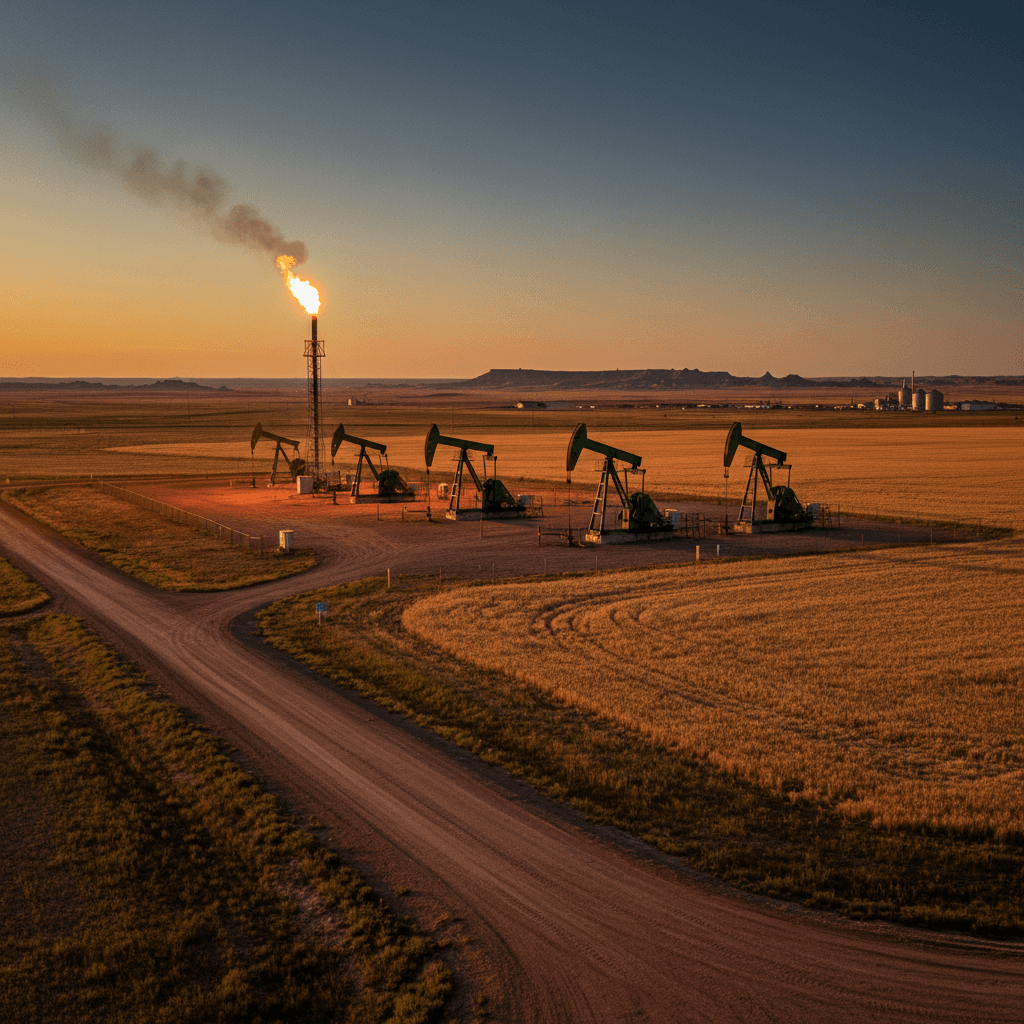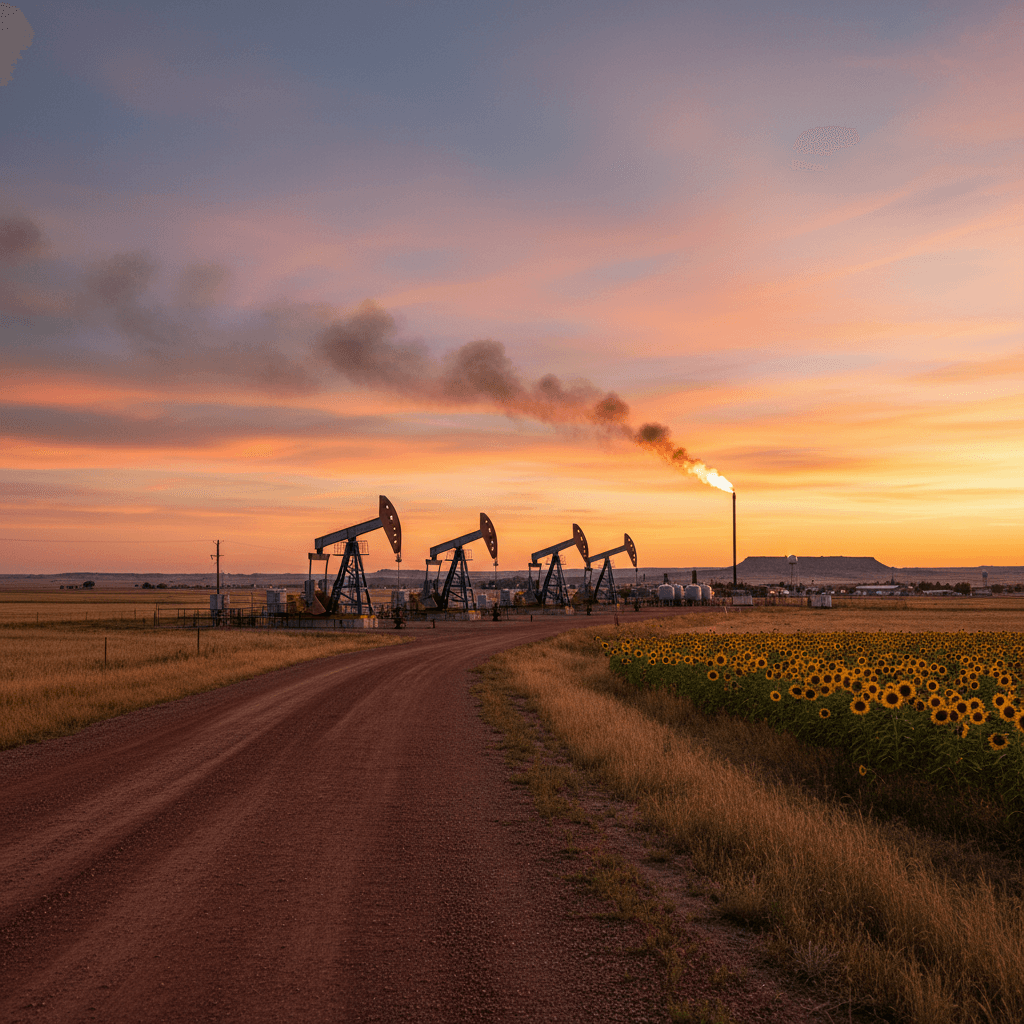
Bakken Rig Count Holds at 30 as Oil Prices Retreat from Highs
North Dakota's active drilling fleet remains steady despite a sharp pullback in crude benchmarks, suggesting a cautious outlook for near-term production growth.
North Dakota's active drilling rig count held firm at 30 on Saturday, a key indicator of operational stability in the Bakken formation even as oil prices fell sharply. According to live data from Bakken Wire, West Texas Intermediate (WTI) crude settled at $87.36 per barrel, down $1.54 or 1.73% for the session. The international benchmark Brent crude fell 1.7% to $91.12.
The current rig count provides a snapshot of near-term industry investment and future production potential. Historically, the number of active rigs is a leading indicator for oil output, with changes in the fleet typically preceding shifts in production volumes by several months. The current level of 30 rigs suggests operators are maintaining a measured pace of new well development.
The price for Bakken crude at the wellhead is directly impacted by the regional differential. Live data shows the Bakken differential at a discount of $3.42 per barrel versus WTI, placing local crude at approximately $83.94. Concurrently, the price of natural gas was reported at $3.29 per MMBtu.
The retreat in crude prices, if sustained, could influence future capital spending decisions. While the current rig count shows no immediate reaction, prolonged price weakness below key thresholds may pressure operators to reconsider drilling budgets. The stability at 30 rigs indicates a focus on capital discipline and generating free cash flow, even amid price volatility.
North Dakota's oil production is closely tied to the economics of drilling in the Bakken formation, one of the nation's primary shale plays. The rig count is a critical metric for state officials and royalty owners forecasting tax and royalty revenue. A steady count suggests production levels may plateau in the coming quarters, absent a significant change in activity.
The outlook for Bakken production remains dependent on both commodity prices and operator efficiency. With prices pulling back from recent highs but remaining above levels seen in previous years, the industry appears to be in a holding pattern. The coming weeks will reveal if the current rig count represents a new equilibrium or a pause before further adjustments.
Source
Bakken Wire Live Data as of May 30, 2026