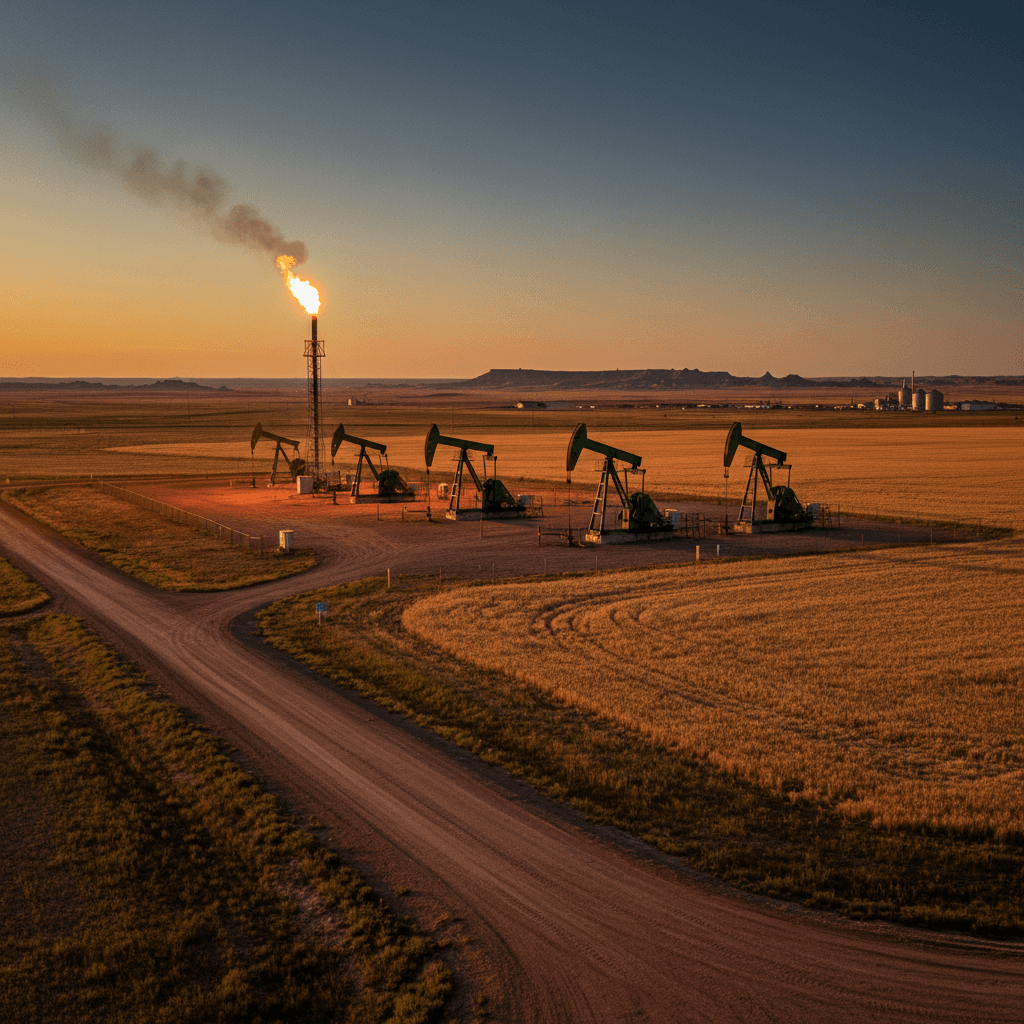
Bakken Rig Count Holds at 30 as Oil Prices Retreat from Highs
Steady activity suggests production plateau; analysts watch price signals for future drilling moves.
North Dakota's active rig count held steady at 30 on Thursday, as crude oil prices pulled back from recent multi-month highs. The stability in drilling activity suggests operators are maintaining, but not aggressively expanding, their current level of development work in the Bakken formation.
West Texas Intermediate (WTI) crude traded at $82.64 per barrel, down 0.76% on the day, while the international Brent benchmark was at $88.40. The price for Bakken crude at the wellhead is effectively lower, with the Bakken differential to WTI reported at -$3.42. Natural gas prices remained weak at $2.75 per MMBtu.
The current rig count of 30 provides a key indicator for near-term production trends. Historically, the number of active drilling rigs is a leading indicator for future oil output, with a lag of several months between a rig commencing drilling and new production coming online. A steady count typically points to a stabilization or modest decline in production, as new wells from current drilling offset the natural decline from existing wells.
At 30 rigs, activity is a fraction of the boom-era highs seen last decade but represents a sustained level of operation through recent price cycles. This plateau suggests that at current price levels, major Bakken operators find it economical to keep core drilling programs running to hold leases and manage base production declines, but not to significantly accelerate growth.
The midday price retreat, if sustained, could influence future capital spending decisions. While prices above $80 WTI are generally supportive for Bakken drilling, the narrowing differential and weak natural gas prices compress cash flows for producers. Operators are likely to remain disciplined, prioritizing cash generation and shareholder returns over volume growth.
For royalty owners and service companies in the Williston Basin, the steady rig count translates to predictable, if not booming, activity. The focus for the industry remains on efficiency, with each rig drilling more productive wells than in the past. The outlook for North Dakota production in the coming quarters therefore hinges on whether oil prices can find a floor high enough to justify increasing the rig count from its current level, or if operators continue to hold the line at current activity levels.
Source
Bakken Wire Live Data as of Thursday, August 13, 2026