Bakken Rig Count Holds at 31 as Oil Prices Retreat Sharply
Active drilling rigs remain near historic lows despite robust crude prices, suggesting continued production discipline by operators.
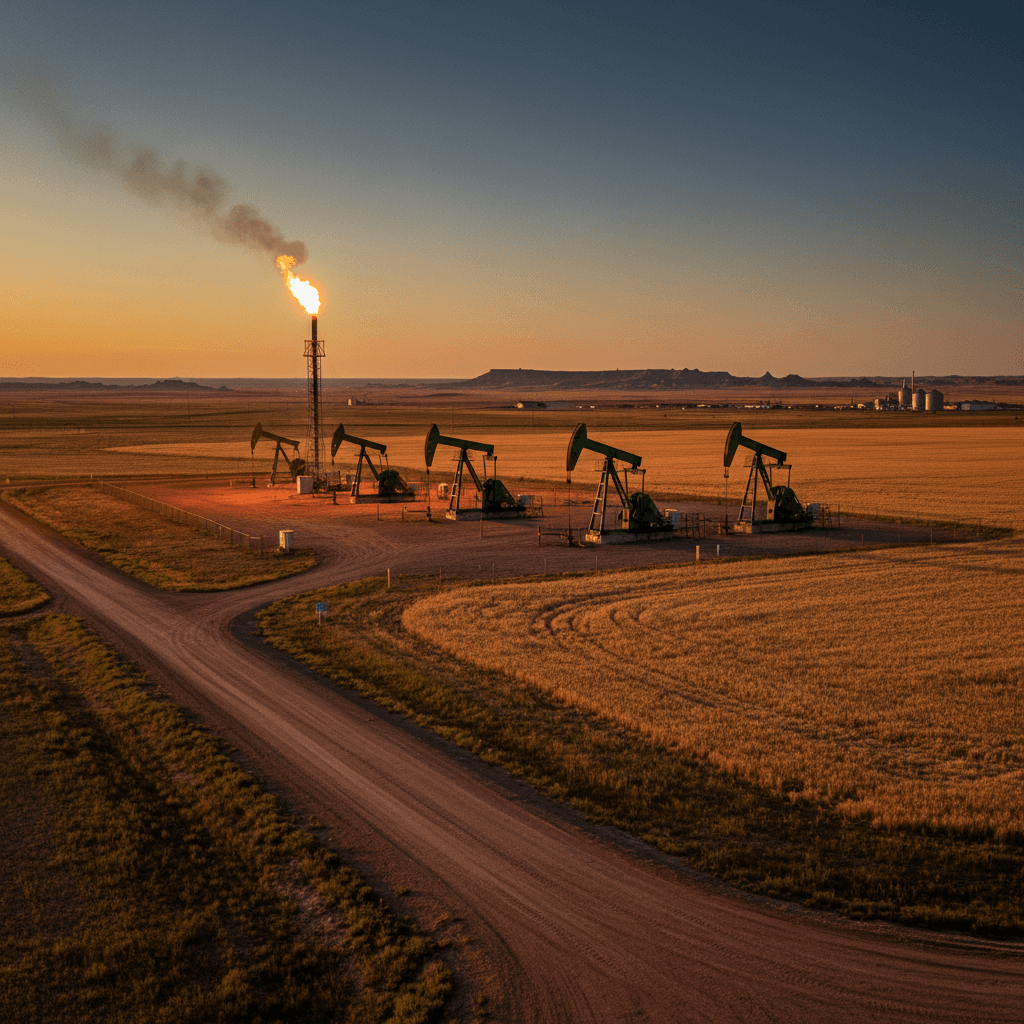
North Dakota's active drilling rig count held steady at 31 as of Thursday, June 4, 2026, according to live Bakken Wire data. The stability in rigs comes amid a sharp midday sell-off in crude oil markets, with West Texas Intermediate (WTI) trading at $92.85 per barrel, down $3.17 (-3.3%) on the day.
The current rig count of 31 remains near the lowest levels seen in the Bakken play over the last decade. Historically, the number of active drilling rigs is a leading indicator of future oil production, as new wells must be drilled and completed to offset the steep decline rates typical of shale basins. The sustained low rig count suggests that operators are maintaining capital discipline and are not significantly accelerating development plans despite the current price environment, even with the Bakken price differential narrowing to -$3.42 versus WTI.
The midday price plunge saw Brent crude fall to $94.98, down $2.83 (-2.89%). Natural gas prices were recorded at $3.35 per MMBtu. While today's price drop is significant, the underlying price level for WTI remains above $90, which is generally considered profitable for most Bakken operators.
The persistent gap between high commodity prices and a stagnant rig count points to a focus on free cash flow generation and shareholder returns over aggressive volume growth. Operators are likely continuing to prioritize completing drilled but uncompleted wells (DUCs) and optimizing production from existing assets rather than launching large-scale new drilling campaigns.
For near-term Bakken production, the low and steady rig count implies that output is likely to remain flat or see only modest growth. Production increases would require a material and sustained increase in drilling activity. The current operator strategy, reflected in the rig data, suggests that the state's production outlook for the remainder of 2026 is one of stability rather than expansion, barring a significant and prolonged upward move in prices that would justify accelerated investment.
Source
Bakken Wire live data as of Thursday, June 4, 2026