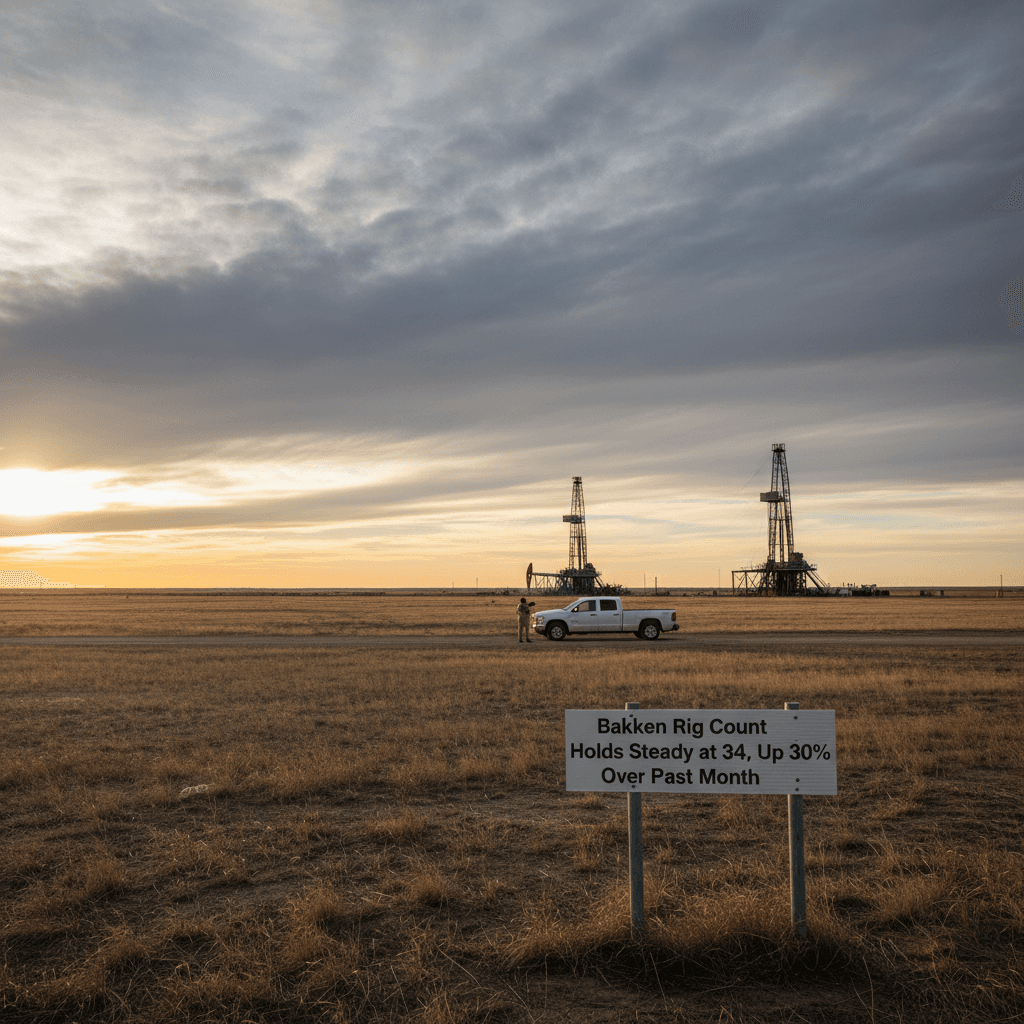
Bakken Rig Count Holds Steady at 34, Up 30% Over Past Month
The North Dakota drilling fleet remains unchanged from last week but has added eight rigs since late July as operators sustain activity.
The number of active drilling rigs in North Dakota's Bakken formation held steady at 34 on Friday, August 28, according to daily data from Bakken Wire. The count showed no change from the previous day, with no new rigs added, none removed, and none moving locations.
This marks one full week of stability, as the state's rig count also stood at 34 on August 21. However, the current activity level represents a significant increase compared to a month ago. On July 29, there were 26 rigs actively drilling, meaning the Bakken has added eight rigs over the past four weeks, a gain of roughly 30 percent.
The sustained rig count indicates a plateau in drilling activity following a summer rebound. For operators and service companies, a steady fleet size provides predictability for crews, equipment, and supply chains across the Williston Basin.
While Bakken drilling holds firm, other U.S. oil regions are seeing new large-scale programs launch. According to Rigzone, Texas-based EON Resources has begun a 92-well horizontal drilling program in New Mexico. The company's CEO, Dante Caravaggio, stated that "The first three of 92 horizontal wells now being drilled makes all the difference in the world to us," highlighting the scale of the commitment.
In other midstream news, the owners of Alaska's 800-mile Trans Alaska Pipeline System are seeking to renew its federal land authorization more than seven years before it expires, Rigzone reported on August 27. Such long-term planning underscores the ongoing need for infrastructure to support production, a consideration also relevant to Bakken takeaway capacity.
The current Bakken rig count of 34 remains well below the historical peaks seen prior to the 2020 price crash but reflects a stabilized level of investment. Each active rig typically leads to the completion of multiple wells, which will contribute to future oil and natural gas production volumes in North Dakota. State production figures, which lag drilling activity by several months, will likely reflect this increased drilling pace in the coming quarters.
For mineral rights owners, steady drilling activity is a positive signal for future royalty income, as operators continue to develop leases. The rig count is a leading indicator of industry health and capital expenditure in the region.
Source
Bakken Wire live rig data, Rigzone