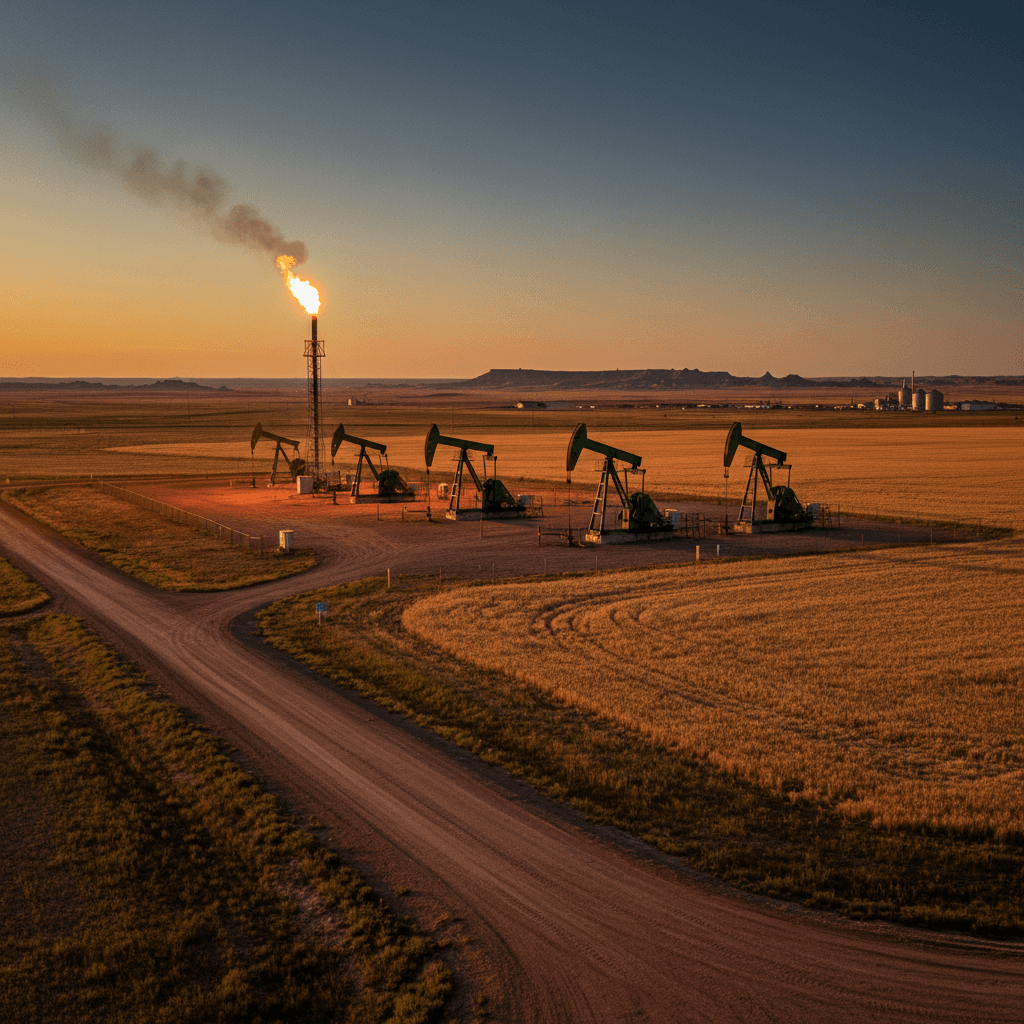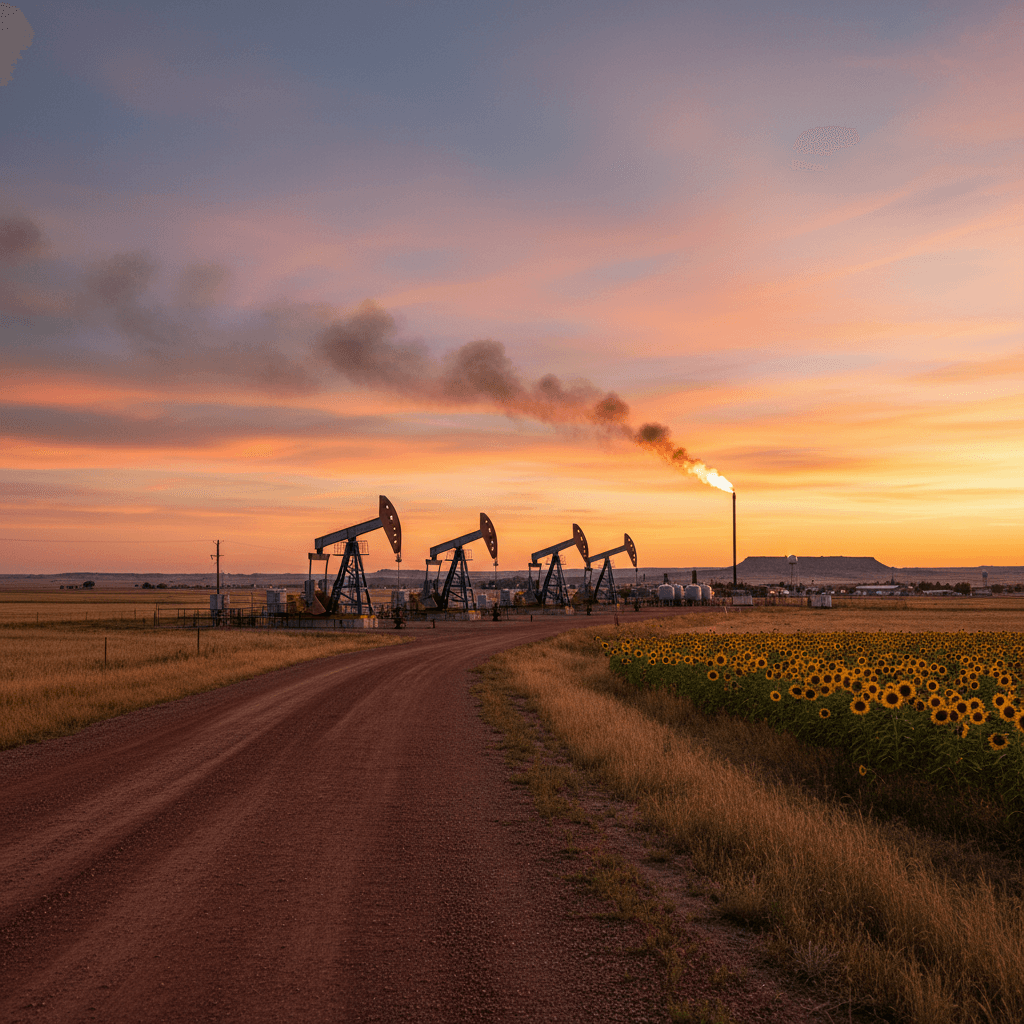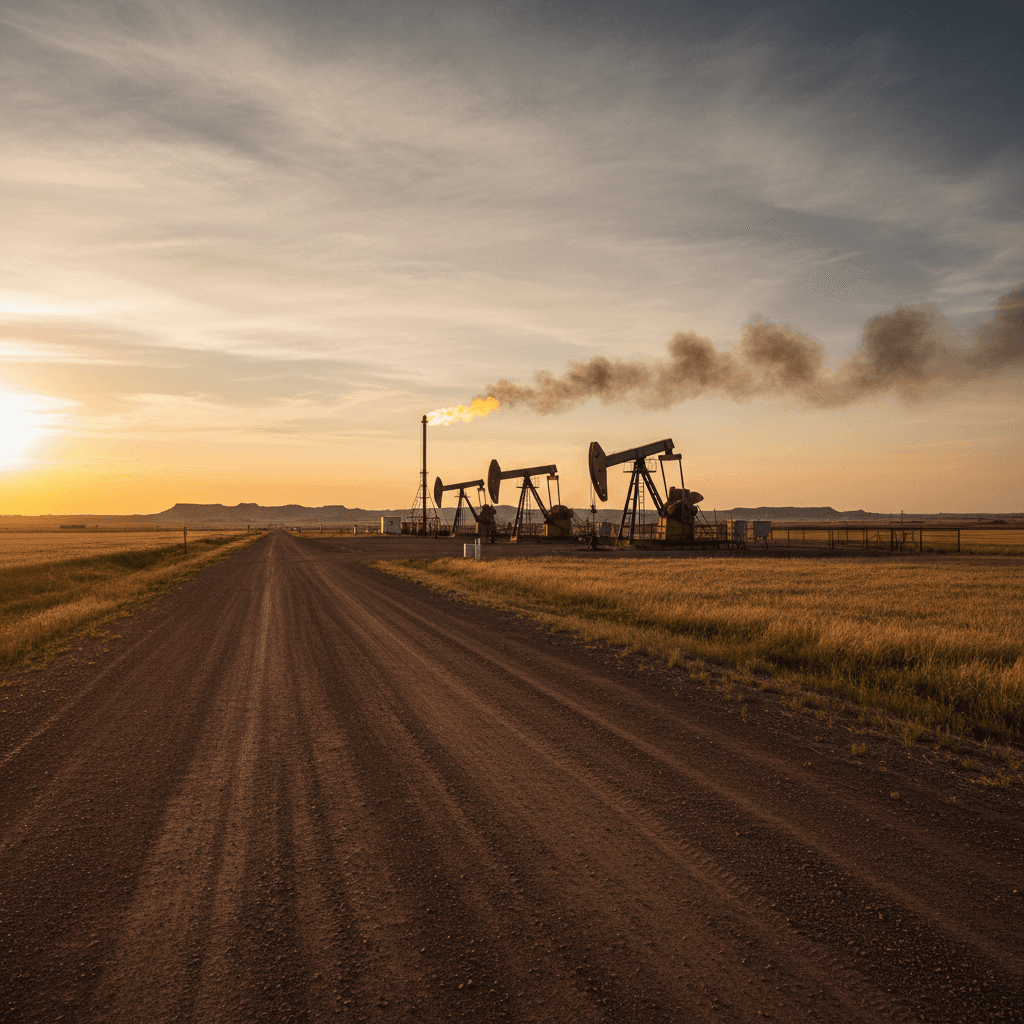
Bakken Rig Count Stalls at 27 Amid Price Retreat
North Dakota's drilling activity remains muted as WTI crude falls sharply, suggesting production levels may plateau.
The number of active drilling rigs in North Dakota held steady at 27 on Tuesday, May 26, 2026, a level signaling continued conservative capital deployment by Bakken operators. The static rig count coincides with a sharp midday retreat in oil prices, with West Texas Intermediate (WTI) crude trading at $93.93, down $2.67 or 2.76% from its previous settlement.
The current rig count remains near the lower end of historical activity for the Bakken formation, North Dakota's primary oil-producing region. Brent crude also fell sharply, trading at $97.19, down $3.02 or 3.01%. Bakken crude traded at a discount of $3.42 to the WTI benchmark.
Historically, the rig count serves as a leading indicator for future production trends. A sustained low count suggests operators are not significantly expanding their drilling programs, which typically leads to a plateau or gradual decline in output after a lag of several months. The current count of 27 rigs is significantly below the peak activity seen in previous boom cycles.
The midday price drop adds financial pressure to the outlook. While prices remain above levels that would trigger widespread shut-ins, the volatility may reinforce a cautious approach among operators. Natural gas prices, at $3.06, provide a modest ancillary revenue stream but are not a primary driver for Bakken drilling decisions.
For royalty owners and service companies in the Williston Basin, the stagnant rig count implies that the current pace of new well development will continue, limiting growth in drilling-related income and employment. The focus for many operators remains on maximizing production from existing wells and completing drilled but uncompleted wells (DUCs), rather than launching large new exploration campaigns.
The near-term production trajectory for the Bakken will likely follow the path set by the rig count over the past several months. Without a significant increase in drilling activity—which would require both higher and more stable commodity prices—North Dakota's oil output is expected to remain relatively flat.
Source
Bakken Wire Live Data (May 26, 2026)