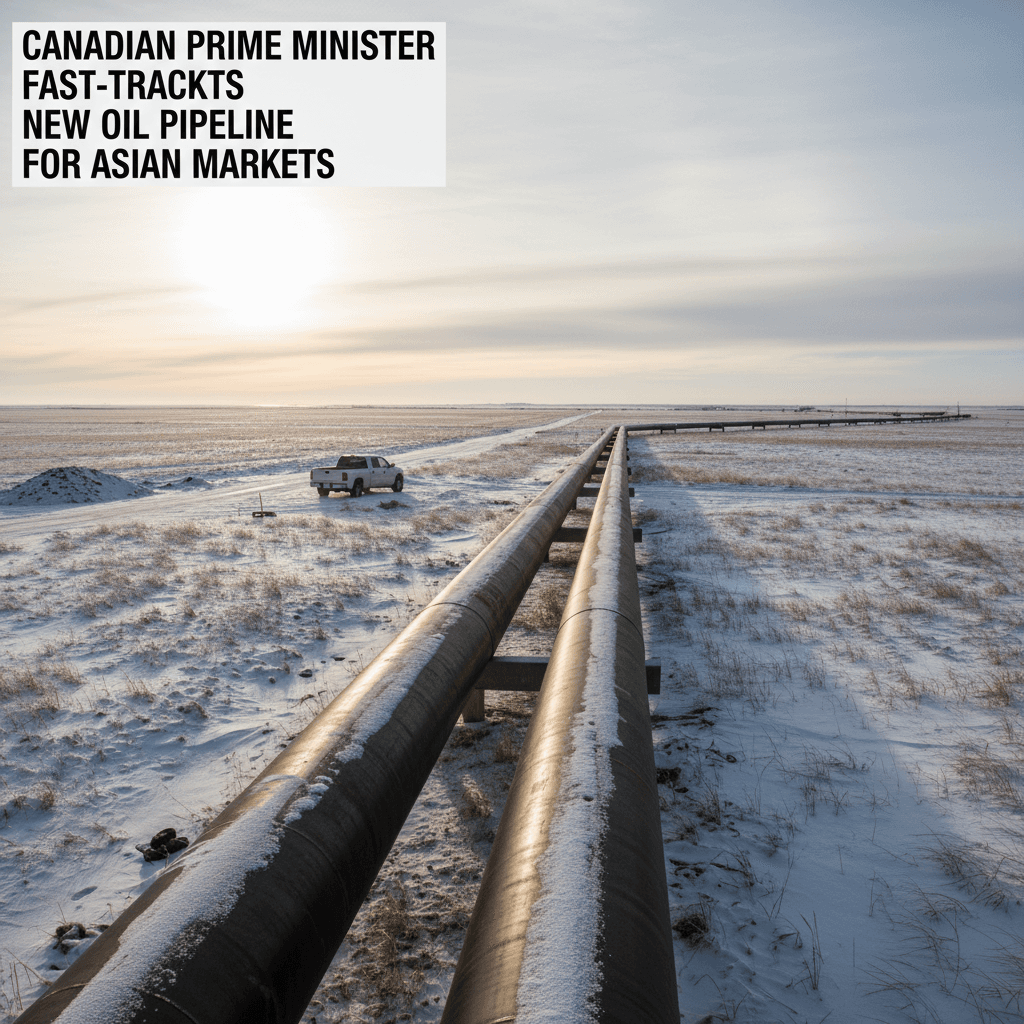
Canadian Prime Minister Fast-Tracks New Oil Pipeline for Asian Markets
The move to expedite regulatory approval for a high-capacity line could impact Bakken crude flows and regional pricing dynamics.
Prime Minister Mark Carney has invoked new powers to expedite regulatory approval for a new, high-capacity oil pipeline, according to a report from Rigzone. The move aims to expand Canada's access to Asian markets.
The development, reported on October 2, signals a renewed push by Canada to move its crude oil to West Coast export terminals. For Bakken operators in North Dakota, new Canadian pipeline capacity can influence regional market dynamics.
Increased pipeline takeaway capacity from Western Canada can affect the flow of competing crudes, including Bakken barrels, through existing midcontinent pipeline systems. Changes in these flows can impact local basis differentials—the difference between the price of Bakken crude at the wellhead and the U.S. benchmark price.
While the Rigzone report did not specify a pipeline route or capacity, any major new Canadian export conduit could alter crude oil logistics in North America. Bakken crude often moves to market via pipelines that also carry Canadian production.
The focus on Asian markets highlights the ongoing global competition for oil exports. Bakken crude, which is also exported from the U.S. Gulf Coast and West Coast, competes with Canadian grades in overseas markets. Enhanced Canadian access to Asia could influence global pricing benchmarks that affect Bakken crude.
The regulatory fast-tracking indicates the project is a priority for the Canadian federal government. For Bakken stakeholders, monitoring the progress of this pipeline will be crucial for understanding future midstream competition and potential impacts on the region's oil market access and pricing.
Source
Information from Rigzone, published October 2, 2026.