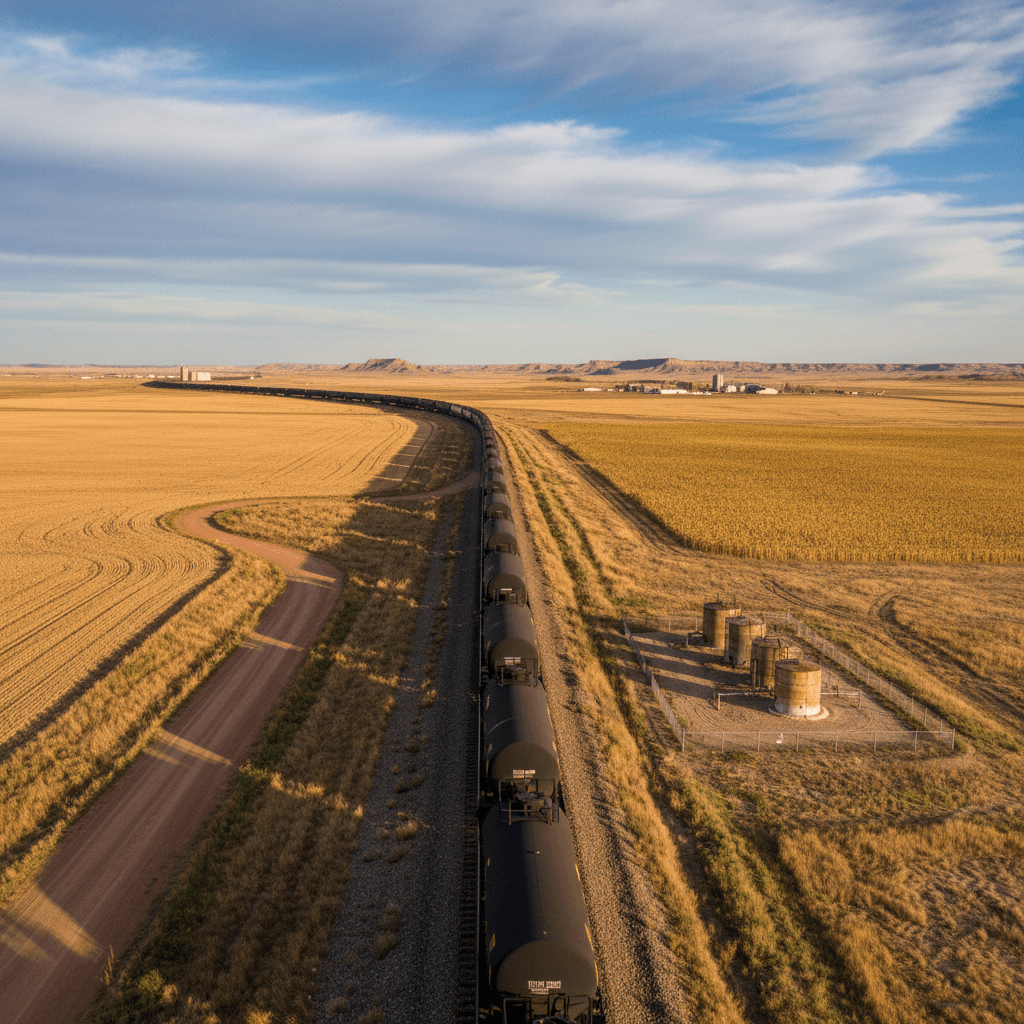
China's Clean Energy Surge, Global Volatility Reshape Bakken's Market Landscape
Rising Chinese exports and energy security concerns create a complex backdrop for North Dakota oil producers.
Global energy markets are being reshaped by China's accelerating clean energy dominance and persistent supply volatility, creating a complex strategic environment for Bakken Shale operators. According to a report from OilPrice.com, China's control over clean energy supply chains is deepening, with exports of key components like photovoltaic cells and lithium-ion batteries to the United States surging by hundreds of percent year-on-year.
This trend is being fueled in part by the ongoing war in Iran, which has closed the Strait of Hormuz—a chokepoint for one-fifth of the world's crude oil. The resulting "extreme turmoil" in global oil and gas markets is pushing nations to seek energy independence through renewables, a shift that benefits Chinese manufacturers. "Energy security is becoming more important on governments’ agenda, and the shift toward clean energy is increasingly being seen as something that can reinforce energy security," China analyst Yang Biqing told the Washington Post, as cited by OilPrice.com.
For Bakken producers, this dynamic presents a dual-edged sword. Geopolitical instability typically supports oil prices by threatening supply, but the concurrent rush toward energy security and Chinese-supplied alternatives could pressure long-term fossil fuel demand. The immediate market impact is illustrated by power grid strains in Europe; Rigzone reported the UK grid operator issued its second supply warning in late June 2026, highlighting the fragility of energy systems even in developed nations.
Domestically, the U.S. Energy Information Administration (EIA) projects total U.S. energy consumption will decrease in 2026 before rising again in 2027, according to Rigzone. A near-term drop in demand could weigh on the crude price outlook that dictates Bakken drilling budgets.
The synthesis of these factors points to a market in transition. The Iran conflict disrupts traditional flows and supports prices, while the structural push for energy security accelerates a transition reliant on a foreign supply chain. North Dakota's oil industry, which has long emphasized the reliability of domestic production, may find its "energy security" narrative gaining traction amidst global instability. However, the sheer scale of China's manufacturing advantage and the policy responses it triggers will be critical in determining the pace of change and the Bakken's position within it.
Source
According to OilPrice.com, Rigzone, and the U.S. Energy Information Administration via Rigzone.

