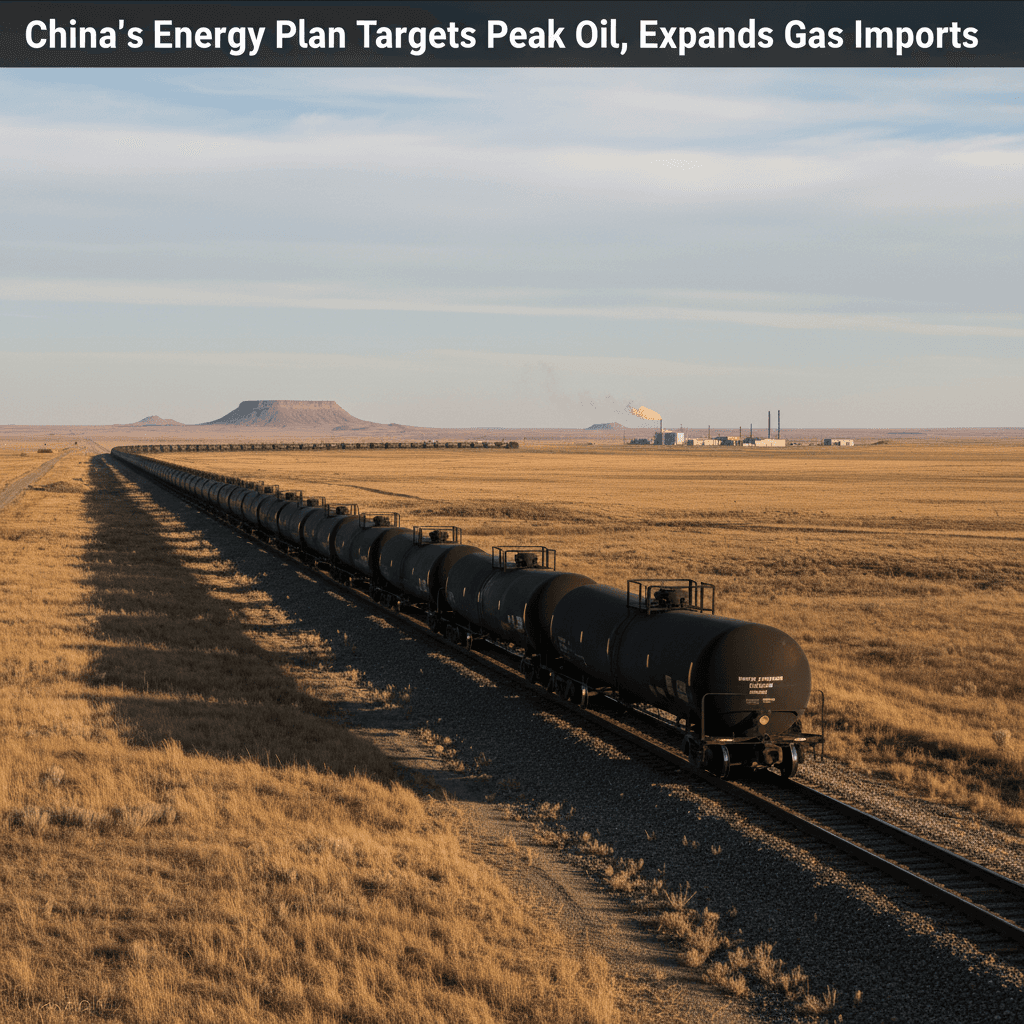
China's Energy Plan Targets Peak Oil, Expands Gas Imports
Beijing's new five-year strategy prioritizes energy security and reduced import reliance, shaping long-term demand outlook for Bakken crude.
China's latest five-year energy plan, focused on achieving energy independence and preparing for peak oil consumption, presents a complex long-term demand picture for crude exporters, including those in North Dakota's Bakken formation. According to a report from OilPrice.com, the plan was released on Monday, August 17, 2026, by China's National Development and Reform Commission and National Energy Administration.
The strategy reveals China's intent to ramp up domestic oil production while simultaneously targeting a peak in its oil consumption, which some experts suggest could occur as soon as this year. For Bakken operators, a major global supplier, a peak and subsequent decline in demand from the world's largest oil importer would signal a fundamental shift in the market landscape over the coming decades. The plan underscores Beijing's overarching strategic priority: weaning the nation off foreign fuel imports to achieve energy autonomy.
A significant pillar of the plan is a massive build-out of natural gas import and storage infrastructure. The document targets 200 million tonnes of LNG terminal capacity and 114 billion cubic metres of pipeline import capacity by 2030. It also aims to ensure natural gas storage capacity outpaces national consumption by 13 percent. This aggressive push for gas could influence global fuel competition, potentially affecting pricing dynamics for associated gas produced in the Bakken.
The OilPrice.com analysis notes that China's strategy has been shaped by geopolitical tensions and the fallout from the war in Iran and closure of the Strait of Hormuz, events which have highlighted vulnerabilities in global supply chains. The new plan is an extension of China's previous success in using strategic fossil fuel stockpiles to buffer against market volatility. However, it also admits an ongoing inability to fully wean off foreign imports despite major efforts.
The report connects China's planning to a broader concern over "peak oil production" — the point where global output begins an irreversible decline. It cites a warning from the National Interest that Europe's next oil crisis could stem from peak production rather than conflict or climate change. China's move to peak its demand before this global production peak is framed as a defensive maneuver against this "looming threat."
For the Bakken, this geopolitical and strategic shift emphasizes the importance of market diversification and cost competitiveness. North Dakota's oil industry must navigate a future where its largest potential customer is actively working to reduce its long-term crude intake. The focus on energy security and import reduction in Beijing reinforces the value of stable, non-OPEC supply sources but within a shrinking overall demand framework from China.
Source
OilPrice.com

