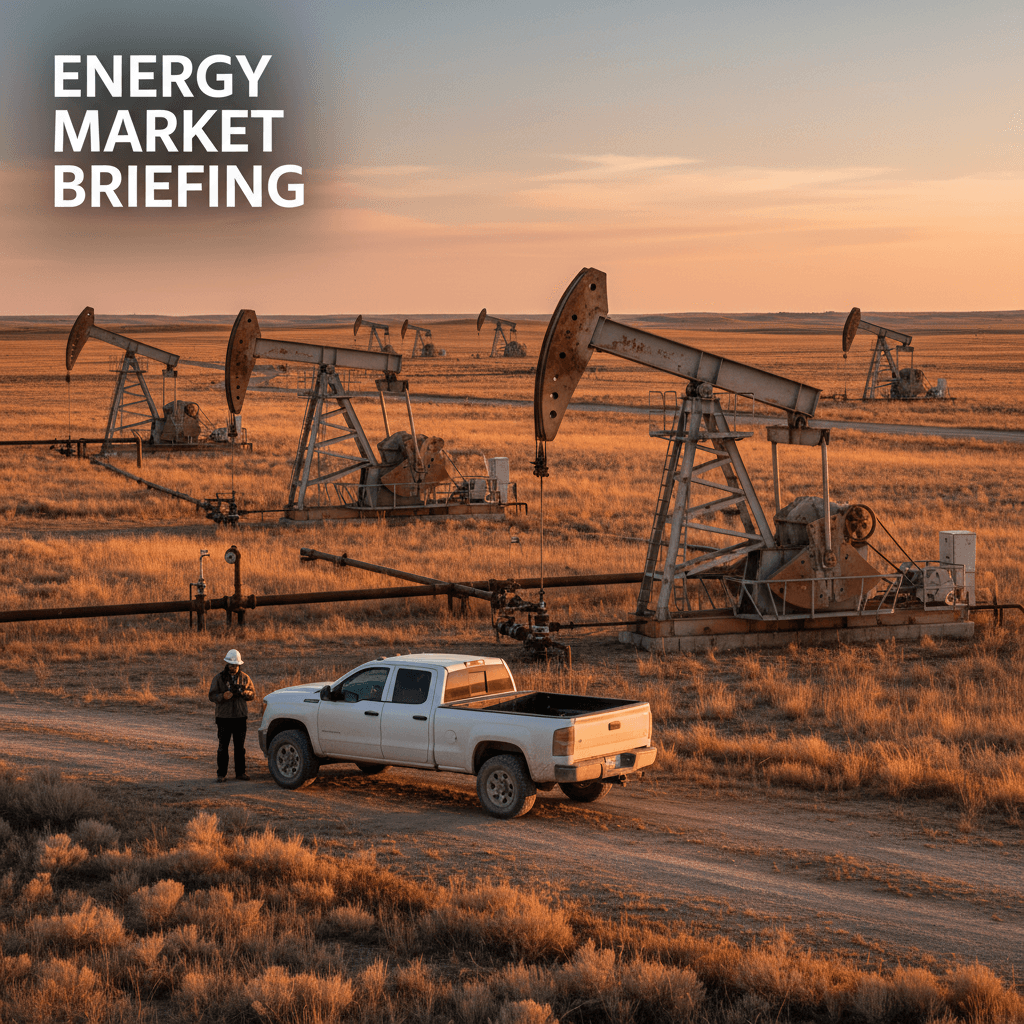
China's Record Oil, Gas Output Weighs on Global Demand Outlook
Increased domestic production and strategic stockpiles have sharply reduced China's crude imports, a key factor for Bakken crude pricing.
China's crude oil production hit a record high last year, reaching 216 million tons, while its total oil and gas output in oil equivalent terms also set a record at 420 million tons, according to a report from the country's National Energy Administration. The data, reported today by OilPrice.com, highlights China's ongoing efforts to bolster domestic energy security, a trend with significant implications for global crude markets and Bakken producers.
Natural gas production also rose substantially by 10 billion cubic meters last year, maintaining an unchanged annual growth rate for the ninth consecutive year. Chinese firms added new recoverable oil and gas volumes of 1.32 billion tons of oil equivalent, a 5.6% annual increase. The majority, 1.29 billion tons, came from newly discovered conventional resources.
A key driver for reduced import demand has been China's strategic filling of storage using discounted Russian and Iranian crude over the past two years. This created a supply cushion estimated at 1 billion barrels, which the country tapped when the U.S.-Iran war prompted a surge in international prices. While higher domestic production has contributed, OilPrice.com notes China is "nowhere near any meaningful self-reliance" as demand outpaces local supply.
The impact on import volumes has been stark. China's oil imports fell to their lowest since 2017 in May, averaging 7.8 million barrels per day. Data from Kpler cited in the report showed an even steeper drop in June, to approximately 6.4 million barrels daily—the lowest level since 2016. This reduction in demand from the world's top crude importer has helped soften the global economic impact of Middle East supply disruptions.
For Bakken operators and North Dakota's oil-dependent economy, China's pullback represents a significant headwind for global crude demand. The Williston Basin produces a light, sweet crude that often competes in international markets. A sustained decrease in purchases by a major buyer can pressure the price differentials for Bakken crude compared to global benchmarks like Brent.
Analysts warn this softening in Chinese import demand may not last indefinitely, as the country's crude needs will eventually push it to raise imports again. However, the current trend of record domestic output and large strategic inventories introduces a new layer of uncertainty for export-dependent U.S. shale regions. The timing of China's return to the market as a major buyer will be a critical factor for Bakken well economics and future drilling plans.
Source
OilPrice.com