China's Renewed Iranian Oil Demand, US Power Surge Shape Bakken Outlook
Teapot refiners poised to ramp imports as record US gas turbine orders signal long-term domestic demand.
China's independent refiners are poised to ramp up purchases of Iranian crude oil this month, a move that could influence global crude balances and prices relevant to Bakken producers. According to OilPrice.com, stockpiles in Shandong province have dropped to their lowest level this year—about 360 million barrels at the end of July—after an estimated drawdown of 35 million barrels in July alone, the biggest monthly decline in a decade.
This drawdown follows a period where China, holding an estimated 1.3 billion barrels in reserves, slashed imports. With stockpiles now lower, analysts expect the so-called "teapot" refiners to increase imports of Iranian oil, especially after the U.S. lifted a blockade on such exports in mid-June to early July. Total Chinese crude imports already rebounded in July to 8.45 million barrels per day, a 22% jump from June's decade low. For Bakken operators, China's return as a major buyer to the international market could provide a floor for global oil prices, though increased Iranian supply may also act as a competing source.
Simultaneously, a separate surge in U.S. power demand is creating a structural pull for natural gas, a key associated product from the Bakken's oil wells. Global orders for gas turbines hit a record high in the second quarter, reaching 38 GW—a 71% annual increase, according to JP Morgan data cited by OilPrice.com. The United States accounted for half of all new orders.
This demand is driven by the proliferation of data centers and onshoring of manufacturing, with electricity demand growth projected to average 2% annually for the next decade. The surge has created major supply chain bottlenecks; lead times for new combined-cycle gas power plants have jumped to five years in 2025 from three and a half years in 2023, with costs soaring 49%. Furthermore, consultancy Wood Mackenzie expects gas turbine prices to skyrocket by 195% by 2027 due to the supply squeeze.
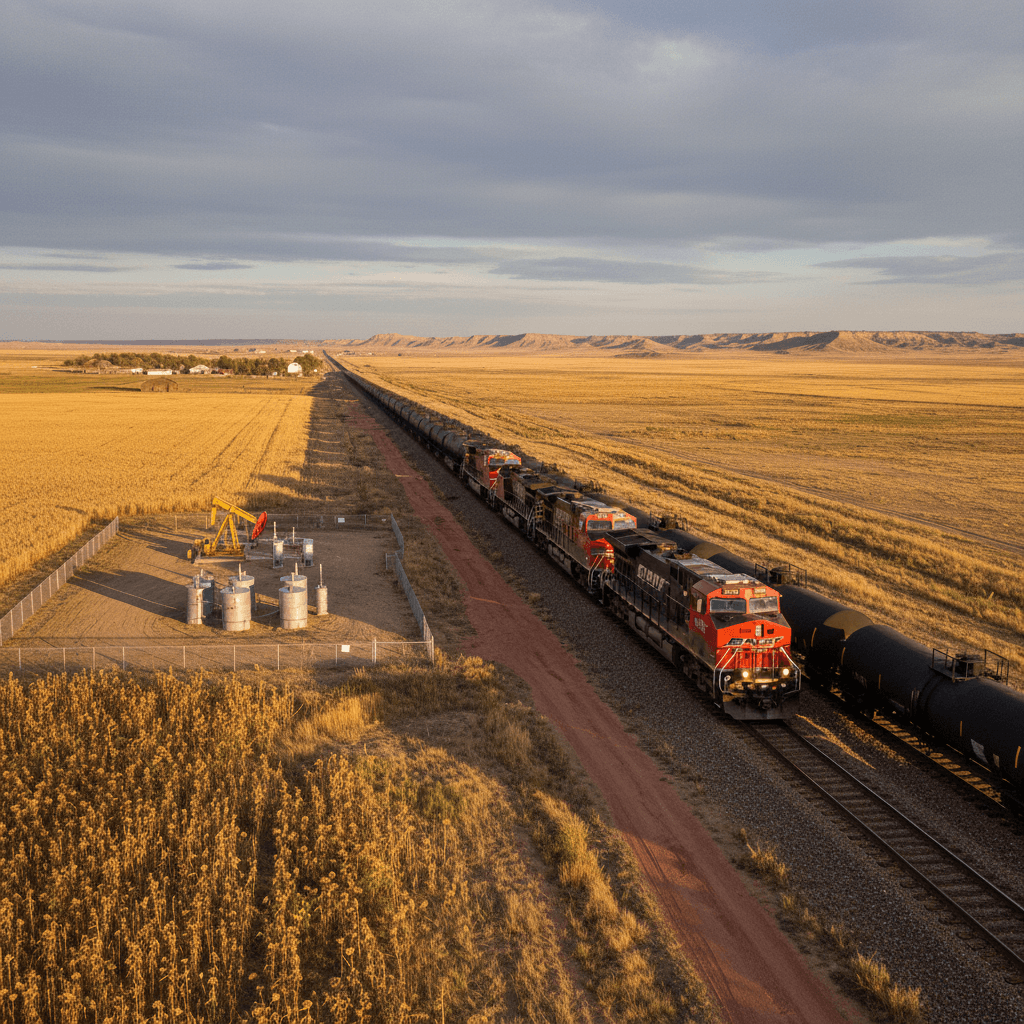
For North Dakota, this translates to a reinforced, long-term demand outlook for natural gas. Record turbine orders and extended lead times indicate a sustained need for gas-fired generation capacity, supporting the economic rationale for capturing and marketing Bakken gas. The state's operators and midstream companies may see continued investment justification in gas capture and processing infrastructure to meet this durable domestic demand.
The dual dynamics of shifting global crude flows and robust domestic gas demand present a mixed but consequential backdrop for the Williston Basin. While crude markets face potential new competition from Iranian barrels flowing to China, the structural U.S. power boom offers a stabilizing demand signal for the region's natural gas production.
Source
According to reporting from OilPrice.com.

