ConocoPhillips Enters Major Iraq Deal, Shifting Global Capital Focus
The Bakken operator's $25 billion partnership with BP could influence long-term investment strategies in North Dakota.
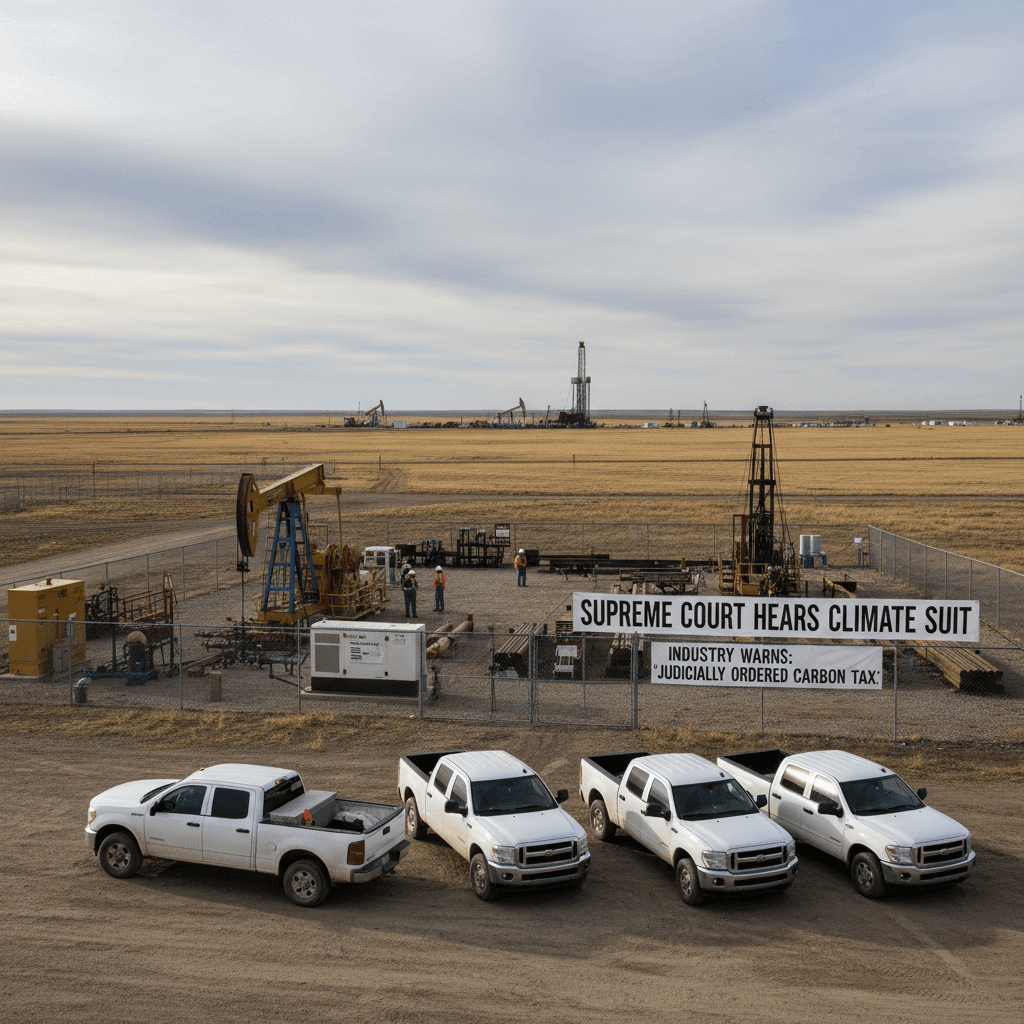
ConocoPhillips, a major operator in North Dakota's Bakken formation, has entered a massive international partnership to redevelop one of Iraq's oldest oilfields. The company agreed to acquire a 42% stake in BP Plc's development subsidiary for the Kirkuk region, according to reports from OilPrice.com and Rigzone.
The joint venture aims to rehabilitate and optimize production from four major oilfields in northern Iraq at an estimated cost of approximately $25 billion. The deal marks ConocoPhillips' return to Iraq for the first time in over a decade. Under the Development and Production Contract (DPC), the partnership targets an initial phase aiming to extract more than 3 billion barrels of oil equivalent.
For Bakken stakeholders, the move highlights the global competition for capital investment. ConocoPhillips is a significant player in the Williston Basin, and large-scale international commitments can influence the pace and scale of future spending in North Dakota. The companies stated the joint venture will function as an equity affiliate, requiring no significant upfront capital contributions, with returns linked to incremental production volumes and costs.
The Kirkuk field, discovered in 1927, is a super-giant field containing over 3 billion barrels of initial gross recoverable resources. It has historically produced up to 1 million barrels per day but current output is between 285,000 and 330,000 barrels per day. Iraq's North Oil Company successfully restarted crude exports of 250,000 barrels per day via the Kirkuk-Ceyhan pipeline to Turkey in March 2026, following a nearly three-year suspension.
According to OilPrice.com, the partnership aligns with the Iraqi government's goal to expand U.S. energy investments to counter the dominant presence of Chinese firms. Iraqi Prime Minister Ali Al-Zaidi recently pitched major energy deals to Western majors like ConocoPhillips and Chevron Corp.
The redevelopment of the century-old fields, which have suffered long-term output declines exacerbated by regional conflict, represents a strategic shift for ConocoPhillips. For other Bakken operators, this underscores the global landscape where majors balance investments in stable, tier-one U.S. assets like the Bakken against opportunities in large, complex international redevelopments.
The news follows other U.S. energy policy developments, as the U.S. Department of Energy announced newly appointed members to its Secretary of Energy Advisory Board, including representatives from Chevron and Cheniere, according to Rigzone. These appointments can shape federal energy policy affecting domestic producers.
Source
OilPrice.com, Rigzone