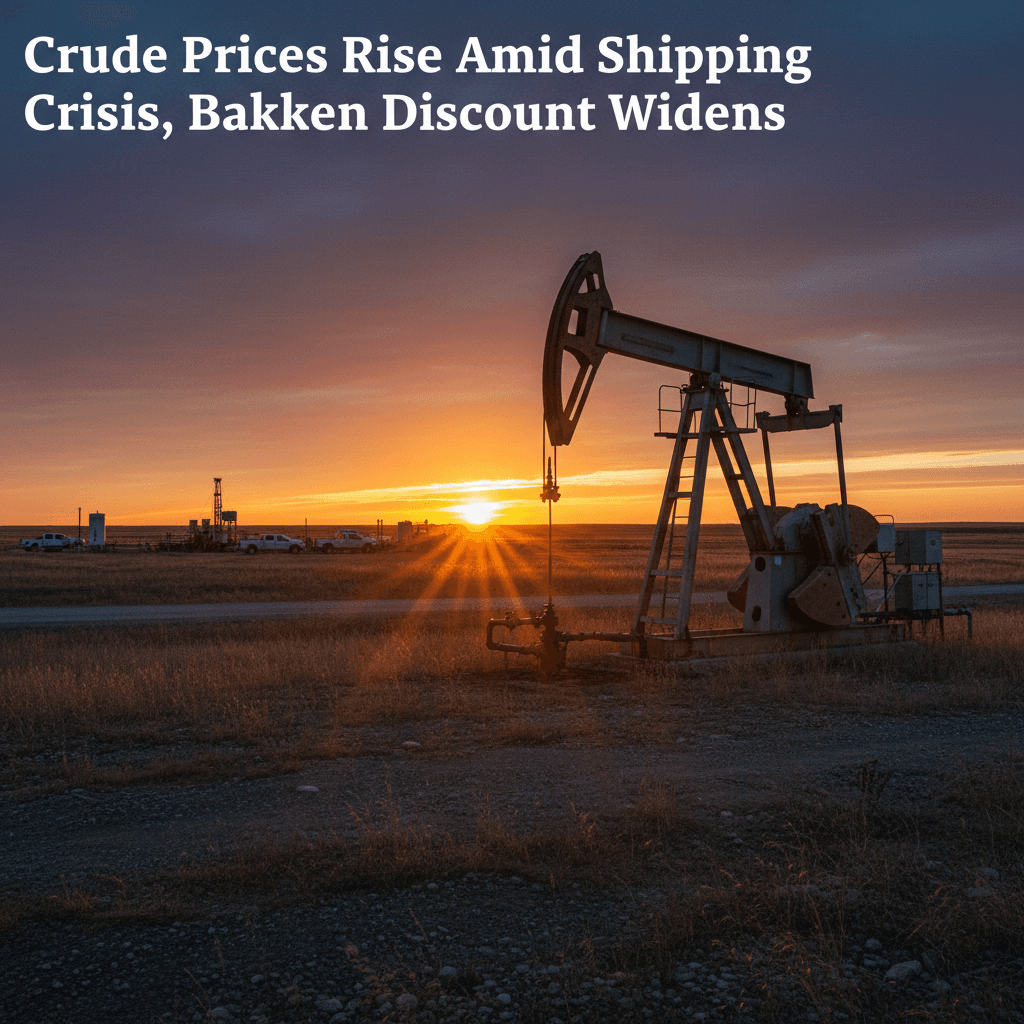
Crude Prices Rise Amid Shipping Crisis, Bakken Discount Widens
WTI gains near $99 as soaring tanker rates from Middle East conflict add upside risk, while Bakken differential expands to -$3.42.
Front-month WTI crude futures rose 0.89% to $98.69 per barrel on Wednesday, October 21, while Brent crude increased 0.62% to $109.46, according to live price data. The Bakken crude differential to WTI stood at -$3.42. Natural gas prices fell, trading at $2.85.
The gains in crude benchmarks come as a severe global tanker crisis, driven by conflict in the Middle East, creates new upside pressure on oil prices. According to a note from Goldman Sachs analysts reported by OilPrice.com, average global freight rates to transport oil have surged to $20 per barrel from just $3 per barrel last year. The investment bank warns this poses a risk to its current baseline forecast of $90 Brent by year-end.
Goldman Sachs attributes the soaring costs to the Iran war and the Hormuz crisis, which have reshuffled trade routes and tied up tankers in inefficient voyages. Supertanker rates on the Gulf to East Asia route topped a record $1.4 million per day in early October. The bank notes that average shipping costs now include a $7 per barrel war-risk premium in the Strait of Hormuz, $4 for higher fuel costs, and $4 for ship-to-ship transfers in the Gulf of Oman.
The tight supertanker market has created a ripple effect, boosting demand and daily rates for smaller Aframax and Suezmax vessels as well. Goldman analysts stated that "higher freight rates for longer pose some upside risk to our Brent forecast, along with the risks of more intense shipping attacks, damage to oil infrastructure, and a stickier geopolitical risk premium."
For Bakken operators, the widening differential to -$3.42 below WTI indicates local pricing pressure despite the rise in the global benchmark. The significant increase in global shipping costs primarily affects waterborne crude, but the resulting upward pressure on international benchmarks like Brent can provide a higher price ceiling for domestic grades. However, the Bakken's landlocked position means its price is more directly tied to WTI and pipeline/rail logistics to coastal refineries.
The sustained high Brent-WTI spread of over $10 per barrel continues to highlight the premium for globally-traded crude facing transport constraints. The ongoing crisis suggests volatility and a heightened geopolitical risk premium will remain features of the oil market in the near term, influencing pricing for North Dakota producers.
Source
Live Price Data, OilPrice.com (Goldman Sachs report)