Crude Prices Slide on Saudi Supply Ease, Bakken Differential Widens
WTI settles below $90 as supply fears ease, but analysts warn of ongoing global risks; diesel prices continue to climb.
Oil prices retreated early Tuesday, extending losses from the previous sessions, as heightened Saudi shipments through the Strait of Hormuz eased immediate supply fears. According to live data, West Texas Intermediate (WTI) crude traded at $89.96 per barrel, down $2.41 or 2.61% on the day. Brent crude was at $98.17, down $2.17.
The price drop follows a volatile period last week when Brent briefly touched $108 per barrel after a key Saudi pipeline closure. However, Rigzone reported that oil fell as Saudi exports through Hormuz increased and hopes grew for diplomatic progress in the ongoing U.S.-Iran conflict. This sentiment weighed on prices at the end of last week and into this week.
Despite the pullback, analysts warn the market remains on edge. "Supply-side risks remain elevated," ING commodities strategists Warren Patterson and Ewa Manthey said in a note Tuesday, according to OilPrice.com. They pointed to a new disruption in Libya, where an armed group forced a production cut at the Sharara field to around 127,000 barrels per day from roughly 340,000 bpd.
Market attention is also fixed on diplomatic maneuvers. U.S. Treasury Secretary Scott Bessent threatened to "shut-down" Iranian airlines starting Wednesday, a move ING analysts noted is part of the "latest verbal escalation" in the U.S.-Iran war. This comes ahead of a UN General Assembly session where many hope for progress in peace talks.
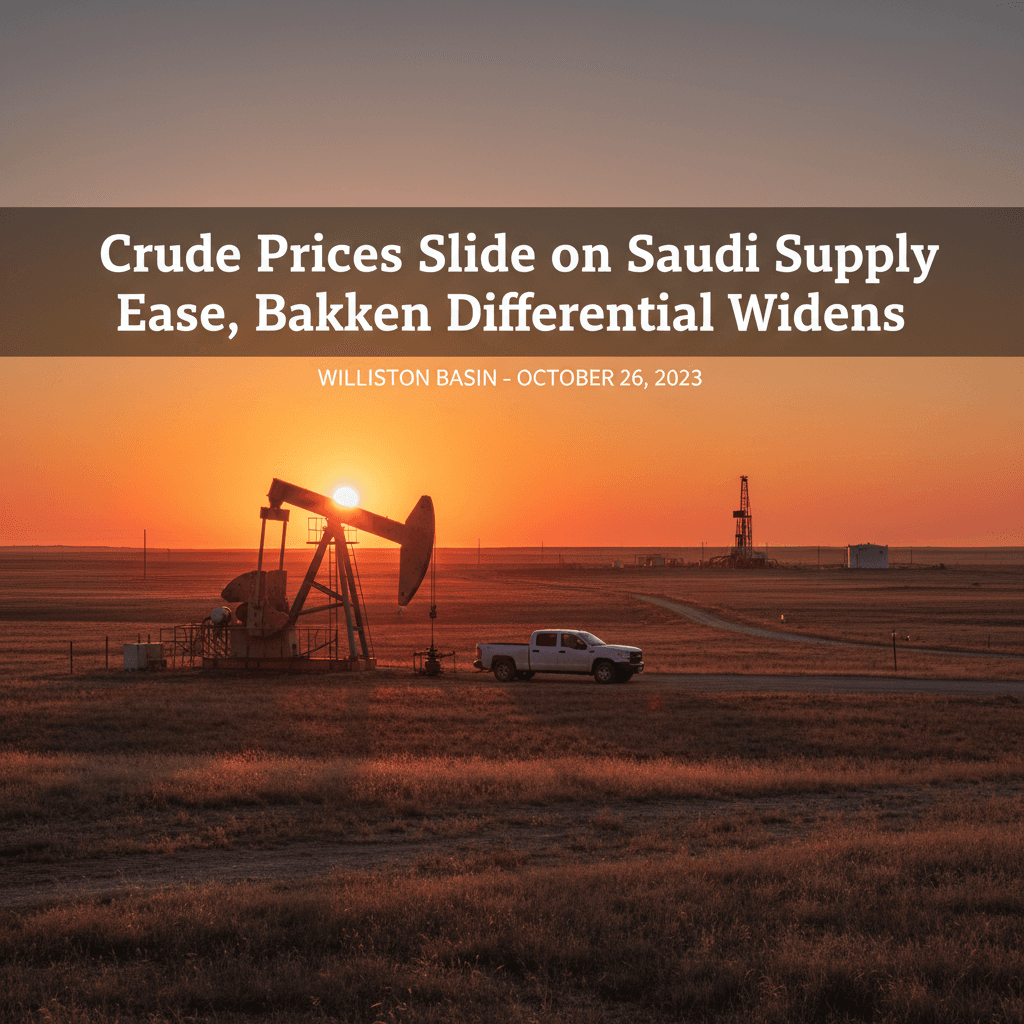
For Bakken producers, the price drop is tempered by a widening discount for local crude. The Bakken differential to WTI stood at -$3.42 Tuesday morning, meaning Bakken crude is priced lower than the U.S. benchmark. This differential pressure can squeeze operator margins despite an overall strong price environment.
In a separate market dynamic, U.S. diesel prices surged again over the past week, according to a summary from Rigzone. Rising diesel costs directly impact Bakken drilling and completion operations, increasing the expense for the fleet of trucks and heavy equipment essential to the oilfield.
The current price landscape presents a mixed picture for North Dakota's oil industry. While global crude benchmarks remain robust by historical standards, local pricing and rising operational costs present headwinds. The market continues to balance hopes for reduced geopolitical tension against real and potential supply disruptions across the Middle East and North Africa.
Source
Live Price Data, OilPrice.com (ING analysis), Rigzone (diesel and price move summaries)