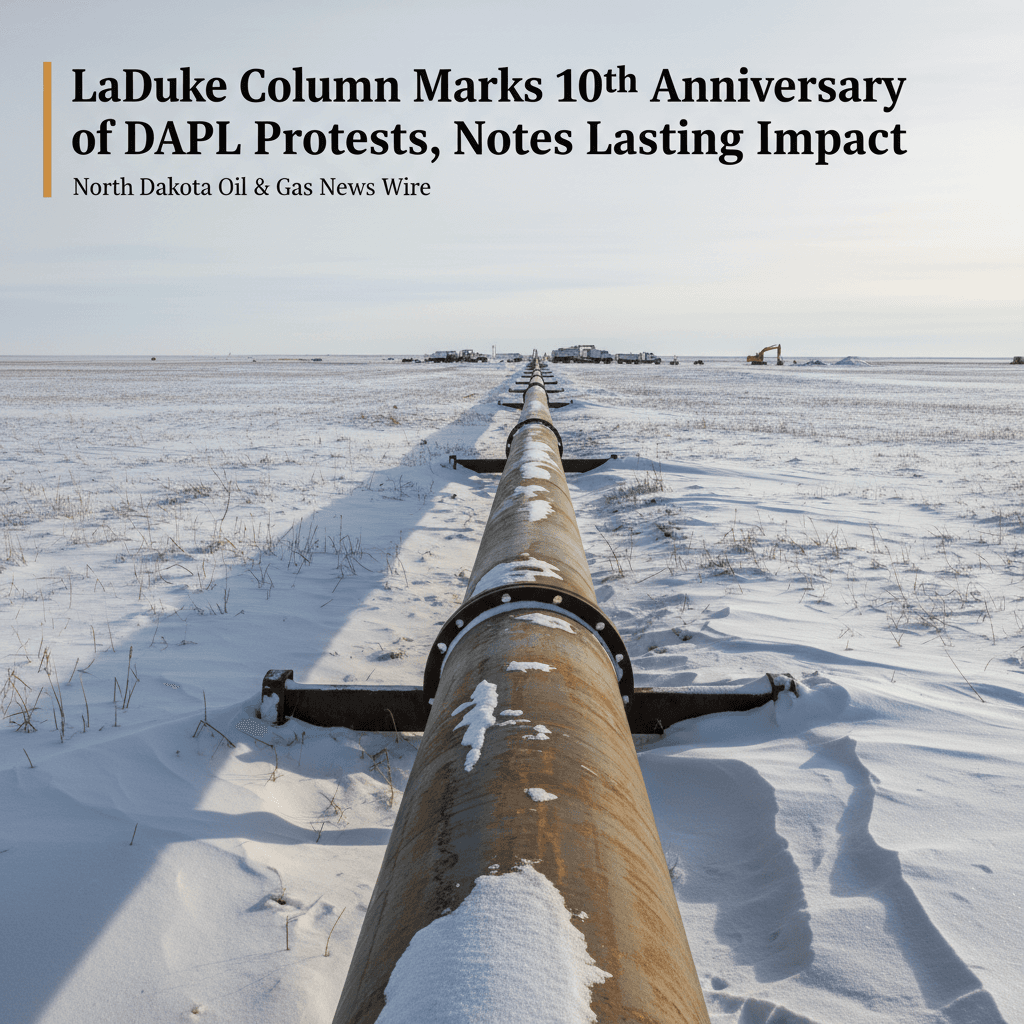
Decade After Standing Rock Protests, DAPL Legacy Shapes North Dakota Energy Landscape
A commentary marks the 10-year anniversary of the Dakota Access Pipeline protests, highlighting enduring local impacts and shifting priorities.
A decade after the Standing Rock resistance to the Dakota Access Pipeline, the event continues to shape perspectives on energy development and indigenous rights in North Dakota, according to a recent commentary. The piece, published by Winona LaDuke on September 23, 2026, reflects on the 2016-2017 protests which she described as "epic" and transformative for participants.
The commentary states that the protests highlighted the "brutality" of security contractor Tiger Swan and an estimated "$38 million in repression and violence against unarmed people." It frames the event as a lesson in "fossil fuel addiction — and how far North Dakota was willing to go for oil." For Bakken operators and the state's energy sector, the pipeline protests marked a pivotal moment of national scrutiny on infrastructure projects crossing tribal lands and critical water sources.
The legacy of the protests includes ongoing legal and political repercussions. LaDuke's commentary asserts that North Dakota’s judicial institutions have "relentlessly pursued Water Protectors" in the years since. It also links state-level policies to the federal arena, noting that former North Dakota Gov. Doug Burgum, as Secretary of the Interior, is "systematically dismantling federal land and wildlife protections."
Locally, the movement has spurred alternative energy and agricultural initiatives led by Indigenous community members. The commentary highlights David Archambault II, former Standing Rock Tribal chairman who was "in the crossfire most of 2016 and 2017," and now works for an Indigenous-led nonprofit in Cannon Ball, N.D. It also cites the SAGE renewable energy initiative, coordinated by a descendant of Sitting Bull, which aims to create "economic opportunities and energy independence."
Furthermore, the piece connects the Standing Rock experience to a resurgence in Indigenous farming, mentioning projects like the Red Lake Agriculture Program, as a way to "heal from war" and rebuild self-sufficiency. The protests also served as a catalyst for political careers, with the commentary noting that Alexandria Ocasio-Cortez announced her campaign for Congress two months after the camps at Standing Rock were bulldozed.
The Dakota Access Pipeline remains a crucial piece of infrastructure for moving Bakken crude oil to market. The 10-year anniversary underscores the persistent tensions between energy development, environmental protection, and tribal sovereignty in North Dakota, factors that continue to influence the regulatory and social landscape for all pipeline and energy projects in the region.
Source
Commentary by Winona LaDuke published on September 23, 2026, sourced via Bing News.