Diverging Agency Outlooks Signal Uncertainty for Bakken Crude Pricing
Major energy agencies show conflicting oil market forecasts, creating a volatile planning environment for North Dakota producers.
Leading energy agencies are presenting sharply different views of the global oil market, according to recent reports. Ole Hansen, Saxo Bank's Head of Commodity Strategy, highlighted that the monthly oil market reports from the U.S. Energy Information Administration (EIA), the International Energy Agency (IEA), and OPEC "continue to highlight a massive divergence," according to a report from Rigzone.
This lack of consensus among the world's primary forecasting bodies creates a cloud of uncertainty over future crude oil prices. For Bakken operators, price stability is a critical component for planning drilling budgets, securing financing, and managing hedge positions. Conflicting signals on global supply, demand, and inventory levels make these tasks significantly more challenging.
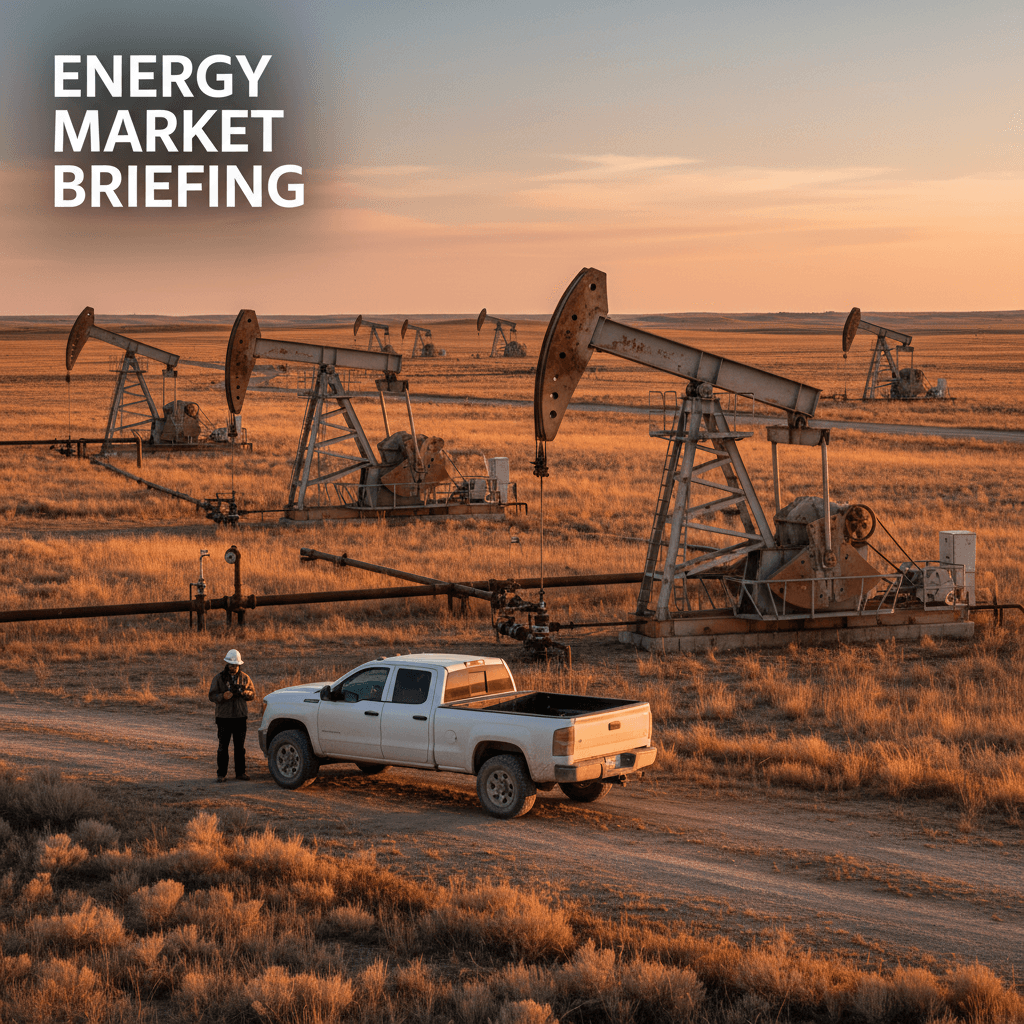
The Bakken formation's output is directly tied to the global crude benchmarks. When major agencies disagree on fundamental market data, it can lead to increased price volatility. This volatility impacts the realized price for every barrel of Williston Basin crude, affecting cash flow for both operators and royalty owners across North Dakota.
In such an environment, Bakken producers must navigate a market where one agency's bullish outlook could be immediately countered by another's bearish assessment. This divergence underscores the complex and fluid state of post-pandemic energy markets, where geopolitical events, economic data, and policy shifts can rapidly alter projections. Operators are likely relying on a range of scenarios rather than a single, authoritative forecast.
Source
According to a report from Rigzone citing Ole Hansen of Saxo Bank.