DOE Awards $36M for Bakken CO2 EOR Research, USGS Outlines Major Gas Resource
Federal funding targets unlocking incremental Bakken oil, while a new Gulf Coast gas assessment highlights long-term US supply.
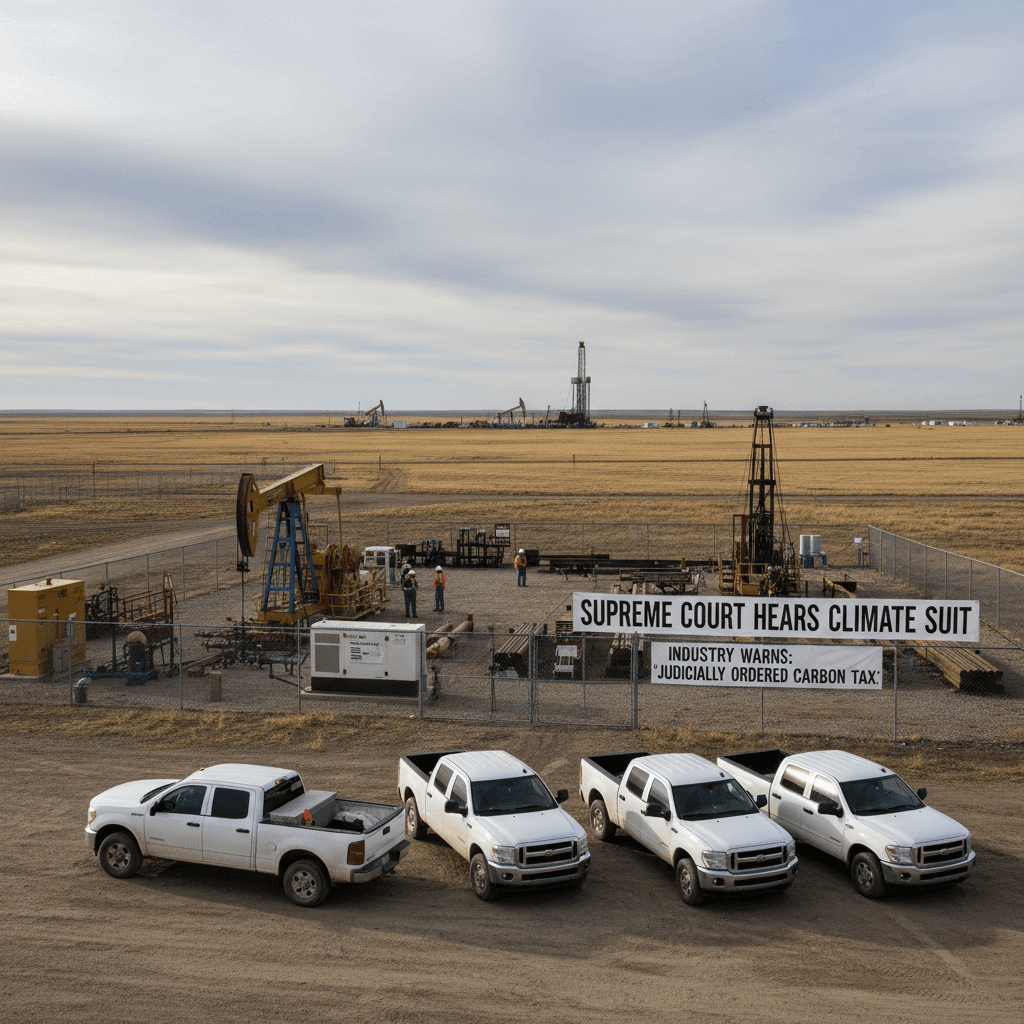
The U.S. Department of Energy will invest $36 million to advance carbon dioxide-enhanced oil recovery (CO2-EOR) research in the Bakken shale through a program led by the University of North Dakota. According to a DOE release, the "Bakken Enhanced Oil Recovery–Cracking the Code" (Bakken EOR-CC) effort aims to combine lab research, reservoir modeling, artificial intelligence, and field work to evaluate EOR strategies.
The program targets the significant volume of oil left unrecovered in unconventional formations, which typically yield only about 10% of oil in place. DOE Assistant Secretary Kyle Haustveit stated the program is "essential to maximize the full potential of our valuable hydrocarbon resources in the Bakken," according to the release. The integrated pilot projects are intended to establish a path for broad commercial deployment of enhanced energy recovery.
The Bakken EOR-CC program will assess injection strategies across six pilot projects. The DOE's $36 million investment, plus $9 million in cost-share from UND's Energy & Environmental Research Center and partners, funds one pilot. State and private sources are providing about $100 million for the remaining five projects. AI tools will be used to analyze performance data to identify best practices.
Separately, the U.S. Geological Survey released a new assessment outlining massive technically recoverable gas resources in the Bossier Formation along the Gulf Coast. The USGS calculated resources of 343.5 trillion cubic feet of gas and three million barrels of oil in the region, according to Rigzone. USGS Director Ned Mamula stated the assessment points to "significant undiscovered resources" that industry hasn't discovered yet.
The USGS noted the gas resources are enough to supply the United States for more than 10 years at the current rate of consumption. The agency said exploration drilling has revealed deep, highly over-pressured shale formations, warranting the new assessment and highlighting new plays like the "Western Haynesville."
In global LNG markets, Pakistan has opted not to buy urgent spot cargoes, betting that hostilities closing the Strait of Hormuz will ease, Rigzone reported. The country, which has received only a single LNG shipment since early March, declined to award an emergency tender for May delivery. Traders indicated the government expects soon-to-arrive, cheaper supplies from Qatar under a long-term contract. The decision risks worsening the nation's gas shortfall, which has caused widespread blackouts.
Source
According to a DOE release via Bing News, a USGS release via Rigzone, and a Bloomberg report via Rigzone.