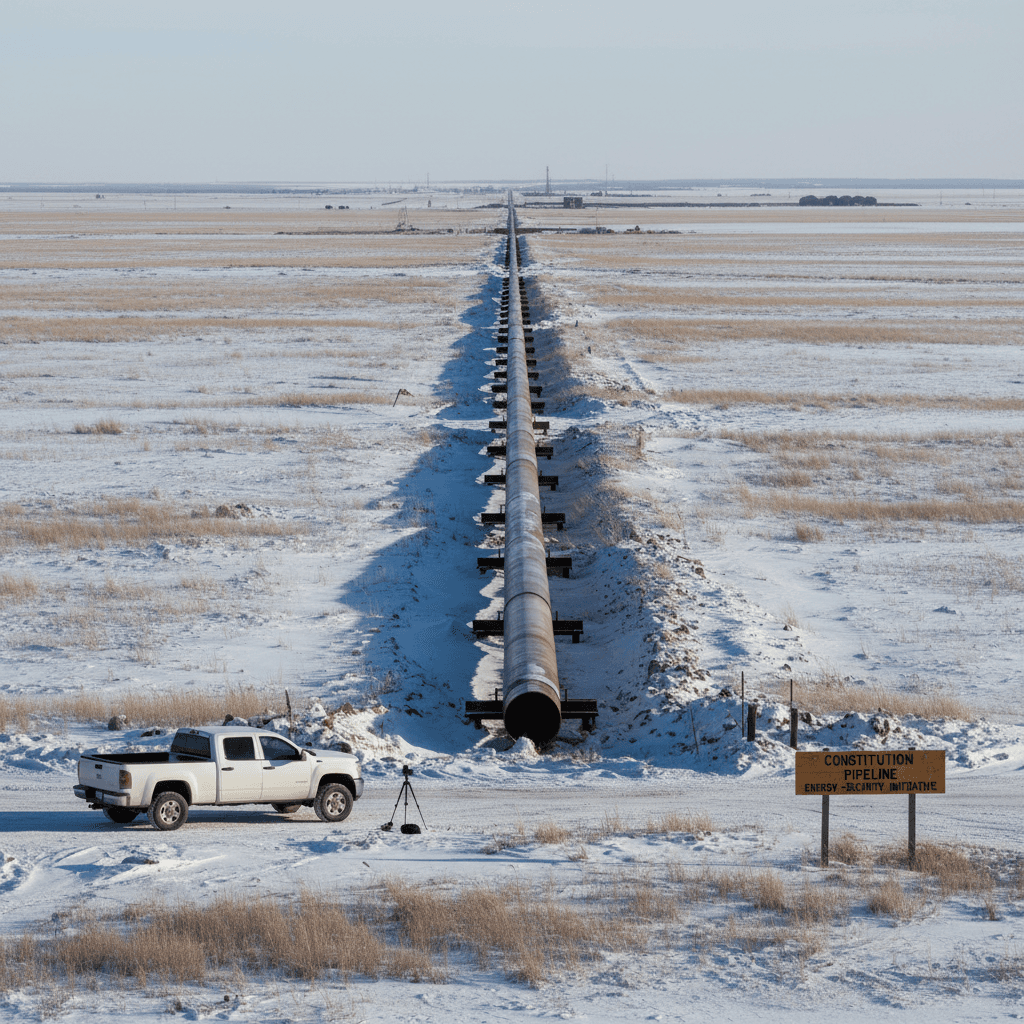
Drone Attack Targets Saudi Arabia's Critical East-West Pipeline
Attack on key export route could tighten global crude supply, impacting Bakken price differentials and market competition.
Saudi Arabia’s critical East-West crude oil pipeline system was struck by drones on Thursday, September 10, 2026, in an attack that threatens one of the kingdom's most important export routes, according to reporting from OilPrice.com and CNN. The attack, which U.S. officials assessed involved drones originating from Iraq, hit multiple pumping stations along the pipeline corridor.
Satellite imagery analyzed by CNN showed extensive fire damage at a pumping station near Al Mesba'ah and a fire with thick black smoke at a station near Al Dhekra. The Saudi government and Aramco have not publicly commented, and it remains unclear if the pipeline itself was damaged or how long repairs will take. Repairing pumping stations can be faster than fixing a ruptured pipeline, a critical distinction for oil markets.
The East-West pipeline has become a strategically vital piece of global infrastructure since the closure of the Strait of Hormuz, serving as Saudi Arabia's primary bypass. The kingdom has been rerouting roughly 5 million barrels per day (bpd) through the system to the Red Sea port of Yanbu. The pipeline has a total capacity of around 7 million bpd, capacity that was only fully restored in April after previous attacks.
For Bakken operators and North Dakota royalty owners, any sustained disruption to this major export artery could have immediate consequences for global crude benchmarks. A significant reduction in Saudi crude flows would tighten global supply, potentially providing upward support to international prices like Brent. This could improve the relative value of Bakken crude priced against West Texas Intermediate (WTI), which is more landlocked.
However, the attack also highlights the fragility of global export routes. With the Strait of Hormuz closed and Houthi forces threatening Red Sea shipping, a serious damage to the East-West pipeline would put Saudi Arabia's principal alternative under unprecedented pressure, according to OilPrice.com. This escalating instability underscores the competitive advantage of stable, domestic production from secure basins like the Bakken.
The incident is part of mounting pressure on Saudi energy infrastructure. Earlier this week, the Saudi Energy Ministry confirmed attacks on multiple facilities in the kingdom's south. Saudi Arabia has previously accused Iran-backed militias of launching drones from Iraq against its oil infrastructure.
The market's reaction will depend on the extent of the damage and repair timeline. For North Dakota producers, a sustained outage could strengthen Bakken crude's competitiveness against imported grades on the U.S. Gulf Coast, potentially improving netbacks. The situation remains fluid as assessments continue.
Source
Reporting synthesized from OilPrice.com and CNN, as cited in the source data provided.