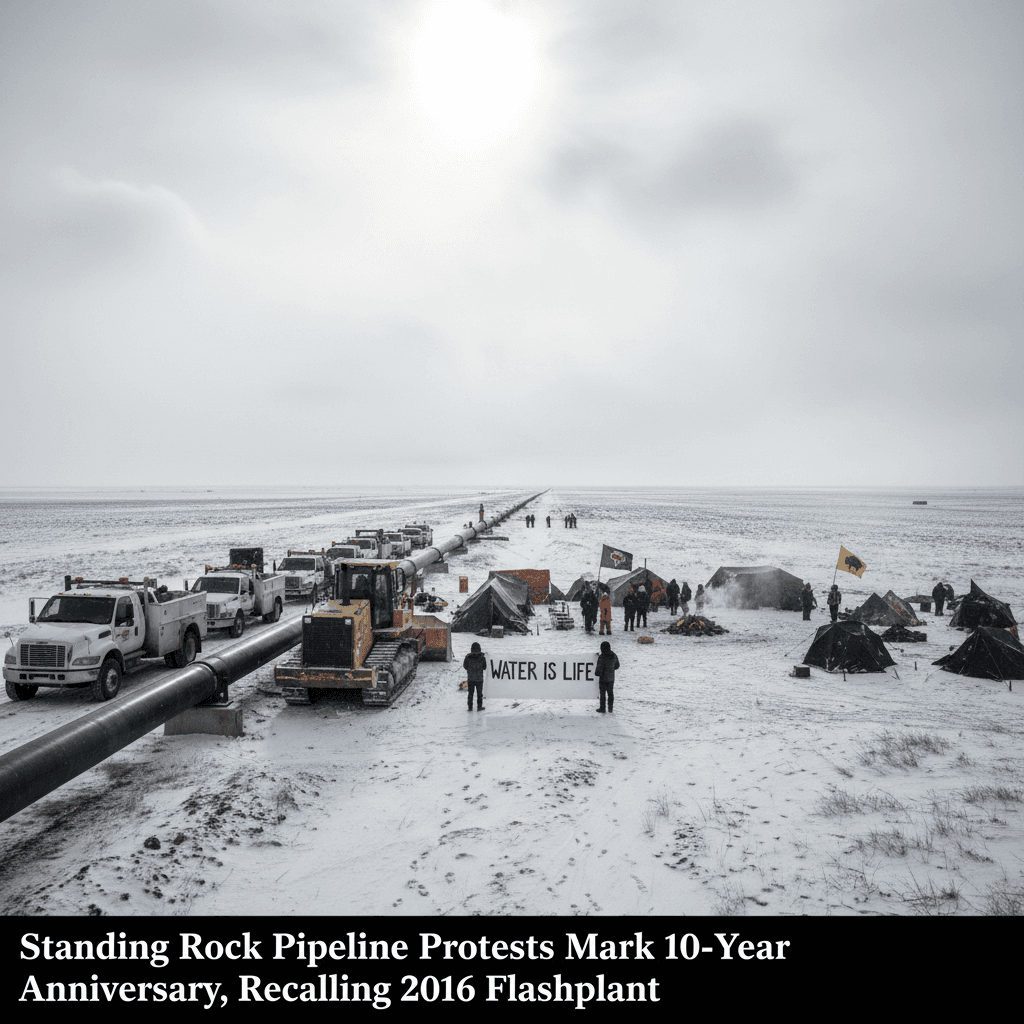
Standing Rock Pipeline Protests Mark 10-Year Anniversary, Recalling 2016 Flashpoint
The Dakota Access Pipeline conflict, which began a decade ago, escalated in early September 2016, pitting energy development against tribal sovereignty and drawing global attention to North Dakota.
The protests over the Dakota Access Pipeline (DAPL) reached a critical flashpoint in early September 2016, an event marking its 10-year anniversary this week, according to a report from the North Dakota Monitor. The $3.7 billion crude oil pipeline project ignited a months-long conflict after the U.S. Army Corps of Engineers approved its route half a mile outside the Standing Rock Sioux Reservation.
The decision framed a national debate pitting American energy infrastructure against tribal sovereignty and environmental concerns. While developers and state officials argued modern steel pipelines were safer for fossil-fuel transit than railroads or trucks, the Standing Rock Sioux Tribe and a growing movement of allies contended the project threatened water sources, sacred sites, and the environment.
What began as a smaller protest swelled into a major encampment south of Bismarck, drawing thousands of Indigenous people and activists from around the world. High-profile supporters, including actors Shailene Woodley and Mark Ruffalo and the Rev. Jesse Jackson, traveled to North Dakota to join the cause. Protesters employed various tactics, including chaining themselves to equipment, building resistance hubs, holding prayer runs, and blocking roads.
The escalating activism began to significantly impact the project's bottom line. According to the report, the protests were costing Dakota Access Partners an estimated $83.3 million per month in delays and damaged equipment. Environmental groups like Greenpeace provided logistical support to activists, including tents, solar-powered vehicles, and training.
Key voices in the opposition included then-Standing Rock Sioux Reservation Chairman Dave Archambault II and Ojibwe writer and economist Winona LaDuke, who focused on water protection and Indigenous rights. Meanwhile, pipeline developer Energy Transfer Partners expressed growing concerns over pipeline integrity, worker safety, and project budgets.
Law enforcement responses intensified as protester numbers grew. Before September 2016, arrests were relatively limited, with 37 people primarily charged with trespassing and disorderly conduct. However, the situation changed dramatically in early September, with the protests threatening to overwhelm authorities and bringing unprecedented international scrutiny to North Dakota's energy sector.
The anniversary underscores the complex intersection of energy infrastructure, regulatory approval, and tribal rights that continues to resonate for Bakken operators and communities in North Dakota. The Dakota Access Pipeline remains a key conduit for Bakken crude oil to market.
Source
North Dakota Monitor (Bing News)